
Navigation
Install the app
How to install the app on iOS
Follow along with the video below to see how to install our site as a web app on your home screen.

Note: this_feature_currently_requires_accessing_site_using_safari
More options
Welcome to our community
Be a part of something great, join today!
You are using an out of date browser. It may not display this or other websites correctly.
You should upgrade or use an alternative browser.
You should upgrade or use an alternative browser.
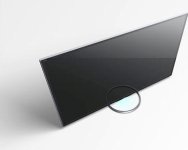
NEW 55" & 65" Sony 4k no speakers
- Thread starter Corey_O
- Start date

Blair S. Paulsen
Well-known member
- Joined
- Dec 28, 2006
- Messages
- 5,503
- Reaction score
- 34
- Points
- 48
- Location
- San Diego, CA
- Website
- www.alacritymedia.com
If it doesn't fit, they won't commit.
If it doesn't fit, they won't commit.
Jeff will be happy to hear about this, as am I. Part of the UHD/4K value proposition rests on large enough screens to make the differential vs 720 or 1080 HD as dramatic as possible. The pushback is often decor, entertainment center dimensions, etc (also known in HT circles as WAF, wife acceptance factor, sorry about the inherent sexism).
Some of us are limited only by cost, but many of the well heeled early adopters necessary for successful commercialization of UHD/4K need displays that fit into their homes discreetly.
Cheers - #19

Louis Maddalena
Well-known member
Oh god do I know about WAF.

Jett He
Well-known member
Curious about the panels they use in the new 4k tvs. Cheap TN or IPS.
John Bellari
Well-known member
- Joined
- Mar 23, 2011
- Messages
- 336
- Reaction score
- 0
- Points
- 0
Curious about the panels they use in the new 4k tvs. Cheap TN or IPS.
Yep, they chopped off more than the ears to hit the new price. I believe the answer lies partly in that one of the Sony 55" sets utilizes active 3D glasses, while the other passive. Don't ask me why the switch, but likely not the same panel...
- Moderator
- #6

Jeff Kilgroe
Well-known member
Grrr… Have not seen one yet, but makes me wish I would've waited and not bought the Samsung. Although, I'm betting this Sony and the Samsung units are using the same panel. I like my Samsung, but that goofy OneConnect box is a pain the way they implemented it. Although, it lets me hope that we'll get true HDMI 2.0 upgradeability, unlike what Sony is offering on theirs -- Upgrade to HDMI 2.0, but still crippled to HDMI 1.4a data rates and UHD at 30Hz max.

Michael Lindsay
Well-known member
- Joined
- Apr 25, 2007
- Messages
- 2,929
- Reaction score
- 43
- Points
- 48
- Location
- London UK
- Website
- www.16ozfilm.com
Interesting...
Does anyone know if any of the new 4k displays are NOT edge lit?
I have a late Kuro display in the studio that I would like to replace with a great consumer 4k display...
I can't accept cloudy non uniform blacks
Slightly elevated blacks can be worked with but they must be even.
Any advice appreciated?
Michael L
Wayne Morellini
Well-known member
- Joined
- Jan 3, 2008
- Messages
- 6,157
- Reaction score
- 0
- Points
- 0
The present 55 inch panel, does that use that wide color gamut nano feature lcd technology they are using on their smart phones. Something luminance.
The other thing about this is the HDMI 2 update, is that going to support 50/60 fps HDMI 10 bit and wide color space. I don't mind the set, despite the extra width of the speakers, a step up from a hisense.
The other thing about this is the HDMI 2 update, is that going to support 50/60 fps HDMI 10 bit and wide color space. I don't mind the set, despite the extra width of the speakers, a step up from a hisense.
- Moderator
- #9
Jeff Kilgroe
Well-known member
The '900A series Sony 4K monitors with the big speakers do use the TriLuminance LCD tech. Highly overrated though. After a proper calibration, my Samsung 55" is just as good, maybe just a tad weaker in the reds. The Sharp 70" Quattron 4K blows the Sony out of the water. These 850 series 4K units from Sony appear to be using the same 4K panel that the Samsung 55" and 65" are using.
With the HDMI 2.0 update, these displays will still be crippled to 30 fps maximum at 4K because of the bandwidth of existing hardware. No word yet on if, when or how HDMI 2.0 might come to the current crop of Samsung 4K units. But they're using the OneConnect external box that provides the interface and a bunch of the processing for the display. That is promoted as being easily upgradeable to new standards. HDMI 2.0 does not support any of the 10, 12, x.v., etc.. "deep color" abilities at 4K/UHD resolutions. That probably won't arrive until 2016 or so with HDMI 2.something. Sony and Apple seemed to be the only two vendors pushing for the enhanced color abilities along with a few other features that didn't make it into the 2.0 spec. Supposedly, Sony waffled on their position near finalization of the spec for some reason. Not that it mattered, they may have just thrown in the towel to get the spec approved so they could move forward with new products on their usual schedule.
If there ever was a time for DisplayPort or some other alternative to swoop in and steal the market from HDMI, this is it… Yet nothing is happening on the DisplayPort front. I am expecting Apple to push the boundaries here though when they finally release their TV product and possibly upcoming pro monitors. Those products all will have Thunderbolt and won't be confined to the available HDMI or DisplayPort specs.
I'm already planning to buy the 80" Sharp 4K when it ships next year, unless it's too expensive, but I'm expecting it to be cheaper than the current 70". Probably about $1K more than the current 1080p 80"
L. Langer
Well-known member
Things are happening with Display Port but nothing new is expected until 2015/2016 when HDMI is due for it's usual post-new version refresh. They are working on advanced 4K display features that will tie into the eventual 4K market flood around that time with mobile devices being connected to UHDTVs along with compacter powerful 4K Media PCs. H.265 decoding should be in good order by that point and begin deployment in electronics with the new 100GB Blu-Ray discs.
Blair S. Paulsen
Well-known member
- Joined
- Dec 28, 2006
- Messages
- 5,503
- Reaction score
- 34
- Points
- 48
- Location
- San Diego, CA
- Website
- www.alacritymedia.com
WTF?
WTF?
Amen brother. HDMI 2.0 is essentially obsolete at release. DisplayPort has never reached critical mass. Thunderbolt cables/chipsets need to be cheaper to proliferate. Maybe I've seen too many Oliver Stone movies, but it feels like interconnect standards have been co-opted to serve as gatekeepers for managing replacement cycles. Since the mass consumer market lacks understanding and meaningful references, there's minimal pushback.
We've seen this play out with music, and I'm betting the CE companies noticed as well. With audio, its relatively easy to school people who are convinced that the music on their iPod/phone is "awesome". I hook up their device to my system, choose a song I also have on CD (yes, CDs cut some fidelity corners as well) and toggle between them - assuming they have average or better hearing, that 1 minute demo ends any argument. Of course the other 99.9999% of the consumer population is still unaware ;-)
IAC, I have to wonder where any genuine pushback will come from? There's obviously an environmental cost to artificially speeding replacement cycles, but considering the scope of that problem its not likely to be high on the priority list.
I have a sinking feeling that by the time we have a distribution infrastructure capable of delivering images that look like what I see in the edit suite my eyesight will have deteriorated to the point that I won't even be able to appreciate them :-(
Cheers - #19
WTF?
(snip) If there ever was a time for DisplayPort or some other alternative to swoop in and steal the market from HDMI, this is it… Yet nothing is happening on the DisplayPort front. I am expecting Apple to push the boundaries here though when they finally release their TV product and possibly upcoming pro monitors. Those products all will have Thunderbolt and won't be confined to the available HDMI or DisplayPort specs. (snip)
Amen brother. HDMI 2.0 is essentially obsolete at release. DisplayPort has never reached critical mass. Thunderbolt cables/chipsets need to be cheaper to proliferate. Maybe I've seen too many Oliver Stone movies, but it feels like interconnect standards have been co-opted to serve as gatekeepers for managing replacement cycles. Since the mass consumer market lacks understanding and meaningful references, there's minimal pushback.
We've seen this play out with music, and I'm betting the CE companies noticed as well. With audio, its relatively easy to school people who are convinced that the music on their iPod/phone is "awesome". I hook up their device to my system, choose a song I also have on CD (yes, CDs cut some fidelity corners as well) and toggle between them - assuming they have average or better hearing, that 1 minute demo ends any argument. Of course the other 99.9999% of the consumer population is still unaware ;-)
IAC, I have to wonder where any genuine pushback will come from? There's obviously an environmental cost to artificially speeding replacement cycles, but considering the scope of that problem its not likely to be high on the priority list.
I have a sinking feeling that by the time we have a distribution infrastructure capable of delivering images that look like what I see in the edit suite my eyesight will have deteriorated to the point that I won't even be able to appreciate them :-(
Cheers - #19
John Bellari
Well-known member
- Joined
- Mar 23, 2011
- Messages
- 336
- Reaction score
- 0
- Points
- 0
HDMI 2.0 should be sufficient for many years and satisfy the majority of consumers using 1080p or 2160p until the official 8K UHD rollout (or whatever they'll call it), but fully supporting HDMI 2.0 at all levels actually causes an issue for the GPU manufacturers, who really wanted to keep 10 bit color in the domain of "pro" level graphics at "pro" level pricing. You have so many with competing wants, it's a royal mess when there are already UHD sets and even tablets are available to purchase in advance of standards commtitees getting there sh*t together- you would think the way things have went, the standards committees are actually trying to royally screw up the adoption of 4K 2160p in the short term!Amen brother. HDMI 2.0 is essentially obsolete at release. ...
I have a sinking feeling that by the time we have a distribution infrastructure capable of delivering images that look like what I see in the edit suite my eyesight will have deteriorated to the point that I won't even be able to appreciate them :-(
Cheers - #19
Blair S. Paulsen
Well-known member
- Joined
- Dec 28, 2006
- Messages
- 5,503
- Reaction score
- 34
- Points
- 48
- Location
- San Diego, CA
- Website
- www.alacritymedia.com
IO specs, the tail wagging the dog.
IO specs, the tail wagging the dog.
Saying that HDMI 2.0 should be sufficient for many years is predicated on the tacit collusion of industry players in selling incremental improvements dribbled out to manage replacement cycles. Your note about GPU makers wanting to maintain a premium pricing structure for 10 bit, let alone 12 bit support is part of that same philosophy.
In terms of the standards committees, it sure seems like the CE companies that are years away from marketing UHD devices are gaming the system to buy time while they catch up to companies like Sony who are much farther along. This speaks to my core beef; standards committees should not be a battleground for industry competitors.
At the risk of sounding like a naive utopian:
what if ITU, the HDMI consortium, etc created a set of standards at various levels and clearly named them something like Grade 1, Grade 2, etc. Then companies could decide what tier to compete in, testing bodies would certify the tier level and consumers would have a meaningful way of comparing options. As an example, AFAIK nobody is currently making a rec 2020 compatible product, but the spec exists and once someone can engineer a device that meets that spec and believes they can make a profit on it, then they can use that certified capability for marketing.
The way things are now, HDMI 2.0 being a cogent example, any company that lacked the ability to put a product on the market anytime soon that exceeded the HDMI 1.4 standard had every reason to delay the new spec as long as possible, thereby constraining their more capable competitors from releasing products that could have leveraged the new interface to offer consumers clearly superior performance.
I understand that business is war, I don't expect profit driven public CE companies to have a moral issue with perverting the standards process to their advantage. That said, if you laid out a road map with a longer time horizon and set thresholds, then the effort to manipulate the process becomes too problematic to pursue. In other words, it would be too hard to predict what your R & D department might come up with 3 years down the road, so why would you help set up a roadblock that might backfire?
In my utopian world, standards committees would be focused on interoperability and setting quality tiers with clear parameters. Manufacturers could then compete on a level playing field and viewers would have an advocate. Is that so wrong?
The way things are going, 2160/60P (UHD/4K) in rec 709 at 8 bits with dithering will be the dominant format in 2018 - considering the advances in technology already out there, that's pathetic. If Apple does come to the UHD party with 10 or even 12 bit color support, and the capacity to do 120fps 2D and 60fps S3D using set IO protocols they'll be the guy heading out to the dance floor with the prom queen while the other guys are fighting over her in the parking lot.
Cheers - #19
- Moderator
- #14
Jeff Kilgroe
Well-known member
I'm of the opinion that the way the ITU, IEEE, HDMI Consortium, etc.. negotiate over specs in each revision of an adopted standard is nothing short of organized crime. They should be trying to dictate a standard for future generations of products to aspire and adhere to. Instead, they squabble and compromise and make underhanded deals until they're doing little more than creating a standard that barely addresses products now on the assembly line and a standard which already falls short or even takes a step back in terms of features already offered. No 10/12bit, x.v. or "deep color" support for UHD/4K is a slap in the face to videophiles everywhere, not just "pro" users, but people who just like to watch a movie and want it to look its best.
On the other hand, there is no reason why these standards bodies should dictate what a manufacturer can offer in a product. There is absolutely no reason why a company like Sony can't design their HDMI ports with 32Gbps and an adaptive DSP to match so as new standards come along, a simple firmware update can bring the display up to the new standard. But they won't do it. TVs are getting to be as bad as cameras, phones and other disposable technological commodities. Especially as large screen displays become cheaper, the desire for manufacturers to sell consumers a new TV every 3 years or so becomes more intense.
I don't really understand the GPU makers' resistance to 10bit color support. And 12bit support is almost nonexistent. They say they want it for their pro offerings, but their pro offerings barely offer or use it anyway. Actually we can get 10bit deep color out of HDMI on some consumer level GPUs under windows for DVD and Blu-Ray playback. At least that's the intended purpose and it's rare to see it for anything else.
Wayne Morellini
Well-known member
- Joined
- Jan 3, 2008
- Messages
- 6,157
- Reaction score
- 0
- Points
- 0
The '900A series Sony 4K monitors with the big speakers do use the TriLuminance LCD tech. Highly overrated though. After a proper calibration, my Samsung 55" is just as good, maybe just a tad weaker in the reds. The Sharp 70" Quattron 4K blows the Sony out of the water. These 850 series 4K units from Sony appear to be using the same 4K panel that the Samsung 55" and 65" are using.
Hmm, remember what you were saying in another thread about things costing double over here because they had to land the planes upside down...
Saw my first TCL 65 inch set today, totally unremarkable uncalibrated, looked like a $2000 or less display but at $3999 (generously discounted from $4999 for a new product). Noticed other 65 inch sets are at least the same for the price. The sales nan informed me that tcl manufactured the displays for all the name brands. I doubt it, he might have mixed it up a bit.
Now, this sharp, you reckon it s best, with the same tech as their 32 inch?
>With the HDMI 2.0 update, these displays will still be crippled to 30 fps maximum at 4K because of the bandwidth of existing hardware.
What, they did not even build it to be upgraded to HDMI 2 4kp50. I read the other bit depth comments. this is ridiculous.
What does the Panasonic with hdmi 2 announced last month have Jeff, any rec2020? How come Rec2020 has such a small gamut, we already have 200% gamut displays?
Thanks again.
Wayne.