Welcome to our community

Be a part of something great, join today!

  • Hey all, just changed over the backend after 15 years I figured time to give it a bit of an update, its probably gonna be a bit weird for most of you and i am sure there is a few bugs to work out but it should kinda work the same as before... hopefully :)

Looking for Mad Genius to modify cameras

Rudi Herbert

Well-known member
Joined
Jun 1, 2007
Messages
1,433
Reaction score
0
Points
0
Gentlemen,

I'm looking for one of those individuals capable of getting inside a device like a camera and rework/redirect/repurpose its innards to change the recording pathways of the camera. More specifically, I have a 3D project coming up that requires very small cameras AND the capacity to record to 10 or 12 bits for high quality post work. I cannot wait for Scarlet, which would suit me just fine, but at best, Scarlet will be here by mid to late next year, and I have to deliver my project by then. Does anybody know of a tinkerer extraordinaire capable of getting inside small AVCHD camcorders and redirect their layout so that I can take their uncompressed RGB signal before compression and send it via HDMI or SDI to an external recorder? Something similar to what was done with the Panasonic DVX100 when it was turned into the Andromeda I believe?

Thanks,

Keep in mind that the DVX100 is a 3-chip camera, so getting "raw" RGB off of the sensors is relatively simple, with a DSLR you are talking about a single Bayer-filtered sensor, and these cameras don't read every photosite off of the sensor and then convert/demosaic that to full RGB in real time.
 
David,

I was thinking about AVCHD camcorders, with yes, a single CMOS sensor, but in their case, they don't skip lines of pixels like a DSLR. Is that still just as problematic?
 
David,

I was thinking about AVCHD camcorders, with yes, a single CMOS sensor, but in their case, they don't skip lines of pixels like a DSLR. Is that still just as problematic?

I suppose it's a bit easier when you are talking about a lower-resolution single-sensor in terms of grabbing the RAW data but I doubt that a simple hack would allow it, and of course, you then have the issue of recording uncompressed RAW data, something that even the Red One doesn't do. But perhaps it's possible. If you are merely talking about skipping the AVCHD compression step to the signal, that's perhaps even easier than getting RAW data. Right now, though, the hacks I've heard about just involve reducing the level of compression, not skipping it altogether. There may be data bandwidth / transfer problems when you don't have any compression to the signal to make it manageable.
 
You might want to take another approach to the problem. Maybe try the Iconix system or something similar. A hack can be a problem because you are taking a defined product and re-purposing it-- you end up with surplus capability that affects the end result. It may be cheaper to spec a custom system and fabricate a solution. This work is pricey and the outcomes are not guaranteed to fit within an unrealistic budget.
 
Well, to be precise, I don't want nor need uncompressed RAW, heavens no :-) I guess I'd be happy with a "clean" SDI or HDMI 10-bit 4:2:2 signal out of the sensor block before it gets compressed, just like the higher end prosumer camcorders like the Sony EX-1 do. I own several EX-1's but their size is just wrong for this project, whereas the smaller camcorders like the 1/3" Canon HF-S10 for example, have the benefit of great depth of field, perfect size for side-by-side orientation and the host of high quality optics and adapters that make very nice images. Now all I need out of them is a 10-bit 4:2:2 signal at ~100Mgb/sec as opposed to 8-bit 4:2:0 at 24 mgb/sec and I'll be happy. I would think/hope this is not that difficult to achieve, and yes, I'm aware of the cons of such tweaking, but these are the cameras that I want to use since no other satisfy so many of the criteria that must be met.
 
sorry to burst your bubble...

sorry to burst your bubble...

I don't mean to be negative only realistic::blush2:
I don't think that you are aware of the way digital camera aquisition works:
The data off the sensor travels through a very high speed, short bus to a DSP
(Digital Signal Processor) The DSP is the holy grail of digital aquisition- very fast "single minded" processor (ASIC) It's where (bayer) data gets converted to full color and than compressed immediately inside the DSP. Some cameras have two DSPs (like the RF900) one out front and one in the back- In that case you can get two simultanious streams with different specs- I think they did it so you could apply LUTs for color rendition inside the camera- but that's a different story...
DSPs are few and far between- Nikon for example doesn't fab one they use Sony AFAIK. They are very closely guarded USPs for companies like Canon, Panasonic, Sony, etc.
I don't think it's realistic to separate debayer from compression and/or uncompressed color samplig output coming out of the DSP since all these operations are performed inside the same chip..
Hope it helps BTW don't you think that the countless hackers would have already done that? Or even the manufacturers wouldn't want to deliver 12bit color? if it was feasible. Not everything is conspiracy sometimes these are "just" current tech limits...
 
GiGo

GiGo

Why don't you HDMI or Component out to a Ki-Pro or Nanoflash and that would bypass the compression to the built in memory and you would get your 10bit 1080 4:2:2.
If the output signal from the camera is 4:2:0 8 bit there isn't much a 10 bit recording can add to it other that meaningless extra data...
 
Jacek,

I'm not a conspiracy theorist, far from it, and no, I don't have a very clear idea of how digital cameras work, or I would know the answer to my question and wouldn't need to post it. So thanks for enlightening me, but for the record, this was done at least once before with the Panasonic DVX100/Andromeda, and this is what triggered my curiosity. All in all, it is a legitimate concern. And no, I don't think that companies selling camcorders in the $1000 range would want to equip them with 12 bit color, what for really? what would the soccer moms do with all that data, edit it in their Quantels to show in their 2K Barcos at the next family meeting? As for hackers, I think those people sort of channel their efforts into achieving higher data rates in camera, whereas I would want to funnel the signal into an external recorder, a Cinedeck 3D to be precise, recording dual stereo streams to 10-bit Cineform, so perhaps my path has not been followed by them because I'm thinking on a different frequency. I guess I was being hopeful in my ignorance that if other cameras can achieve this, like the aforementioned Sony EX-1, then a hack to a lesser camcorder might not be such an impossibility after all. Thanks for your input though and keep making hose awesome Nikon adapters.
 
If the output signal from the camera is 4:2:0 8 bit there isn't much a 10 bit recording can add to it other that meaningless extra data...

Yeah, that's the problem I'm facing.
 
Isn't the SI-2k-mini the camera that you need?

Very small-camera block only, Ethernet tether, 12 bit. Did I miss something in your requirements?
I also just read in AC that Anthony DodMantle worked with them to skip cineform and go uncompressed for "127 hours" which added 1/2 stop.

http://www.siliconimaging.com/DigitalCinema/products.html
 
Rudi:

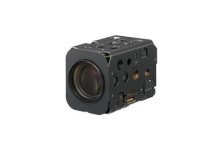
Take a look at the Sony "block" cameras. They are essentially the camera section guts of the consumer/prosumer type cameras, but designed to give digital outputs. The one I am linking to is designed for industrial purposes and has a 4:2:2 output and a 20X zoom.

http://pro.sony.com/bbsc/ssr/product-FCBEH4300/

Less than 270 g, 60 mm x 50 mm x 89 mm

"In continuing its commitment to HD technology and superb picture quality for applications that require dynamic, high-resolution images and flexibility, Sony is introducing the FCB-EH4300 Color HD Block Camera. This impressive model extends application possibilities and features full 1920 x 1080 HD resolution. The FCB-EH4300 incorporates a 1/3-type CMOS image sensor, boasting approximately 2 million effective pixels for exceptional picture quality"

Full 1920 x 1080/30p High Definition: Ideally suited for Security monitoring applications, the FCB-EH4300 block camera offers full 1920 x 1080/30p high definition video output.

Digital Output (Y/Cb/Cr 4:2:2): The digital LVDS interface provides easy access for IP and Gigabit Ethernet applications. Thanks to the digital interface, the quality of the camera's video signal does not deteriorate. This can lead to cost savings due to the direct connection to codes/systems without the need for any additional components.

Additional Wide D Modes: In addition to the Auto Wide-D mode, the FCB-EH4300 features additional modes including: Indoor, Outdoor, One-push WB, ATW, Manual and a new Sodium Vapor Lamp Mode.

The thing I'm not sure about is how easy it is to record the LVDS signal or convert it to HDMI or SDI.

It also has HD analog Component (Y/Pb/Pr)
 

Attachments

  • fcbeh4300.jpeg
    fcbeh4300.jpeg
    6.2 KB · Views: 0
Yes definitely check out SI-2K, of 3DCC in Toronto...they have a proven workflow -recording uncompressed RAW via Cineform -and this worked very well for Saw3D.

Their rig is something like 18 lbs. with lenses, and setup including external recorders.
 
Mike,

As usual, you're full if useful information :-) Looked at the specs, looks very promising, but then went I looked a bit deeper, it looks like the output, although 4:2:2 is only 8 bit? Take a look at this:

"Video Output HD: Digital: Y/Cb/Cr 4:2:2 EIA/CEA-861-B type via LVDS
(Y: 8 bit, C: 8 bit, Vsync, Hsync, Field, Clock)
HD Analog: Component (Y/Pb/Pr)
SD: VBS"

In that case, it's not really worth it going through the whole trouble to reconfiguring my system just for a new camera at just 8 bits. I also wonder what quality should I expect from the fixed lens, although if it is the same as the camcorders that share that sensor in the Sony lineup, it would be just fine. If it can do 10 bit, then I'm all over it.

As for the SI-2K, yes, on paper it is just the system I need. But I will need to spend a long time, around 4 months or so, filming the project, so renting the rig, which includes 2 cameras, lenses, mounts, adapters, the Cinedeck recorder, etc, becomes a bit too expensive, out of what I have budgeted. Buying the system is equally steep, a single SI-2K mini goes for around $22K (whoever complained of RED?) so imagine the whole enchilada. Also, using the SI-2K would force me to build a housing system that I've already priced at around $30K, so we're talking close to $100K for that system, definitely out of the question for me. Now, back to the 1/3" prosumer cameras, I presented some AVCHD tests to my buyer and they were sold on the concept and 3D quality (using the housing made by Mike) but they insisted that we would need to acquire at higher quality and eliminate all the AVCHD artifacts for final delivery. Now, going with a Nano Flash or Kipro might work in 8 bit for regular topside work, since you still improve from 4:2:0 to 4:2:2, but for the extensive post work I need to do for underwater 3D, I don't wanna use anything less than 10 bit. Those images from small sensors degrade alarmingly easy...
 
Yeah, the 8 bit is a bummer. Does converting the analog HD give you any better option?

Believe me I've been searching for this holy grail for a while.

There's a reason the R1 is such a bargain, and everybody wanted that 3K for $3K Scarlet. It's seem to be darn near impossible to get all the pieces put together.

One of the reasons I jumped on the R1 so quick is that back in 2005 I had been trying to get a decent way to take one of the first sony HD box cameras that did 24P (about $15K) and combine it with some kind of recorder so I could make a compact HD U/W system. Fast Forward had a relatively cheap SD compact harddisk recorder but no HD.

I did a fair amount of research, and found a development company that would do all the development for a compact HD disk recorder for $250K, but besides not having $250K laying around (refinanced the house during the bubble and got a divorce instead :smile:):emote_head_explode: I was afraid that even if I got some investors to put up the money, one of the majors might jump in and wipe us out of the market.

Then I walked into the RED booth at NAB2006 and it was an obvious answer for an underwater Varicam/F900 killer.

Still not that holy grail of tiny, inexpensive, and low compression, but with so much going on in this area it seems inevitable.
 
Yep, we all love 10-12bit recording but with small cameras we're often limited by the electronics inside. All it takes is the analogue to digital (ADC) converter that connects the imager chip to the DSP to work in 8bit and you've had it. Even some analogue outputs would have been sampled from an 8bit AD/DAC in those cases there's, sadly, very little one can do about it, except...

One can get surprisingly good results with 8bit pictures if:

1. You expose very carefully

and

2. In post edit 8bit video using a Quantel making sure Dynamic Bit Rounding (DBR) is switched on. Put simply DBR dithers an 8bit signal thus significantly reduces quantization artifacts/noise (banding etc). This process, IMO, massively improves 8bit pictures so much so that they can be inter-cut with 10-12bit pictures without much, if any, of an aesthetic jump. As an aside this process is so effective I am amazed that the industry didn't adopt this process universally (a licence is available), the audio world did by adopting dithering for digital recording/mixing back in the early 90's, or at least produce a plug-in for various NLE's.

See a little more info here:

Failing that. As well as the SI-2K cameras there are industrial board cameras that, depending on the project/shoot, might be suitable - though these cams often require being tethered to a computer. A friendly electronics expert maybe able to help you there.

JohnF
 
I failed to mention that with the cameras you originally mentioned the best bet is to bypass the cameras on-board recording codec thus one should record the 1080 4:2:0@8bit HDMI to a nanoFlash recorder (set to a high datarate LongGOP or I-frame mode) and then edit online using a Quantel making sure Dynamic Bit Rounding is switched on.

Do a test with the above setup/workflow. You'll probably find that when shooting 8bit the greatest image problems will be quantization noise/banding due to the graduating tones common to underwater filming! Quantel's DBR should, theoretically, improve the image dramatically.

All the best

JohnF
 
John,

thanks for the informative replies. The cameras I had planned to use, Canon HF-S10, use Canon's Digic DV3 image processor, which, despite all the research I've done, I haven't been able to find out whether it's an 8 or 10 bit processor. Given that these are consumer cameras, my bet is that the whole pipeline is 8 bit, and then as you said, I'm pretty much dead on my tracks. Yes, I can record directly out of the HDMI port to a NanoFlash for a marginal improvement in quality, but where things really get noticeably better is with the jump to 10 bits. Sadly, most of the industrial block/board cameras I've found have 8 bit pipelines as well, with the only exception being Ikegami, but those are just as expensive as the SI-2K, if not more. I've heard about Quantel DBR, you certain is not in use, even if under a different name, in other systems?
 
Back
Top