Welcome to our community

Be a part of something great, join today!

  • Hey all, just changed over the backend after 15 years I figured time to give it a bit of an update, its probably gonna be a bit weird for most of you and i am sure there is a few bugs to work out but it should kinda work the same as before... hopefully :)

Just in case you were wondering how accurate ISO 800 is on Dragon...

Thanks Evan,

I used 800 ISO on my meters throughout my little RKO film in Atlanta and was very pleased with how it processes out. I have yet to run some shots all the way through 2K DI to see how the noise is but you are correct that one's own tolerance for noise from a creative/Story standpoint and how the post work and delivery system (vimeo all the way to 2K DCP for theaters) is the true test.

Thanks again for taking the time to test and share.

Peter
 
Last edited by a moderator:
Marc, I suppose you missed the "quick and dirty" part of my opening sentence...
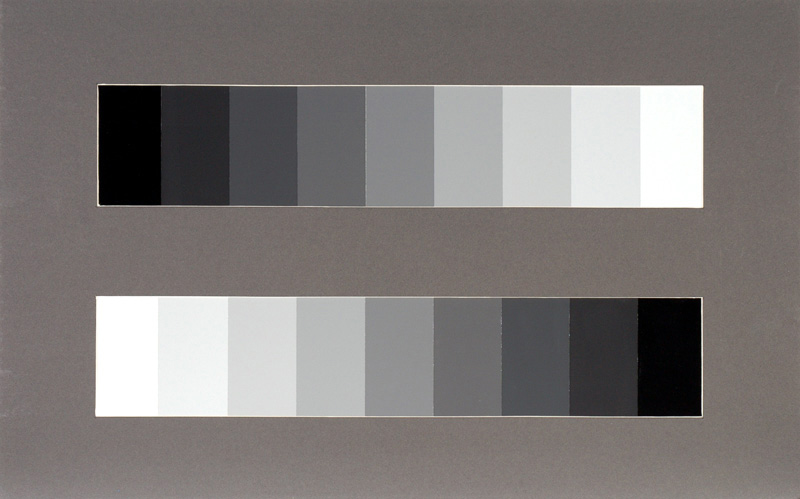
Well, is it "quick and dirty," or is it "accurate"? I'm not sure you can have both. Here's a grayscale chart that used to be very, very standard for HD cameras on TV sets, and it's $39:

GSHD.JPG


http://www.markertek.com/Tools-Test-Equipment/Video-Test-Charts/GSHD.xhtml

Talk to any experienced colorist in the world and they'll most likely tell you that this is far more useful than just a standard Kodak 18% grayscale chart or a Macbeth chart.

The point being that Red placing their "middle gray" exposure at 42 IRE appropriately compensates for any reflectivity difference, so call it 12% or late for dinner, with all three measurements in alignment you can feel confident using your incident, spot or in-camera meter for proper exposure without compensation, assuming you have tested your 12-18% grey card.
I don't think it matters as long as you have a 100% white field and a 100% black field on the chart, with various steps of gray all the way up. Seeing that on an RGB parade scope and a histogram will give you a much better understanding of how the camera is exposing and how it's going to fare in color correction, as well as where the real-world limitations are going to be.

Exposure is a wide-open subject (no pun intended), and there are so many ways to interpret virtual ISOs in digital cameras, there's no one method that's 100% foolproof. I wish that Red and Arri would provide more information as to how they rate their cameras and where these numbers come from. I don't think either camera can really do 800 reliably, not without noise issues. In a lot of cases, the noise doesn't matter, so it's not really that much of an issue.
 
Thank you Evan, this was very informative and much appreciated.
 
Back
Top