Welcome to our community

Be a part of something great, join today!

  • Hey all, just changed over the backend after 15 years I figured time to give it a bit of an update, its probably gonna be a bit weird for most of you and i am sure there is a few bugs to work out but it should kinda work the same as before... hopefully :)

Is it just me, or do other people prefer the 2:1 ratio, too?

Let's first admit that there's no right or wrong aspect ratio, they all have their aesthetic / compositional advantages and weaknesses. I love the framing in both old 1.37 Academy movies and 2.35 CinemaScope movies.

As for 16x9 (1.78 : 1), honestly, it's SO close to 1.85 that it's a bit silly to make an argument that one is more pleasing visually or more cinematic than the other. Truth is that I'd prefer that theatrical movies, if one is going to have two choices, be either 1.66 and 2.40 so that there is a more dramatic difference.

The average viewer hardly notices whether a movie today is 1.85 or 2.40, and many movies are indifferently composed for either. At least if we went to 1.66, there would be a more marked difference with 2.40.

On the other hand, if one really were pushing a "universal" single aspect ratio, than 2:1 isn't a bad choice. It's clearly widescreen... but not extremely wide. As for sensors, I agree that a 2:1 sensor isn't such a bad idea in terms of handling most widescreen aspect ratios with minimal cropping. On the other hand, if you are a fan of anamorphic photography, there is an argument for 4x3 sensors...

I also like the idea of 2:1 TV monitors, again as a way of showing both 16x9, 1.85, and 2.40 movies, so that the 2.40 movie is not too reduced in size due to letterboxing.
 
Not quite.

Essentially all motion pictures today that are shot on film are shot on either 3 perf (which has a "native" 1.77:1, or 16x9 format) or 4 perf. In either case there is more picture area available than the 1.85 area. The DI is almost always rendered for 1.33 full frame (in the case of 4 perf origination) or 16x9 (in the case of 3 perf). Other formats - for instance, 1.85 - are created from those files. So for the HD video release (16x9), there is no cropping, even if the theatrical version is 1.85. The 1.85 version would be created when making both the DI negative and the digital cinema version. Pan/scan 1.33 versions are created electronically from the same original files, or indirectly from the HD video version.

None of this, of course, applies in the case of 2.40 material, in which case the theatrical version is an anamorphic film release, and the HD version is letterboxed.

Yeah, I didn't really explain what I meant. I knew often there wasn't really a "crop" since they "printed" both the 16X9 and 1.85 from the same neg. What I mostly meant, was that in 16X9 "TV", they never had a few lines of black to crop to 1.85, even if the theatrical intent was 1.85. You see 1.85 on the DVD jacket, but it's always just 16X9.

I like the idea of 2:1, but I just wonder how you would deliver it to TV. I guess it could just be a 16X9 with black bars as how 2.35 is done. Seems like it neither fish nor foul as longs as we have 4X3 or 16X9 TVs. It opens up a can of worms, but without the cache of 2.35.

Chris
 
... The average viewer hardly notices whether a movie today is 1.85 or 2.40, and many movies are indifferently composed for either. At least if we went to 1.66, there would be a more marked difference with 2.40.....

But doesn't the issue come up with 16X9 TVs quickly becoming the norm? Many people adopt 16X9 thinking they will no longer have to deal with letter box, then they put in a 2.40 BR. To see black bars on a 16X9, I think it drives some people nuts.

(don't get me wrong, I love 2.40)

Chris
 
Yeah, I didn't really explain what I meant. I knew often there wasn't really a "crop" since they "printed" both the 16X9 and 1.85 from the same neg. What I mostly meant, was that in 16X9 "TV", they never had a few lines of black to crop to 1.85, even if the theatrical intent was 1.85. You see 1.85 on the DVD jacket, but it's always just 16X9.
Chris

The black bars of 1.85 on a 16X9 TV is usually lost in the overscan. Would have been nice if 2:1 was used for HDTV but 16X9 was already firmly established in the SD world, especially in much of Europe which went SD widescreen long before most Americans had ever seen HD.

16X9 (1.77) was a nice fit between the American 1.85 and European 1.66 theatrical conventions.

Vantage Film is teasing anamorphic of 1.3x with no actual details. A new set of Hawks that generate a slight squeeze down to a 16X9 image? The end result being 2.30. That would be nice, and expensive.
 
Vantage Film is teasing anamorphic of 1.3x with no actual details. A new set of Hawks that generate a slight squeeze down to a 16X9 image? The end result being 2.30. That would be nice, and expensive.

i shot with them...you are correct, they are using the 16x9 area instead of 4:3.

they are rock solid and have a beautiful image,but the ana look feels reduced.
and right now you have to use their monitors for framing.
 
I'm sorry 2:1 is a bastard format.

The future of all content distribution is the web. Whether it be in a little window or streamed from a set top box computer in your living room. Just like computer monitors come in all shapes and sizes, web content knows no allegiance to any aspect ratio and neither will future distributors or viewers.

Every time I do a project on Red that I care about I've ended up shooting 2:1.

IBloom
 
The only reason "standards" ever existed was to ensure a consistent width for cameras that pulled physical film through a gate. Those days are long over.

There's no reason a filmmaker should be limited to certain aspects for their content just as a painter has the freedom to choose any size canvas for their art. I've always thought 2:1 to be a fantastic ratio - 16:9 just isn't quite wide enough.
 
The only reason "standards" ever existed was to ensure a consistent width for cameras that pulled physical film through a gate. Those days are long over.

You're ignoring film projection in theaters, which also need standards -- in fact, the standards for aspect ratios are primarily related to distribution formats, not due to limitations in the film camera (and the days of pulling film through a camera are hardly "long over"). For decades, the aspect ratio used in framing with a movie camera was not directly tied to the shape of the physical negative -- after all, the 4-perf 35mm negative is 4x3 and most 35mm projection has been widescreen for fifty years! So the physical film in the camera gate has actually NOT been the reason for aspect ratio standards, it's been due to presentation formats both theatrical and for television.

Despite what everyone here is saying, there are still strong reasons to work within standard aspect ratios used in release formats -- in fact, many distributors require it when making deliverables. Just try and shoot a narrative movie in 4x3 and get it distributed that way worldwide in movie theaters -- it's extremely rare. Or try a 3:1 aspect ratio and see how many distributors would be happy to make scope prints with a 3:1 hard matte in them, or exhibitors who would be happy to show a print that way.

So unless you are only shooting for web content, I seriously recommend figuring out the aspect ratio requirements that a likely distributor is going to ask for.
 
i like 2.33:1 (red 4.5k)

i like 2.33:1 (red 4.5k)

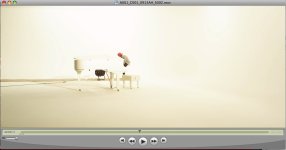
after reading all this i will stick to my earlier comment. we shot a music video today using the 4.5k format in build 21. when i made the pro res files and watched the first one, i was so excited when the qt viewer was built in the 2.33 aspect ratio. it is very very cinematic, i would strongly suggest everyone that owns this camera to upgrade to 21, even if it is for a few hours and go outside and shoot something. it is very cool.

also,we shot come 2:1 120fps and 3k 2:1 60 fps and i put all of it in a fcp time line and it is not so jarring when the content cuts between the formats.

never thought much of the discussions about 4.5k but now that i am rocking it...i love it so much (as my two year old says).

jim..please make your screens 2.33:1.
 

Attachments

  • Picture 24.jpg
    Picture 24.jpg
    77.6 KB · Views: 0
When?

When?

When we make displays we are going to make them 2:1. :-)

Jim

Jim,

When do you think these displays will be made/tested and ready for purchase? Any idea on specs, resolution, price and 26"/30"/etc..?
 
You're ignoring film projection in theaters, which also need standards
Fair enough; I admit that's a big oversight. When you get used to digital projection, you forget that there's another way of doing it. :) Guess we'll have to wait a little while longer...

That being said, anything can be letterboxxed to the desired ratio. The real point of my post was that a director should find the right aspect that conveys the story best and go with it, regardless of limitations of the projection device. We have the ability to do that freely, and we should.
 
3:1 is cool, too.

3:1 is cool, too.

A 2x anamorphic element in front of a 24mm x 36mm digital sensor is kinda cool. I can't actually make mine achieve focus, but I like the shape of the frame. ;-)

Makes me think the 617 Monstro is going to be exceptionally cool. Though the idea of pulling focus on Digital APO Sironar or Super Symmar XL large format lenses doesn't appeal to me all that much. Heh...

http://www.flickr.com/photos/r_jackson/3919772130/

3919772130_68c8c8f41b_b.jpg
 
When we make displays we are going to make them 2:1. :-)

Jim

I love it!!! Not 'if', but 'when'!!! Please can we get a proper technology like FED or SED so that we can see a proper contrast ratio with proper black levels that your lovely cameras produce ;) :drool5:

Si
 
That being said, anything can be letterboxxed to the desired ratio.

I've been shooting 16:9 and framing for 2:35 letterboxing. I can reposition vertically in post if I decide to later. That could be cropped for final output or delivered 16:9 with black bars. Or just delivered 16:9 from the original footage though I doubt I'd like the framing.

I'm not really sure why I'd shoot 2:1 in camera when I can crop it to 2:1 later. Faster frame rates is the only reason I've shot 2:1.

Not sure about 4.5K yet. Need to test it.
 
I personally got to love the 2:1 aspect ratio, as I was "forced" to use it as a recording format, when 16:9 was not yet implemented in the camera, and also when you use 120fps.

There is something interesting about the 1:1 for each eye concept, that I really like. This format somehow calms me down, sets the right cinema-mood from the first seconds.

I was never a fan of 16:9, which seems to me a glorious bastard. Its neither 4:3 like the "old day" framing, neither 1:1,88 "academy". For me, it is something in between, that does not know what it is, what it wants, born out of technical necessities.

For 2:1 I feel, that it is just wide enough to give me that cinema/special/magic/... feeling, although I understand the problem at the distribution part. I believe however, that once the mass of cinemas enter the digital realm, there might be much more tolerance towards such Storaro/Jannard formats.

For going wider, I am still undecided between cropping super35mm to get to 1:2,35 or using anamorphics. James Cameron surely knows how to use the super35mm format. On the other hand HAWK 2x anamorphics of the latest generation are just incredible.

I guess, that this is a very tough choice for those, who want to get to 1:2.35, as both ways give a quite different feel of the picture.

I also tried the 1.3x anamorphics from HAWK. On its own, it is a briliant idea, as you can use a full 4:3 chip to record a 16:9 picture, and from a 16:9 chip, like the RED ONE, you get 1:2.35 anamorphic.

Aesthetically, I am a little torn, though. The reason to go for anamorphics are when you go for a certain look (like oval off-focus highlights, etc.), and as with 16:9, the 1.3x anamorphic is somehow "not enough". Of course, this is only my personal taste...
If I would shoot on super16mm, I surely would want the 1.3x Hawks on the camera.

---

A more "philosophical" point:

Technically, you should always shoot the as much as the sensor gives you, like Joel pointed out.

On the other hand, I find that committing to a format and sticking to it, helps to bring out better results, because you are thinking more about it, during the shooting, rather than relying on the "fix it in post" syndrome. I tend to put out more, when I know all is at stake, and there is not necessarily everything changeable afterwards.

Is it only me?
 
A very interesting thread!
I think we should be very happy having the choice of all this different aspect ratios and they are still supported in the film business. Every aspect ratio have its place in the vocabulary of a visual artist. And there are a lot of movies aspect ratio like 2:1 and Scope wouldn´t make sense (I´m just thinking of Woody Allen). Not every story is written for widescreen. Just my 2cents.
Personally I prefer the new 4,5K 1:2,33 over the 2:1, but if there would be only one possible aspect ratio with R1, it should stay 2:1. It`s just too painful to cut on both sides from 1: 2,33 sensor to get 1.85 or 16X9. It´s less brutal to cut from 2:1 on top and bottom to get a 1:2,35 or 2,39.
But wow, now I have scope without cutting! Thanks for this gift,

Marc
 
Storaro/Jannard

Storaro/Jannard

(snip) For 2:1 I feel, that it is just wide enough to give me that cinema/special/magic/... feeling, although I understand the problem at the distribution part. I believe however, that once the mass of cinemas enter the digital realm, there might be much more tolerance against such Storaro/Jannard formats.

Despite the odd phraseology of the paragraph, I love the mash-up that labels the 2:1 aspect ratio as the Storaro/Jannard format.:sifone:

I have added it to my glossary.

Cheers - #19
 
On the other hand, I find that committing to a format and sticking to it, helps to bring out better results, because you are thinking more about it, during the shooting, rather than relying on the "fix it in post" syndrome. I tend to put out more, when I know all is at stake, and there is not necessarily everything changeable afterwards.

Is it only me?

I've turned to masking the monitors so I'm seeing 2.35 on set. I'm trying to get the framing right for the final output. But actors move, miss marks and other weird stuff can happen so it's nice to have the option of reframing in post. That doesn't make me less committed to getting it perfect on set.

1.618034 is the Golden Mean Ratio... probably closest to 16:9 I beleive.
 
Back
Top