Welcome to our community

Be a part of something great, join today!

  • Hey all, just changed over the backend after 15 years I figured time to give it a bit of an update, its probably gonna be a bit weird for most of you and i am sure there is a few bugs to work out but it should kinda work the same as before... hopefully :)

International Flight Advice

BrendanLeahy

Well-known member
Joined
Sep 3, 2012
Messages
1,068
Reaction score
0
Points
36
Hey REDusers!

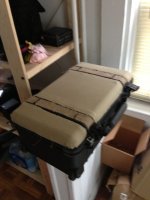
I'm flying out to shoot in the Netherlands next week, and my airline (SAS) has strict carry-on policies. I booked their Economy Plus, which allows me to bring two bags up to 18lbs/8kg onboard. However, just my pelican case with the Scarlet, monitor, and SSDs in it weighs 12kgs... I also have lenses, a backup DSLR body, laptop, and some v-mount batteries I want to bring, but I'm really stressed on how to divide everything up. Any advice from the pro travelers?
 
My case is 16kg, usually they dont bother to check the weight, if they do I split the battery in an other carry on bag.
The case is a Pelicase 1550 and fits All planes I ve taken exempt of the
ATR72.
 
Traveled with as many airlines as I can't remember, all over the world, never give them a chance to argue on size and or weight of my CAMERA BAG, which by regulation you are allow to have one Camera Bag, no weight or size been specified any were.

My Huge bag in average weigh 20+KG each, I always carry two, a Back Pack, and a wheeled Think Thank case.

But in some local flights with very small Jets, I only was allowed one, despite of size, my camera bag.
 
Airlines will never ask you to check in your camera equipment. Too much liabiity.
Smile and be nice to the stewardesses and, like Martin said, 'make it look light'.

I fly frequently fully loaded with a big carry on bag that weighs around 20Kg. I never get stopped, and I've even had instances where it's been too big for the overhead cabins so it went into the crew's own luggage locker in the catering area. Be nice to everyone and they'll be nice back. Everything will be fine.
 
I flew half way around the world with a backpack loaded up with my camera and lenses. It weighed a ton. I just kept it on my back and acted like it wasn't heavy and no one said anything.
 
Hey everyone, just wanted to say thank you so much for the advice - I'll definitely be nice, make it look light, and see what happens!

Random side question: I should be fine using AC power overseas so long as I just get a travel adapter - don't need anything fancy?
 
Brendan,

You should really list all your equipment on a carnet and have it signed into and out of the countries you are visiting. it's easy to get nowadays and could save you a lot of hassle.

Your chargers and pretty much all electronics will list the voltages they can accept. Then just have the right travel adapter and you'll be fine.

I've only had them check my carry on weight once in many, many flights. You should be ok if you smile a lot as mentioned above. Enjoy the trip, it's one of the best parts of our profession I think.

Bob
 
Last time I traveled from Canada to US, I picked up a Carnet from the customs agent and they said it would be useless without all my receipts that show I paid duties for all items. I didn't have them with me at the airport and thankfully wasn't stopped on my return but going forward, I'll make sure I have a copy of all that paperwork.
 
customs form 4457 is used instead of a carnet. You go to the customs section of the airport and a customs agent inspects the gear you're bringing, stamps the form and you good to go. Carnets are more for goods that are being transported in support of sales. The 4457 form is for personal property.
 
A carnet isn't necessary and it makes you look to "pro" which can open up a lot of other questions. I have registered my gear with US customs by going to the customs office with the gear and any receipts (if they ask), which does help with returning to the US. It doesn't necessarily help in a foreign country, but I've discovered that just saying "I have papers for this" and waving something official in their face usually will satisfy all but the most by-the-rule-book customs agent.

As for the flight, Ketch is correct and 99% of the time I have no problem with a 50+lb roller bag and a backpack. The 1% exception is Australia where their scanning conveyor actually weighs the bags as they go through. Long story, but here's my advice...

1. Ditch the Pelican. It attracts attention and it in itself weighs in. Get a nice Think Tank or other roller bag that doesn't say camera gear all over it.

Then, 2. if it looks dicy at the security check in, open the bag, and take out your gear, piece by piece. How I got through in Sydney was one tray, one camera, another tray, a lens, third tray, hard drives... you get the idea. I think I had about 7 or 8 trays and they won't bother adding up the weight. Put the bag through last and then repack it all. You'll hold up the line, but you'll get through.

3. All your batteries should go in a photo vest. Again, put the batteries in a tray by themselves and then the vest in another tray. I travel with two Red Bricks. I was informed in Japan that I couldn't put those in my checked bag, but that I could carry them on, which is what I've done ever since. In Mexico, I was told I needed to pack them. I pulled out the FAA regulation on L-Ion batteries but they didn't care. They told me to go back to the counter to check them. When I found someone at the counter that would actually help he walked me back to the security point and told them to let the batteries through.

Bottom line - Give yourself plenty of time to get through should you need to explain anything or they send you back to the counter.

Good luck and safe travels.
 
Airlines will never ask you to check in your camera equipment. Too much liabiity.
Smile and be nice to the stewardesses and, like Martin said, 'make it look light'.
In Europe and oz they can and do check your bag if it is over the carry on limit. If the check-in clerk thinks the equipment is poorly packed they will get you to sign a disclaimer.
There is an international agreement for liability claims on lost bags, it used to be based not on the value of contents, but the weight of the bag!. Now it is a set figure for international flights of around $1500 per bag. You can't sue an airline for the replacement cost of the contents of your bag unless you have evidence they were reckless ect.

In Melbourne they will weight your hand luggage as you enter airside.
customs form 4457 is used instead of a carnet. You go to the customs section of the airport and a customs agent inspects the gear you're bringing, stamps the form and you good to go. Carnets are more for goods that are being transported in support of sales. The 4457 form is for personal property
Whilst a local US form may satisfy USA customs on your return, it is not the proper document to import and export equipment into other countries.
Many countries are part of the carnet system. This pro stills photographer prefers a carnet.. http://webcache.googleusercontent.c...aphers&cd=1&hl=en&ct=clnk&gl=au&client=safari

The last time I tried to get kit through on a "list" instead of a carnet was Iceland, I was lambasted by customs who said I should have got a carnet, they were not interested in the list I had stamped in UK customs.


Experience is proving that if you are travelling with numerous camera cases you are more likely to be stopped if you try and walk past customs, than if you look like an amateur still photographer with a single backpack.

For those who prefer to try and get away with it, one day you may come unstuck, and it will be your fault that the shoot is delayed or cancelled.
At the very least you should pass this liability onto production before you travel, or better still simply pass on the cost of a carnet.

Customs have more power than police, they can confiscate your equipment and delay your travel.

Your travel insurance generally does not cover any losses incurred by customs action; "exclusions.. Loss or damage caused by detention, confiscation, or destruction by customs;"

Customs regulations make a distinction between "personal effects" and "professional equipment" . Form 4457 clearly states it is for "personal effects" and carnets we know are for "professional equipment".
(UK once had a category of "tools of trade" which was dealt with in same way as personal effects. "Tools of trade" is a handy expression to have up your sleeve if the customs paperwork has gone awry and you own the kit.)


Importing kit into usa as a non US citizen both usa and canada customs and immigration do not need much of an excuse to be very vigorous in tracking any irregularity, cross referencing work visas ect.

Judging by comments here and on other forums, understandably, they are little easier on United States citizens than foreign camera crew.

My point in general is that as professional cameramen, due regard effort and research should be given to customs, especially in foreign countries.


Mike Brennan
 
I regularly travel with a carry-on bag that is 22kg. One trick is bring a plastic bag, get a trolly, put the epic/scarlet body in the bag, leave it on the cart, and put it back in the pelican after. I still usually am over weight, so being nice and asking for the supervisor, you can usually say, heh look, it's 40k worth of Camera gear, my insurance does not let me check it. Can you please... Normally they will say ok. I've done 50+ flights, and always got my bag on with minimal issues.

I must say, I don't advertise it's heavy! Start pumping weights, make it look light .
 
A carnet isn't necessary and it makes you look to "pro" which can open up a lot of other questions. I have registered my gear with US customs by going to the customs office with the gear and any receipts (if they ask), which does help with returning to the US. It doesn't necessarily help in a foreign country, but I've discovered that just saying "I have papers for this" and waving something official in their face usually will satisfy all but the most by-the-rule-book customs agent.

As for the flight, Ketch is correct and 99% of the time I have no problem with a 50+lb roller bag and a backpack. The 1% exception is Australia where their scanning conveyor actually weighs the bags as they go through. Long story, but here's my advice...

1. Ditch the Pelican. It attracts attention and it in itself weighs in. Get a nice Think Tank or other roller bag that doesn't say camera gear all over it.

Then, 2. if it looks dicy at the security check in, open the bag, and take out your gear, piece by piece. How I got through in Sydney was one tray, one camera, another tray, a lens, third tray, hard drives... you get the idea. I think I had about 7 or 8 trays and they won't bother adding up the weight. Put the bag through last and then repack it all. You'll hold up the line, but you'll get through.

3. All your batteries should go in a photo vest. Again, put the batteries in a tray by themselves and then the vest in another tray. I travel with two Red Bricks. I was informed in Japan that I couldn't put those in my checked bag, but that I could carry them on, which is what I've done ever since. In Mexico, I was told I needed to pack them. I pulled out the FAA regulation on L-Ion batteries but they didn't care. They told me to go back to the counter to check them. When I found someone at the counter that would actually help he walked me back to the security point and told them to let the batteries through.

Bottom line - Give yourself plenty of time to get through should you need to explain anything or they send you back to the counter.

Good luck and safe travels.

I would agree with Ron, making yourself look like a pro draws unwanted attention, I favour f-stop gear for that reason. http://fstopgear.com/product/mountain/loka#.UfaPPLTMr6s this will fit in carry-on size checks. Travelling through Africa, I look more like I'm going to climb Kilimanjaro then shooting films. Even with proper permits, looking like a pro will draw unwanted attention from corrupt people. I sometime strap trekking poles to my pack to sell the idea.

Even in Holland, they may want a film permit, and deny you entry.
 
Back
Top