Welcome to our community

Be a part of something great, join today!

  • Hey all, just changed over the backend after 15 years I figured time to give it a bit of an update, its probably gonna be a bit weird for most of you and i am sure there is a few bugs to work out but it should kinda work the same as before... hopefully :)

I need some help from the expert for an upcoming air to air shoot

Brice LeCarre

Well-known member
Joined
Dec 12, 2015
Messages
118
Reaction score
0
Points
0
Location
Gilbert AZ
Hi guys,
I am going to be shooting two air to air shoot for the CAF (Commemorative Air Force) chasing a B17, a B25 and a C47 (DC3) from a C45 (light twin engine plane). There is a 2 foot by 2 foot hatch which can be removed and give a pretty good 3/4 rear view for framing.
I am thinking of having the CAF renting or getting a Move Pro for stabilization but I need to shoot with a long lens. Either a Canon F4 L 300mm or a Canon F2.8 L 70-200mm.
Here is my setup
Scarlet W
Red Brick ( I am concern about the bulkiness)
Side DSMC2 handle (although I could remove it)
Either lens mentioned above.

Two questions
1-would this be too bulky to fit in the cage
2-could it be balanced

Thanks guys
 
I know I'm not responding to your questions but here are a few thoughts:

1) Stabilizing overall - Not sure you'll be able to stabilize that length of lens consistently in even a slightly moving vehicle. you will be in a machine that is rattling around like crazy.
2) Vertical Axis stabilizing - how are you planning on achieving? I think you'd have to go with a mounted arm like Flowcine Black Arm....if that can be set up properly in your scenario. Note that it's not that good for your body and can be unsafe to use something like a ready rig or easy rig while sitting.
3) Wind - it'll catch your rig differently, thinking about any air resistance can be a difficult tastk
4) G-Forces - you'll be putting extra "weight" on the motor during banks or rolls because of your increased G-Forces. Between wind and g-forces during turns, I was surprised at how quickly my gimbals have failed when shooting other moving objects.
5) SAFETY - boy this is a big one. I'm sure you've got lots of plans but please make sure things are tied down and you are in no way fully attached to this rig. You don't want to hurt yourself, the crew of your craft, the crew of other crafts, or any innocent bystander below you should something fall off/out.

All of this leads me to say....can you get a Shotover going? That is really what you'd want for something like this.
 
thanks Brendan, all are great points.

1) I don't have much choice because for these shoots require airplanes to be 500 ft apart and the producers want tight shots (I know why doing things the easy way...). We are going to shoot in the morning to take advantage of the calmer air.

2) No go for the Flowcine Black Arm. The best I can do is to is maybe rig some 3 inch pvc to allow me to attach the Movi to a handful of bungee cords.

3) luckily the rig will be totally inside and I won't be attached to it.

4) These planes are big gentle planes and carry a lot of inertia so the maneuvers are very deliberate and Gs kept as low as possible. But, some sudden turbulence could potentially throw me around.

5)Safety. You are right on this is the most important. Everybody on the shoot is a professional pilot (including me). We will preflight the shots on the ground and be inconstant radio contact during the shoot.

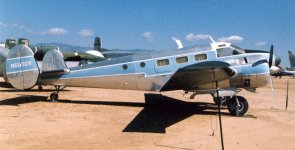
This is the picture of the chase airplane. You can see the small the outline of the hatch that can be removed.


PS. Excuse my ignorance but what do you call a Shotover?
 

Attachments

  • B18 43-50222 d1.jpg
    B18 43-50222 d1.jpg
    83.2 KB · Views: 0
thanks Brendan, all are great points.

1) I don't have much choice because for these shoots require airplanes to be 500 ft apart and the producers want tight shots (I know why doing things the easy way...). We are going to shoot in the morning to take advantage of the calmer air.

2) No go for the Flowcine Black Arm. The best I can do is to is maybe rig some 3 inch pvc to allow me to attach the Movi to a handful of bungee cords.

3) luckily the rig will be totally inside and I won't be attached to it.

4) These planes are big gentle planes and carry a lot of inertia so the maneuvers are very deliberate and Gs kept as low as possible. But, some sudden turbulence could potentially throw me around.

5)Safety. You are right on this is the most important. Everybody on the shoot is a professional pilot (including me). We will preflight the shots on the ground and be inconstant radio contact during the shoot.

This is the picture of the chase airplane. You can see the small the outline of the hatch that can be removed.


PS. Excuse my ignorance but what do you call a Shotover?

All sounds good, totally hear you.

A shotover is a type of specialty gimbal that is used usually on a vehicle crane rig or on the nose of aerials. They're really amazing, but also very $$$
Shotover-U1g_2-640x360.jpg

ShotoverF1_ALPINE_AERIALS_Austria.jpg
 
Have you examined the Kenyon 4x4 or 6x6 gyros as a rental option? - Handheld, the combination can become heavy and you may struggle and grunt depending upon your fitness.

http://www.ken-lab.com/rentals.html


For what it is worth, I shot this air-to-air using a single KS8 gyro handheld from a Maule M5 with a 2/3" sensor camera coupled to a 50mm-500mm Sigma zoom. In 35mm sensor camera terms, that is like using a approx 100mm-1000mm. There was no stabilisation on the roll axis and pitch ( tilt ) and yaw ( pan ).The gyro will fight you if you follow your subject aggressively. I feel I would have had an easier time with the new generation of 4x4 gyros in a smaller size, say KS6x6. The 4x4 family of gyros may occupy less workspace than a motorised gymbal orientation rig.

https://youtu.be/yCIFj1NVR08

Unfortunately I don't have the wit to make this clip viewable within the page so you will have to copy/paste the link.

My framing and follows in the preceding clip could have been better. I was actually holding the camera at right-angles to the way I was seated and using the LCD screen on a Noga Arm to sight and view with so it was rather awkard and I had not practiced anywhere as much as I should have.


Looking at the hatch you will be working through you may have similar workspace limitations to those I had in the Maule if all the cabin seating remains in place in the aircraft and you are required to be strapped in.


There will be better advice from others here.
 
Last edited:
Here is another example clip, shot with a KS6x6 gyro. With weight of the gyro plus camera, handholding can enable you to "float" the camera due to inertia as this clip demonstrates. If the aircraft starts some heavy turns then you may have to use a cushion or the aircraft seat under the camera/gyro combination for support or for rest periods. There may be some substantial structure within the aircraft overhead you can safely attach a couple of bungee cords to to relieve the weight. For safety, you also should have a stout lanyard attached to prevent your rig from exiting the aircraft or flying around inside and causing injury if things get lively for any reason.

https://www.youtube.com/watch?v=EXnvuA52Uzg
 
Thanks Robert. This seems interesting. I'll investigate further for sure. My rig weights about 15 lb. plus the gyro would be very heavy. One of the video shows the use of an easy rig vest. That my help too.
 
Again, please heed the more valid advice of others over my own comments and suggestions.

I don't think an easy-rig vest may be any use in a confined workspace of a C35 aircraft cabin, even if it is stripped out. Curvature in the wall and roof of the aircraft cabin may prevent you from working close to the hatch opening if you wear an easy-rig.

If it is able to conveniently fit in the workspace at all, likely you may have to sit crosslegged on the floor. That brings other issues like whether the organisation will allow you to work within the aircraft at an open hatch unrestrained. By the time you reach the location, you might already be crippled by awkward posture and get the shakes when you try to operate with tight precision.

You may find a small cameraman's beanbag cushion or thick folded blanket on top of a half-flat wheelbarrow innertube resting on the floor helpful as a rest point or even a support for the gyro/camera combination. Two radial engines on firm mounts may vibrate the airframe. I think with the C35, a pair of two-blade propellors may induce something in the ballpark of 40Hz-50Hz which may play nasty with the frame rate and induce a sawtooth rolling shutter artifact.

I may be barking at shadows as I do not know the behaviour of the RED cam in these conditions. As much as possible, avoid having the camera in direct contact with the airframe. Hopefully the inner-tube and blanket may dampen that vibration if you are forced to use a rest whilst shooting. Needless to say, any of these things will need to be restrained from exiting the aircraft.

The aircraft interior may be much smaller than it looks from the outside. If you have the time to experiment, even with shooting from a car or minibus with opened side door, my personal preference would be to do so. I would also prefer to keep things as simple as possible, take as much weight off the camera as you can yet keep it operating, a monitor of course being a must have.

Mount the camera on a bridgeplate and rods which has a lens support and its own tripod base, then mount this onto a Kenyon KS4x4. The gyros have a little plate on top with a standard tripod threaded stud with a little tommybar to turn it. You can get quick mount plates for them.

The rods should enable you to find a sweet balance point. The KS4x4 will not be as heavy as a KS6x6 and probably easier to force if you have a sudden unexpected follow to do. The kick from the gyros if you have to overpower them won't be as aggressive as with the larger ones.
The KS4x4 Weighs 4.8 lbs. (2.177 kg) Outside dimensions=6.03"(15.316 cm)6.03"(15.316cm). I understand that if there is no local rental vendor near you that Kenyon will rent to you.

The KS4x4 will have a coiled power lead which plugs into a combined battery/inverter power supply. You must use the Kenyon inverter and no other power substitute. Even if the plugs and sockets look the same as some other power supplies, the Kenyon gyros run off a 400Hz AC power frequency. Using DC into the motors will fry them.

If you are practicing in a car or van beforehand, try using a focus assist window if it is available on the EPIC as a small central tile within the monitor image. On the SI2K, I use this as a tracking aid. It can help reduce overshoot and fallback in follows as movements off-subject are more apparent and detectable earlier.

Good luck with it. - A pity I am not there as I would be in pig-heaven on that adventure
 
Last edited:
Two Kenyon's mounted in opposing orientation with a mount from Blue Sky Aerials in the Bay Area, or the Kenyon X series. Both options can be rented. You will get very frustrated with a gimbal. I would avoid that, as wind will cause it to go bonkers. With the Kenyon's, you're still supporting the camera, so wind will have negligible affect. 70-200 with IS is doable, but 300 is going to be tough. That's when you need the shotover... you mentioned 500ft separation in your formation. At 500ft the 70-200 is probably overkill. 24-70 should be enough if you're looking to capture the whole aircraft. Shoot at a faster shutter speed/lower angle; however, going above 1/250 will cause props to wagon wheel at low rpm. Warp stabilizer is going to be your friend.
 
Last edited:
Especially when there are budget constrains, I have found the Tyler Mini-Gyro to be a good tool to work with.

Here is a snapshot of the unit / specs:
http://www.tylermount.com/minigyro.html

And a youtube of Nelson Tyler demonstrating:
https://www.youtube.com/watch?v=7-zKvWsS_3s

I shot this using the Mini-Gyro from a Bell JetRanger III with the door off over the ocean:
https://vimeo.com/214581921

Very windy that day - we were getting knocked around a bit.
(Note flag direction on sail is not necessarily in the direction of travel)

The "pogo" stick that the gyros sit on is quite short. For your application, you may want to build a platform of sorts - maybe apple boxes strapped together with sand bags to ballast - bringing the lens up to the proper height for the window. Give yourself enough platform space so you could move it around to reframe.

The Bell has local power that is easy to hook up into. On the plane, you may need a block battery. I've used an Anton Bauer VCLX with 24V.

Good luck!
 
Again, please heed the more valid advice of others over my own comments and suggestions.

I don't think an easy-rig vest may be any use in a confined workspace of a C35 aircraft cabin, even if it is stripped out. Curvature in the wall and roof of the aircraft cabin may prevent you from working close to the hatch opening if you wear an easy-rig.

If it is able to conveniently fit in the workspace at all, likely you may have to sit crosslegged on the floor. That brings other issues like whether the organisation will allow you to work within the aircraft at an open hatch unrestrained. By the time you reach the location, you might already be crippled by awkward posture and get the shakes when you try to operate with tight precision.

You may find a small cameraman's beanbag cushion or thick folded blanket on top of a half-flat wheelbarrow innertube resting on the floor helpful as a rest point or even a support for the gyro/camera combination. Two radial engines on firm mounts may vibrate the airframe. I think with the C35, a pair of two-blade propellors may induce something in the ballpark of 40Hz-50Hz which may play nasty with the frame rate and induce a sawtooth rolling shutter artifact.

I may be barking at shadows as I do not know the behaviour of the RED cam in these conditions. As much as possible, avoid having the camera in direct contact with the airframe. Hopefully the inner-tube and blanket may dampen that vibration if you are forced to use a rest whilst shooting. Needless to say, any of these things will need to be restrained from exiting the aircraft.

The aircraft interior may be much smaller than it looks from the outside. If you have the time to experiment, even with shooting from a car or minibus with opened side door, my personal preference would be to do so. I would also prefer to keep things as simple as possible, take as much weight off the camera as you can yet keep it operating, a monitor of course being a must have.

Mount the camera on a bridgeplate and rods which has a lens support and its own tripod base, then mount this onto a Kenyon KS4x4. The gyros have a little plate on top with a standard tripod threaded stud with a little tommybar to turn it. You can get quick mount plates for them.

The rods should enable you to find a sweet balance point. The KS4x4 will not be as heavy as a KS6x6 and probably easier to force if you have a sudden unexpected follow to do. The kick from the gyros if you have to overpower them won't be as aggressive as with the larger ones.
The KS4x4 Weighs 4.8 lbs. (2.177 kg) Outside dimensions=6.03"(15.316 cm)6.03"(15.316cm). I understand that if there is no local rental vendor near you that Kenyon will rent to you.

The KS4x4 will have a coiled power lead which plugs into a combined battery/inverter power supply. You must use the Kenyon inverter and no other power substitute. Even if the plugs and sockets look the same as some other power supplies, the Kenyon gyros run off a 400Hz AC power frequency. Using DC into the motors will fry them.

If you are practicing in a car or van beforehand, try using a focus assist window if it is available on the EPIC as a small central tile within the monitor image. On the SI2K, I use this as a tracking aid. It can help reduce overshoot and fallback in follows as movements off-subject are more apparent and detectable earlier.

Good luck with it. - A pity I am not there as I would be in pig-heaven on that adventure

Thanks Robert. More great advice indeed.
I went in the C45 and there is not much room. I took some measurement and I have a plan. We will remove one seat from the cabin and build out of 2.5 inch PVC a rig which will support the red with adjustable extenders. You're right the camera can't touch the frame.
The shoot got pushed back at least three months. After a meeting with the crews it became logical to wait and to test the rig first.
As you know, this is dangerous stuff and it needs to be absolutely scripted and everyone has to be on the same page. I am a pilot too so I understand airplanes and how they move in 3D but I have a lot of unanswered questions about the workflow once I am up in the air. it would have been a disaster to proceed.
 
Especially when there are budget constrains, I have found the Tyler Mini-Gyro to be a good tool to work with.

Here is a snapshot of the unit / specs:
http://www.tylermount.com/minigyro.html

And a youtube of Nelson Tyler demonstrating:
https://www.youtube.com/watch?v=7-zKvWsS_3s

I shot this using the Mini-Gyro from a Bell JetRanger III with the door off over the ocean:
https://vimeo.com/214581921

Very windy that day - we were getting knocked around a bit.
(Note flag direction on sail is not necessarily in the direction of travel)

The "pogo" stick that the gyros sit on is quite short. For your application, you may want to build a platform of sorts - maybe apple boxes strapped together with sand bags to ballast - bringing the lens up to the proper height for the window. Give yourself enough platform space so you could move it around to reframe.

The Bell has local power that is easy to hook up into. On the plane, you may need a block battery. I've used an Anton Bauer VCLX with 24V.

Good luck!

Cool subject!

Interesting setup too. Something to keep in mind.

Thanks Brian
 
I commend you for an eminently sensible decision when it comes to aircraft - "old and bold but no old-bold" and all that.

The PVC should do it for you and be easy to prototype. I am assuming you may be suspending the camera on a bungee web with gyros below. Suspension is one method Kenyon has described. I doubt you will have springiness or compliance with the wide diameter PVC but if you do, it may be feasable to inject that yellow foam they use for surfboard cores and I think Grob Tutor wings into capped tubes, so that it sets under a little pressure to preload the PVC tubes and stiffen them. I doubt you will need to.

With one or more seat pairs removed, you may have workspace to use an orientating rig like a Ronin but my personal preference would be to stick with the gyros. The Tyler approach with the "pogo stick" is an interesting method to deal with the inevitable rotor shake from helicopters but it appears to only work in a vertical plane to eliminate hop and turbulence bumps. A lateral or orbital movement of a helicopter airframe may remain in effect unless the foot on the "pogo stick" is itself quite soft.

In the aircraft, I suspect you will only have to deal with hops and bumps. Bungees or a compliant base should deal with that and prop/engine cylinder firing vibrations, 40Hz - 50Hz / 145Hz - 155Hz at a ballpark guess based on a 9 cyl engine at 1900-2000rpm approx. My guess is the subject aircraft will be formating on your camera aircraft so your pilot should not be having to change the power settings a lot which might introduce unexpected intermittent rolling shutter artifacts if you are not insulated from the airframe. The other pilots likely will be doing the power changes.

If they fly an approx 15 to 30 degrees and higher speed tangential course below yours for one of those nice cross-unders, my personal preference would not be to try for a dynamic tilt but to set the camera high enough in a semi-fixed down-tilted position, with a relatively wide view and let the large aircraft grow in the frame and do the work of moving through your frame but that is just me. How narrow that tangent angle can be will be dictated by how close to the hatch opening you can get the camera and whether you want the empennage of the camera aircraft in the top and right of your shot.

There's lots of folk who have done this better than I have. One very accomplished steadycam guy who has done quite a few air-to-airs is I think a member here, Pedro Guimaraes. He is also inventing and building all manner of interesting things in accessories for orientation devices like Ronins and the like. He calls those products "Cinemilled". He may well have another solution for what you are planning. I think some of his aerials were done with purposed camera aircraft with built-in periscopes which will be out of your league but likely he has other experience with aircraft and helicopters.

Be mindful that with open air coming in and the likely altitude you may be flying at to find smoother air, things may get cold. During or soon after descent, it might be prudent to wrap the camera and lens in a towel to prevent any dew from building and creeping into joints or the lenses.

Good luck with your endeavours.
 
Last edited:
I've done a fair amount of air to air using a Kenyon 4x4 gyro. You can get good results with it. The Shotover is a great solution but besides budget a helicopter will not be fast enough for the warbirds to fly at a safe speed. You can support the camera/gyro with a bungee from above or simply on your lap. Smooth air is key.

Few examples with the kenyon/red/70-200:

https://vimeo.com/210423413/f592736f18

https://vimeo.com/114841604

https://vimeo.com/70966693
 
Do the gun turrets on any of those warbirds still work? Twould be a great place to place cameras for a BTS of the shoot.
 
Try and have a test flight, even if there is not another airplane to shoot.
If no test flight is on offer take all your kit and sit in the aircraft. You may find that a cushion will make you far more comfortable (note that cushions should be well secured)
A shoulder mounted camera eliminates most high frequency, but the torso will sway in turbulence.
Attaching bungies to airframe by an open door is not without risk, in many cases it is illegal.. spell check said "attaching bunnies".. i guess that is not advisable either.
Strapping yourself in with non approved harness is dangerous and illegal. A few cameramen have been killed when they were unable to exit a crashed craft due to non aviation approved harnesses.
Even if you are 500ft apart, you are still manoeuvring and flying in formation and it is advisable that both pilots are experienced in formation flying. A filming shoot is no place to learn how to fly in formation.
Are hatches available both sides? Consider direction of flight in respect to the sun or the direction of orbits and travel past land features.
If you want air to air with land feature in shot you have to plan this ahead so you are shooting from the best side of the aircraft.
Take a camera bag with a top opening that can be easily closed and a few straps to secure it.
A remote 12v battery is useful option to fine tune the balance on shoulder or to reduce height/length of the camera in tight spaces.
Consider how you will operate when wearing a headset. Ask if they have a one-sided headset.
Double check comms before takeoff.
Ask pilot about appropriate clothing.
Consider using silk cloves to cover your fingers.
Do a test record and playback after engine startup and once all nav kit is turned on.
Its difficult to evaluate vibrations by replaying whilst still in the air.
Arrive in plenty of time to be be comfortable everything is working and to seek help to solve problems.
You may have to be seated for take off and landing in an approved seat and move to the open hatch, make sure you have planned and rehearsed for this.
Beware that changes to plan once airborne and making it up as you go along are a significant cause of the undoing of even the most experienced pilots who take their passengers and the aircraft with them.
Tell the pilot it is your first air to air shoot, you will get far more help from him on the ground and in the air than if he figures it out once you are airborne.

If you have a family consider that most life and mortgage insurance policies do not cover passengers in a charter aircraft and that although the operator of the aircraft has insurance for legal liability they generally have very low or no all risk accident insurance. i.e. you have to prove in a civil court that the pilot or operator operated illegally or dangerously.

Mike Brennan
 
Last edited:
Michael J. Brennan.

Thank you for that input. I had forgotten to add my usual entreaty to be mindful of a pilot's workload and the risks associated with some pilots being too anxious to please and venturing outside of safe envelopes, especially if air-to-air or air-to-ground motion video work is involved.

Michael Jensen.

In your third clip, that air-to-air of the two aircraft in echelon, one with crossed controls, pure mint. I like it muchly. The crisp 4K+ makes my old 2K look a bit ordinary.

For your curiosity, some years back before Ronins and affordable pre-owned Kenyons, I tried to make a sort of passive miniaturised steadycam post and gymbal with adjustable base weights and head weights to skew the balance in a very slight pendulum. It differed to the Indian miniature posts for DLSRs in that the entire outer handgrip surrounded the gymbal and pivot which was gripped with both hands and the thumbs used to move the camera for the follows.


I used spring curtain wire loops for pan/tilt handles. It worked well enough if it was not disturbed but was fairly useless for following a subject.

This was about as good as it got with a PD150 on it but it was very compact and did not pull me to the floor of the aircraft in tight turns.

 
Last edited:
Slightly offtopic, I forgot to mention one other method we used to shoot within an aircraft in flight with the SI2K remote head on a tether cable. I built a long pole with the camera head and two soft cross key/fill lamps mounted. There was movement available for pans and tilts but it was limited, therefore disturbance of the aircraft by the odd bump was not as apparent as would be if hand-holding due to the camera being mounted to the pole close to the socket point. The front socket end of the pole was anchored in a large deep pliant foam block fastened to two frame tubes on the instrument panel coaming. So a considerable amounts of movement of the camera operator translated into very small movements of the camera itself.

You will find frame tubes converging from the wingroot leading edges to a centre below the windscreen on some Cessna floatplane conversions and as standard framing in a Maule.

The rear of the pole with its short side handle was operated from the rear seat of the Maule M5 it was flown in. The pilot was exceptionally experienced, not only through a career as an airline pilot but also in safely flying aerobatics at airshows. We subsequently also used that rig for in-car-in-motion shots.

A variation on this theme might be workable in your instance with the socket-end of a pole attached to a PVC frame strapped down to the next seat behind or attached to a bridge pole supported by PVC pillars strapped down into a seat forward and behind of the removable hatch. The range of movement for follows would remain limited and positioning of the formating aircraft by the pilots would be more critical. Good coms from the camera operator and a tightly rehearsed process would be needed.

For air-to-air vision this mechanical method is potentially more suspectable to engine and propellor airframe vibrations and is very limiting in the range of available movement of the camera for follows. Gyro dampened, it would be relatively stable but more susceptable to actual movements of the aircraft.

My personal preference for stabilising the camera would be the KS4x4 gyro which seems to have worked well in the previously posted examples by Michael Jensen.

It was based on a poor-man's steadycam arrangement used here in Australia involving a shoulder-mounted camera, a long pole with a tee-handle and a second man carrying the rear tee-end pof the pole to keep the camera stable in pitch and roll whilst the camera operator side-walked left or right to steer the follows, typically shots of people walking from behind, or with more difficulty, walking backwards ahead of the subjects.
 
Last edited:
Another vote for the Kenyon gyro option for your needs. Used them plenty shooting out doorless helicopters and the results are great.
 
Back
Top