Welcome to our community

Be a part of something great, join today!

  • Hey all, just changed over the backend after 15 years I figured time to give it a bit of an update, its probably gonna be a bit weird for most of you and i am sure there is a few bugs to work out but it should kinda work the same as before... hopefully :)

How To Achieve These Looks

Lesley Davis

Member
Joined
Mar 24, 2011
Messages
5
Reaction score
0
Points
0
Location
Bronx, New York
This is My First post ever on reduser and i see people share a lot of useful info,tips,tricks and technique here. So as A up and Coming Music video Director/Cinematographer I will like to take my production quality to the next level. I was wondering how i can achieve these looks
176283884_640.jpg

Sean Garrett ft. Rick Ross-In Da Box HD 4720p.videohdquality.blogspot.com.jpg

djkhaled-500x183.jpg

158354_10150155556343567_10150155526948567_5606_2518_b.jpg

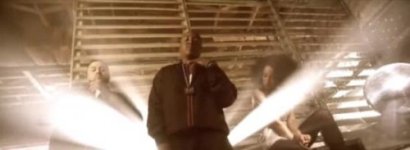
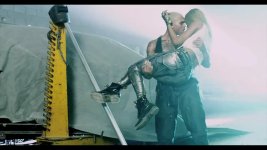
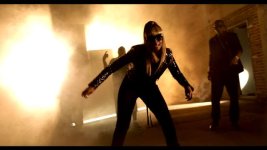
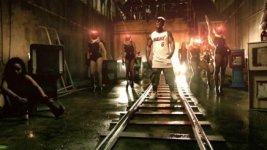
Now From What i Observe from these Flicks is a a fogger/hazer was use. What i'm Really trying to figure out is the back light more intense than the key light. Does the distance from the backlight and subject has something to do with these looks and what instruments where use
 
Yes the backlight was much more powerful than the keylight. It had to be able to be diffused and still deliver quite some lighting power and directionality to the subjects.

So ... my first guess would be some Joker 800 or Arri 1.2 HMI Pars back there. Something really punchy. Then some Joker 200 or 575 HMI par dimmed for keys. These keys are often positioned almost as sidelight. The Sean Garret shot seems to use an HMI globe hanging above the top of the frame on the camera left. (See the directionality on the subject, and on the player seated against the wall?)

Fill looks absent in some of those shots, but as usual adjust fill to taste.
 
Last edited:
Check out http://rivetingentertainment.com/thecartel/directors/colin.html . Ive shot most of these videos as A cam op, one of which is the Sean Garrett video you have referenced in picture 3.
Pic 1:
Most likely 2x 4k(possibly 5k) fresnels about 15-20 ft back, smoke is coming from the back which spreads the beam of the light giving that wider dispersion. The front key light is most likely a 2k from the side to light the main artist. You can tell its a hard light because of the hard drop-off from one side of the face to the other. That looks to be about it that was used for this shot. The back lights could also be 2 maxi brutes which are commonly used on music videos as back lights.
Pic 2:
In this specific shot the backlight is a 4k hmi, and off to the two sides of the main backlight you see are a 1.2khmi on beaver boards behind the dancers in the back. His key light is a 800 watt leko hung above and coming from his right side, camera left.

Pic 3:
Looks like a 4k hmi as back light, smoke lightly in the room to define the light beams, and the artists are breaking up the light so it streaks. The key is again from the side and less in wattage than the back-light, possible a 1.2k hmi. Doesn't look like they used any fill.

Pic 4:
This Chris Brown shot was in a warehouse with a 12k hmi coming through the window at an angle, and a 4k hmi bare completely front lighting from slight right of camera and the light is raised just above where her shoulder is. You can tell the placement by the hot spot on her pants and the shadow of her arm onto him.

The thing you have to remember about music videos is what you see on set looks a lot different then what it looks like after color and effects. Most of the reason these shots look "good" is mainly because of the post work done. For example, the Sean Garrett photo, all those lights are daylight balanced in camera as daylight. This means when we see it on set everything is a white light except for the orange fire flames on the sides. All the coloring is done in post to give it that "orange look". Of course you make it look good on set but the real work in music videos is in post. Also in music videos lighting continuity is always off. Lights are moved for every shot to make it look as good as possible for that shot. Hope this helps

Thanks Matt, its awesome to get a reply from someone who was there!

Its very interesting to see how accurate, and yet how wrong, my estimation of the lighting in that Sean Garret shot was. I go the right concepts but ...

First off ... I would have brought far too little lighting power apparently. Can I ask what you were shooting? Film or digital? What ISO? Do you remember the stop?

Also, in the Sean Garrett shot, what was the source hitting the dancer on the left of the frame. I thought a powerful soft source (like the HMI globe I guessed) could be flagged off the wall and still give good key lighting with deep shadows on both the dancer and on Sean. If they used a Leko, which makes more sense as I look again, then there was probably another source for the dancer. Do you recall?
 
Most every video I have shot for Riveting have been on the Red more specifically the Red One MX (Sean Garret is Red One MX). We just recently used the Epic on the Young Jeezy & Lil Wayne Video Ballin, and have also been using the Alexa on some stuff such as the Chris Brown-Justin Beiber Video Next to You. As for ISO the Red is usually exposed at 800ASA and stop wise just depends on the shot itself. Every shot is different. When you have a strong back-light like the Sean Garret video your exposure is important, overexpose and clip and you have lost your control in post, expose for the back-light and your subject becomes underexposed. Its always a trade off.

Yes most people don't realize how much light you actually need for a shoot. David Mullen ASC described it better than anyone else on Reduser when he said the amount of light used on set doesn't necessarily dictate the image. You may have a stage lit up and look like daytime to the eye but depending on what you expose the image for you can make that shot look like night.

The best piece of advice I ever received in regards to lighting was by a Cinematography professor at my old film school. He said, You can always take light away (in terms of brightness, diffusing, flags, dimmers) but you cant bring up a light you don't have. In other words its better to over light and have the ability to tune in your lights on set then to not have enough lights and end up with a poorly lit and underexposed image.

As for the Sean Garret shot I don't remember any other lights specifically but from the way the light is hitting her I'd assume its a leko as we use them a lot but definitely with diffusion. Most likely there were Leko's with diffusion hung above at the front of the frame to fill in some of the dark areas. Hope this helps.
 
Back
Top