Welcome to our community

Be a part of something great, join today!

  • Hey all, just changed over the backend after 15 years I figured time to give it a bit of an update, its probably gonna be a bit weird for most of you and i am sure there is a few bugs to work out but it should kinda work the same as before... hopefully :)

How Have Other Traditional Artists Influenced Your Work?

Jason Osterday

Well-known member
Joined
Jun 2, 2008
Messages
773
Reaction score
0
Points
0
I'm posing this question for some research and thought this would be a good place to stir up some answers.

The question is namely, what 20th Century artists have influenced your cinematography and style. I'm referring to any sculptors, painters, ect that have made an impact on how you shoot. So not necessarily other cinematographers but more so traditional artists.

Also, if you know any sources with cinematographers discussing their influences I'd love to hear that too (like cinematographer style, visions of light and so on).
 
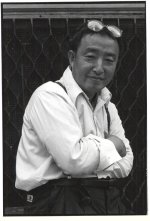
Nam June Paik combined imagery and sculpture in ways no one had ever thought of. He was an engineer, an artist and a very forward thinking person.
 

Attachments

  • Nam june pic.jpg
    Nam june pic.jpg
    71.6 KB · Views: 0
Great input. Keep them coming guys.

For example, what are some samples of Andy Warhol inspired work?
 
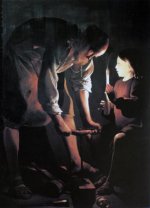
Rembrandt Van Rijn was a master of tenebrism and from a standpoint of cinematography, is probably one of the best examples of the use of light in narrative visual expression.
 
It's not any of traditional art and artist but it's so contemporary and real or a piece of pure Conceptual and Fluxus art:

T07667_8.jpg

Piero Manzoni: Artist's Shit 1961.

Read more>>>
 
I like Carravagio's Calling of Saint Matthew quite a bit. There are other artists that employ chiaroscuro, but they do so largely as a way of moving the eye. Carravagio is guilty of this as well, but in the Calling Saint Matthew painting, he follows the natural rules of light as we'd understand them. Rembrandt is probably natural light's best practioners. It could be said he only painted the light and not the form of the subject. Renaissance art is painted on form mostly, using light to describe volume and mass, regardless of its effect on the environment. I find Rembrandt adhered to the light more. Rembrandt is the Noir filmmaker in the group.

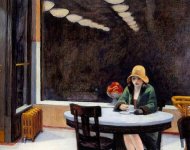
With the rise of modern art, you don't see painters use light as it exists in nature. I think the reason for this is the rise of photography. Go to the early 20th century's cubism and constructivism movements and you find that light as a narrative is largely abandoned. The Hudson River School uses a romanticized natural light and Edward Hopper uses a more primitive expression of light. In Hopper's case, he has the benefit of cinema as a potential inspiration, so his work may be the first examples of a cinematic influence on painting. This would not last either, like Rembrandt, Hopper seems to be among a minority of artists that use the type of light a cinematographer would recognize. Many of the great painters, while using light, are not dedicated to the natural laws of how light works. Anyway... fun stuff to ponder...
 
Edward Hopper is an interesting artist. Not only because he was a brilliant painter but also he worked in a time when film was already a common entertainment. I also find him very, very American.

His pictures do not only show an intriguing loneliness but also a filmlike composition and lighting.

He's not my number one painter but always more than worth to look at if we talk about filmmaking.

Hans
 

Attachments

  • Hopper1.jpg
    Hopper1.jpg
    38.7 KB · Views: 0
I like Carravagio's Calling of Saint Matthew quite a bit. There are other artists that employ chiaroscuro, but they do so largely as a way of moving the eye. Carravagio is guilty of this as well, but in the Calling Saint Matthew painting, he follows the natural rules of light as we'd understand them. Rembrandt is probably natural light's best practioners. It could be said he only painted the light and not the form of the subject. Renaissance art is painted on form mostly, using light to describe volume and mass, regardless of its effect on the environment. I find Rembrandt adhered to the light more. Rembrandt is the Noir filmmaker in the group.

With the rise of modern art, you don't see painters use light as it exists in nature. I think the reason for this is the rise of photography. Go to the early 20th century's cubism and constructivism movements and you find that light as a narrative is largely abandoned. The Hudson River School uses a romanticized natural light and Edward Hopper uses a more primitive expression of light. In Hopper's case, he has the benefit of cinema as a potential inspiration, so his work may be the first examples of a cinematic influence on painting. This would not last either, like Rembrandt, Hopper seems to be among a minority of artists that use the type of light a cinematographer would recognize. Many of the great painters, while using light, are not dedicated to the natural laws of how light works. Anyway... fun stuff to ponder...


Good post Jeff.

I haven't read your post when I posted my short contribution about Hopper. I fully agree in this regard. But I guess we also agree that Rembrand was not a Renaissance painter but from barock. Not to degrade his work (on the contrary) but he builded his work upon he achievments of his Italien predecessors.

Parmigianino was one of those. An outstanding prostagonist of the manierism. All of them are valuable guides for filmmakers.

Hans
 
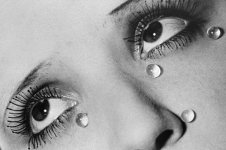
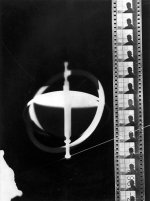
Man Ray was a bit of an obsession of mine when I was doing my photography degree.......painter, film maker, photographer, writer, sculpturer.

In 1999, ARTnews magazine named him one of the 25 most influential artists of the 20th century, citing his groundbreaking photography as well as "his explorations of film, painting, sculpture, collage, assemblage, and prototypes of what would eventually be called performance art and conceptual art" and saying "Man Ray offered artists in all media an example of a creative intelligence that, in its 'pursuit of pleasure and liberty,'"—Man Ray's stated guiding principles—"unlocked every door it came to and walked freely where it would."[2]

http://en.wikipedia.org/wiki/Man_Ray
 

Attachments

  • ray.jpg
    ray.jpg
    46.2 KB · Views: 0
  • man-ray-rayograph-1921.jpg
    man-ray-rayograph-1921.jpg
    80.4 KB · Views: 0
In terms of conveying a narrative, besides Hopper, the best example is Norman Rockwell. My art professors were loathe to credit Rockwell as being anything more than an illustrator, as if to say that illustration in and of itself had no value.

However, a careful study of the average Norman Rockwell cover for the Saturday Evening Post reveals that Rockwell was not only a gifted painter (I've seen a few original canvases) but a master storyteller. I believe Norman Rockwell would have made a brilliant director. His images can convey whole narratives that have their beginnings well before the moment he chooses to freeze upon the canvas, and often times one can extrapolate a conclusion that is seemingly inevitable long after the moment depicted in the painting has past.

Rockwell is a filmmaker in this sense, and his "films" are the duration of a single frame. To gain an appreciation of this, freeze-frame a film you've never seen before and try to figure out the narrative thread from the single image. Rockwell was a master at telling stories. That is one of the most impressive aspects of his talent.
 
Back
Top