Welcome to our community

Be a part of something great, join today!

  • Hey all, just changed over the backend after 15 years I figured time to give it a bit of an update, its probably gonna be a bit weird for most of you and i am sure there is a few bugs to work out but it should kinda work the same as before... hopefully :)

Highlights in range but...

Tyler Besh

Well-known member
Joined
Mar 26, 2018
Messages
177
Reaction score
0
Points
16
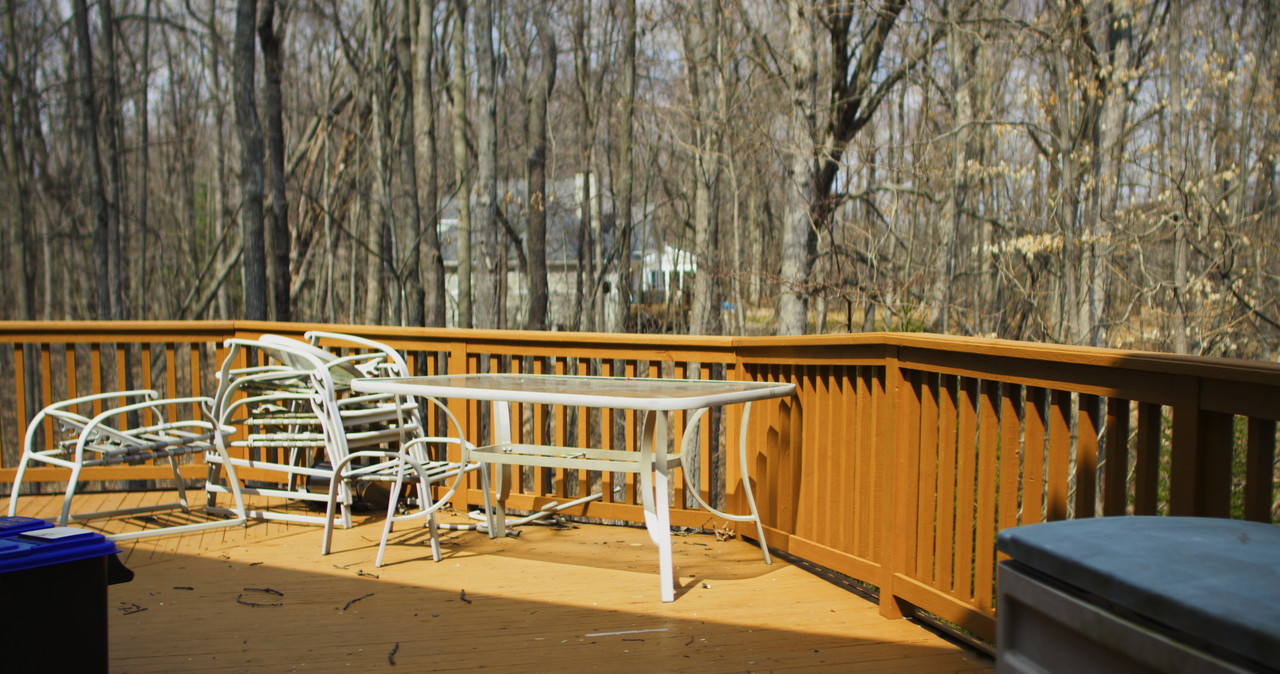
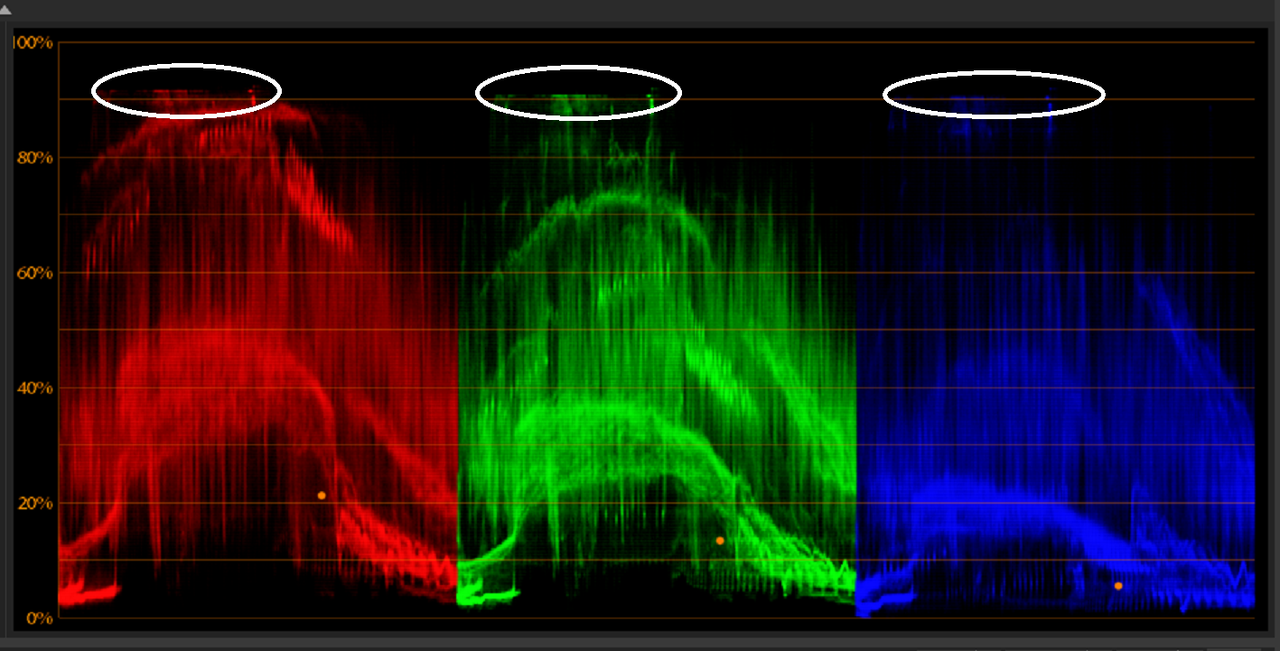
Could someone give me some insight into why these "hot spots" are well within range (around 80-90 on the scale) but they seem to have no detail and be clipped?

82uDSze.png


1RYJegd.png


R3D (shot with skin-tone OLPF with Schneider 1.5 ND)
https://www.dropbox.com/s/a3kbbz62pi8ifen/A001_C001_0101S9.0001984F.R3D?dl=0
 
STH, with Mysterium-X sensor?

gClRjoe.jpg


Metadata says no interchangeable OLPFs.


And this looks pretty overexposed to me:

spvOWoz.jpg


9dQHAhe.jpg


There's your scorched highlights...
 
First off, the image is really over exposed. Second. change your pipeline to IPP2 and you will see a huge improvement to the image. The ND you are using will also greatly skew the color but thats a different discussion.

A001_C001_0101S9.0001984F.0000000.jpg
 
as Sabovic said it was overexposed and the hightlights were clipped. Even when you try to bring it back, there is still no highlight info to recover. If you look at the highlight area the tops are flat and have been harshly cutoff.

A001-C001-0101-S9-0001984-F-S001-00000003.jpg


Screenshot-224.png
 
Last edited:
The reason is you've clipped them at the sensor-level, but you have some metadata curves set which are bringing that white-point down to like 90%, giving you the false idea that they should be within range. You're also processing your footage in RedGamma3 which brings that white point down even further than the more current RedGamma4. Clear the curves and set the camera to RedGamma4, and you'll see those highlights get pushed to 100% where you guess they'd be.

Ultimately I suggest going IPP2 over RedGamma4, though. Processing in IPP2 will run this clip through a highlight extension algorithm, which will rebuild the peaks and allow for a smoother transition to full clipping.
 
Could someone give me some insight into why these "hot spots" are well within range (around 80-90 on the scale) but they seem to have no detail and be clipped?

Tyler,

It only looks like it is in range because you are looking at the Redcine scope where the exposure values being represented are the result of the image processing and in your case it looks like the legacy Redgamma 3. So if you have over exposed pixels this image processing never maps these pixels past 98-99IRE even when clipped. The scope in Redcine is not responding like an older video camera where you might even see overexposure push past 100IRE. Unsure if there are any tools in Redcine that will indicate clip but there are many tools on the camera that will show you when you have saturated your pixels starting with the goal posts. Assuming a 800asa base than this image is a little over a stop overexposed but using Redcine especially with the more sophisticated tools in IPP2 image pipeline most of the detail is still there.
 
Could someone give me some insight into why these "hot spots" are well within range (around 80-90 on the scale) but they seem to have no detail and be clipped?

Signal range on scopes in post is relative to gamma.

It is a normal highlight peak/clip.
You have sunlight directly hitting a white surface. Nothing unusual here.


s4tcmv.jpg


2irkdgo.jpg
 
Šabović Adis;1850050 said:
STH, with Mysterium-X sensor?

gClRjoe.jpg


Metadata says no interchangeable OLPFs.


And this looks pretty overexposed to me:

spvOWoz.jpg


9dQHAhe.jpg


There's your scorched highlights...

I did a post about how I changed the OLPFs in the Epic. I now have the skin tone permanently in there because it offers better results.
 
The reason is you've clipped them at the sensor-level, but you have some metadata curves set which are bringing that white-point down to like 90%, giving you the false idea that they should be within range. You're also processing your footage in RedGamma3 which brings that white point down even further than the more current RedGamma4. Clear the curves and set the camera to RedGamma4, and you'll see those highlights get pushed to 100% where you guess they'd be.

Ultimately I suggest going IPP2 over RedGamma4, though. Processing in IPP2 will run this clip through a highlight extension algorithm, which will rebuild the peaks and allow for a smoother transition to full clipping.

This helps a lot thank you!
 
Appreciate the insight guys! This was the first time I've recorded outside without a meter or any kind of charts, just used the goal posts. Need to work on my understanding of dynamic range and exposure tools.
 
Also I should mention I don't participate in "online attitude" I'm genuinely into your thoughts as the majority of members on this forum are far ahead of me in knowledge and experience. I'd love to take advantage of that as I try to add better images to me storytelling.
 
Do you see a problem with replacing the OLPF? In the entirety of the thread I didn't hear any "don't do this because..." my tests showed it balanced the color channels better and added more contrast to the image.

http://www.reduser.net/forum/showthread.php?173729-On-going-MX-OLPF-tests

Really?!

How exactly did it balance "better" when:

http://www.reduser.net/forum/showth...X-OLPF-tests&p=1840869&viewfull=1#post1840869

Mysterium-X doesn't have a calibration profile for the Standard OLPF.

or any other profile for that matter, nor can RCXP read it. And how much contrast is correct amount of contrast? :biggrin:

But, as I said earlier, do what ever you want and don't let anybody tell you different - on the contrary, I'd like to see more parts that don't belong built in. Say ALEV III.
Or two...double the pleasure. :rofl:
 
Šabović Adis;1850117 said:
Really?!

How exactly did it balance "better" when:

http://www.reduser.net/forum/showth...X-OLPF-tests&p=1840869&viewfull=1#post1840869


or any other profile for that matter, nor can RCXP read it. And how much contrast is correct amount of contrast? :biggrin:

But, as I said earlier, do what ever you want and don't let anybody tell you different - on the contrary, I'd like to see more parts that don't belong built in. Say ALEV III.
Or two...double the pleasure. :rofl:

From what I have gathered, just because the brain isn't deciphering the data differently when putting a different OLPF in front of it, that doesn't mean the light values aren't passing through the OLPF and ultimately onto the sensor differently, right? (honest question).
 
Last edited:
From what I have gathered, just because the brain isn't deciphering the data differently when putting a different OLPF in front of it, that doesn't mean the light values aren't passing through the OLPF and ultimately onto the sensor differently, right? (honest question).

100%!
But how different, by how much? To what "side"?
There's a target, I mean an inch above the target is the same as inch under - it's a miss. :smile5:
 
Šabović Adis;1850127 said:
100%!
But how different, by how much? To what "side"?
There's a target, I mean an inch above the target is the same as inch under - it's a miss. :smile5:

I feel that. Makes sense. It's probably me just projecting the visual difference into some kind of technical difference which seems to be close to zero haha
 
I feel that. Makes sense. It's probably me just projecting the visual difference into some kind of technical difference which seems to be close to zero haha

Well, visual difference is also proof of technical difference, but the question is this: is it a hit? Is it really better (closer to the target, dead on maybe), or just different?
My reasoning is like this: if you don't like what you get with Mysterium-X, you don't just throw in stuff like OLPFs (or do other stuff like cutting, scraping, drilling, screwing, welding...ain't no rocket science, innit? :rofl:), or adapt the camera to your needs like that (and simply call it "better"). No, you do what RED did already - design new camera body, design new sensor, design new OPLFs etc. Now, that's better!
What you could do better is: adapt yourself to the camera - by learning how to operate it properly...but that's only me. :smile5:
 
Last edited:
Šabović Adis;1850165 said:
Well, visual difference is also proof of technical difference, but the question is this: is it a hit? Is it really better (closer to the target, dead on maybe), or just different?
My reasoning is like this: if you don't like what you get with Mysterium-X, you don't just throw in stuff like OLPFs (or do other stuff like cutting, scraping, drilling, screwing, welding...ain't no rocket science, innit? :rofl:), or adapt the camera to your needs like that (and simply call it "better"). No, you do what RED did already - design new camera body, design new sensor, design new OPLFs etc. Now, that's better!
What you could do better is: adapt yourself to the camera - by learning how to operate it properly...but that's only me. :smile5:

Respect.
 
Back
Top