Welcome to our community

Be a part of something great, join today!

  • Hey all, just changed over the backend after 15 years I figured time to give it a bit of an update, its probably gonna be a bit weird for most of you and i am sure there is a few bugs to work out but it should kinda work the same as before... hopefully :)

GemiZ

discussion, empathy and shared values most conflicts can be resolved without confrontation

Those are like "curse words" these days or a show of weakness. Hopefully those days will come back soon.
 
Those are like "curse words" these days or a show of weakness. Hopefully those days will come back soon.

I invite those who want to know how to win the long game at anything read Art of War by Sun Tzu. 2500 year old Chinese General who knew that war (direct conflict) is your worst play
 
Zeb,


I'm ashamed to say that I have never read it but always heard it referenced in every great battle, in the Civil War, Vietnam and the World Wars.
 
Thanks for the link Zeb! monumental teachings from a truly gifted and wise being.
 
Last edited:
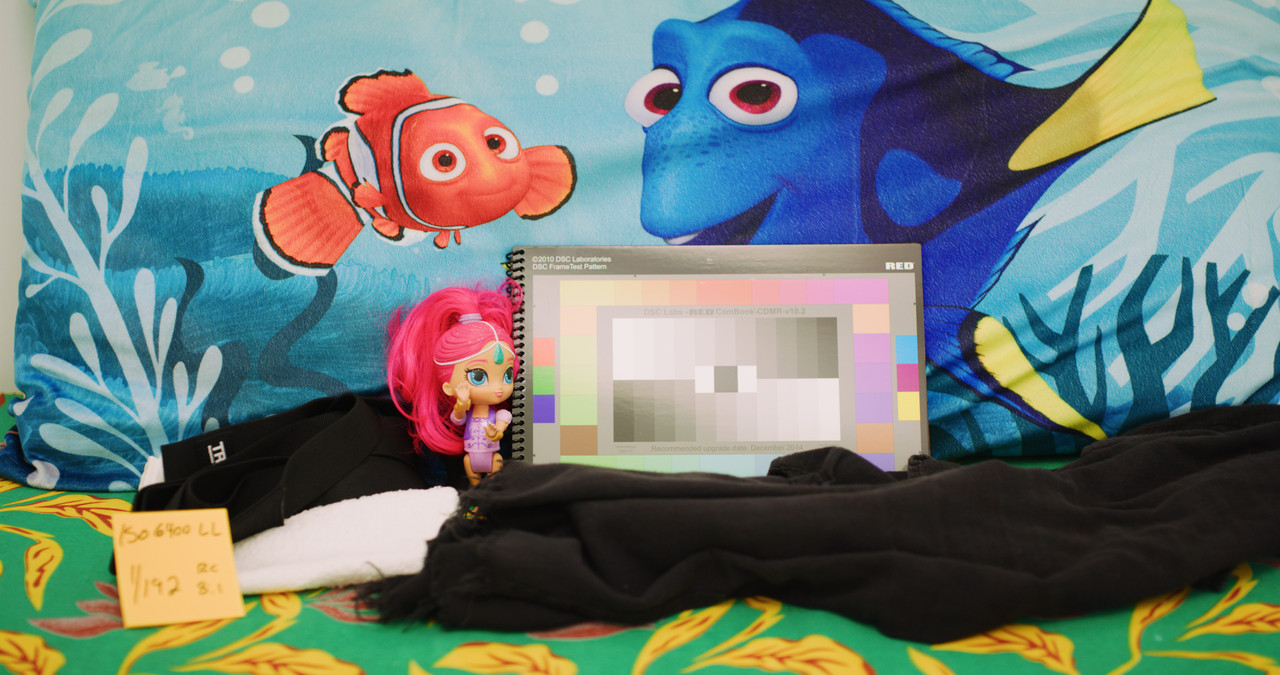
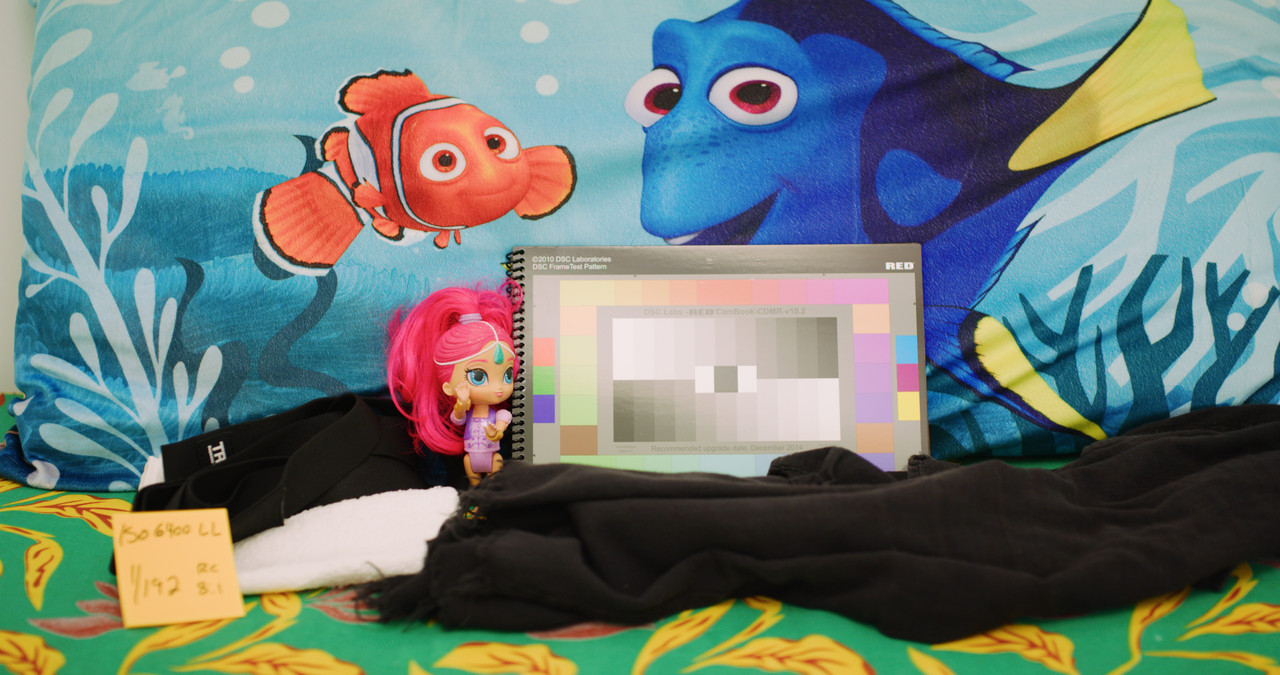
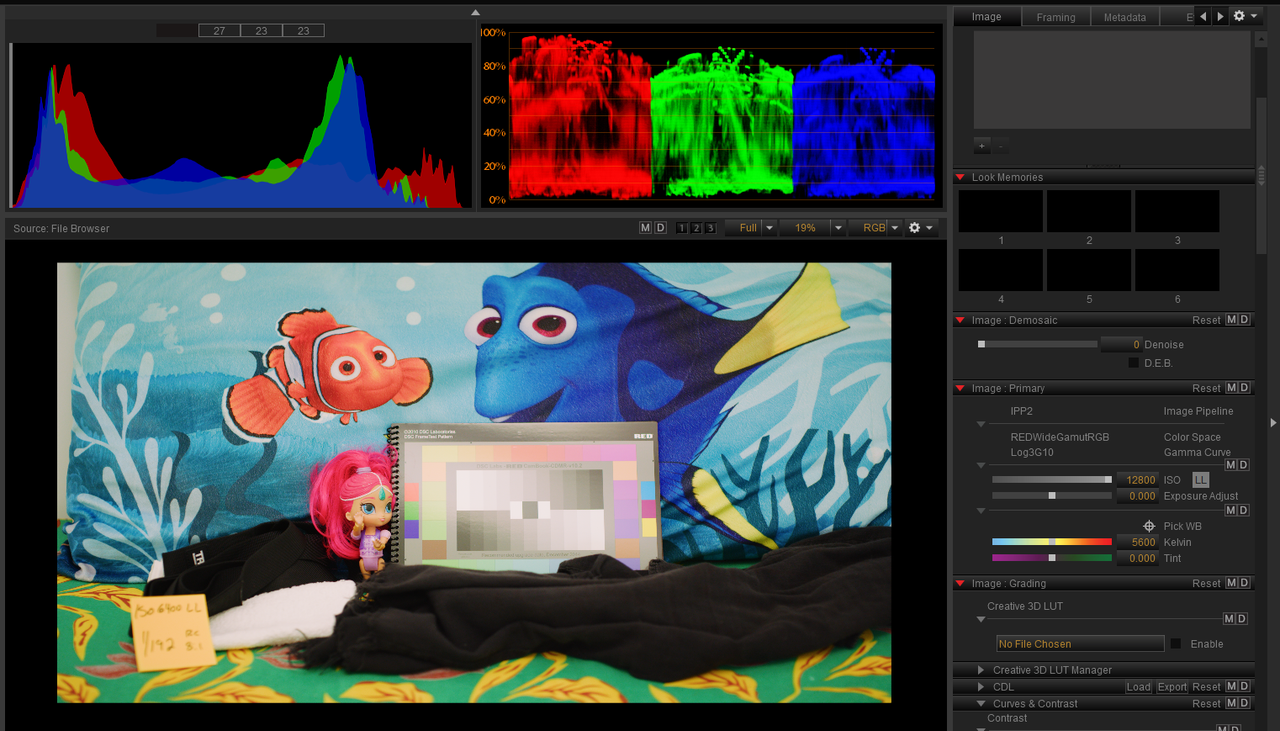
Aaron, don't read too much into the "tests" I'm posting.

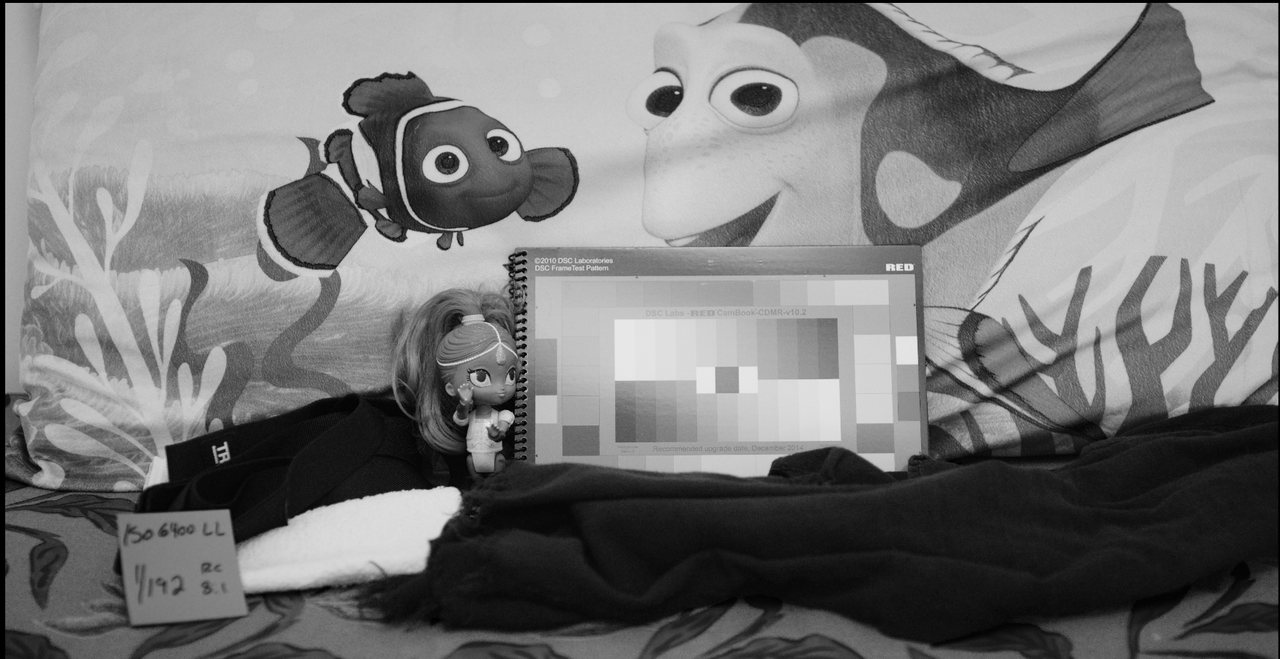
Just trying to manage expectations. Some people might come across this thread, see a very very clean shot with 6400LL written on a post-it note and draw the wrong conclusion. :)

See any difference in the 2:1 v 8:1?

Yes, actually. 2:1 has tight, well defined grain in tact where 8:1 mushes it quite a bit so it becomes bigger/blockier.

43857783615_eca60cb21e_o.png
 
Just trying to manage expectations. Some people might come across this thread, see a very very clean shot with 6400LL written on a post-it note and draw the wrong conclusion. :)


Yes, actually. 2:1 has tight, well defined grain in tact where 8:1 mushes it quite a bit so it becomes bigger/blockier.

43857783615_eca60cb21e_o.png

Thx! I’ll look at it mo closely when at a big screen. 8:1 is probably going to be where the Gemi spends a lot of time since that’s the RC for 96fps
 
Zeb,


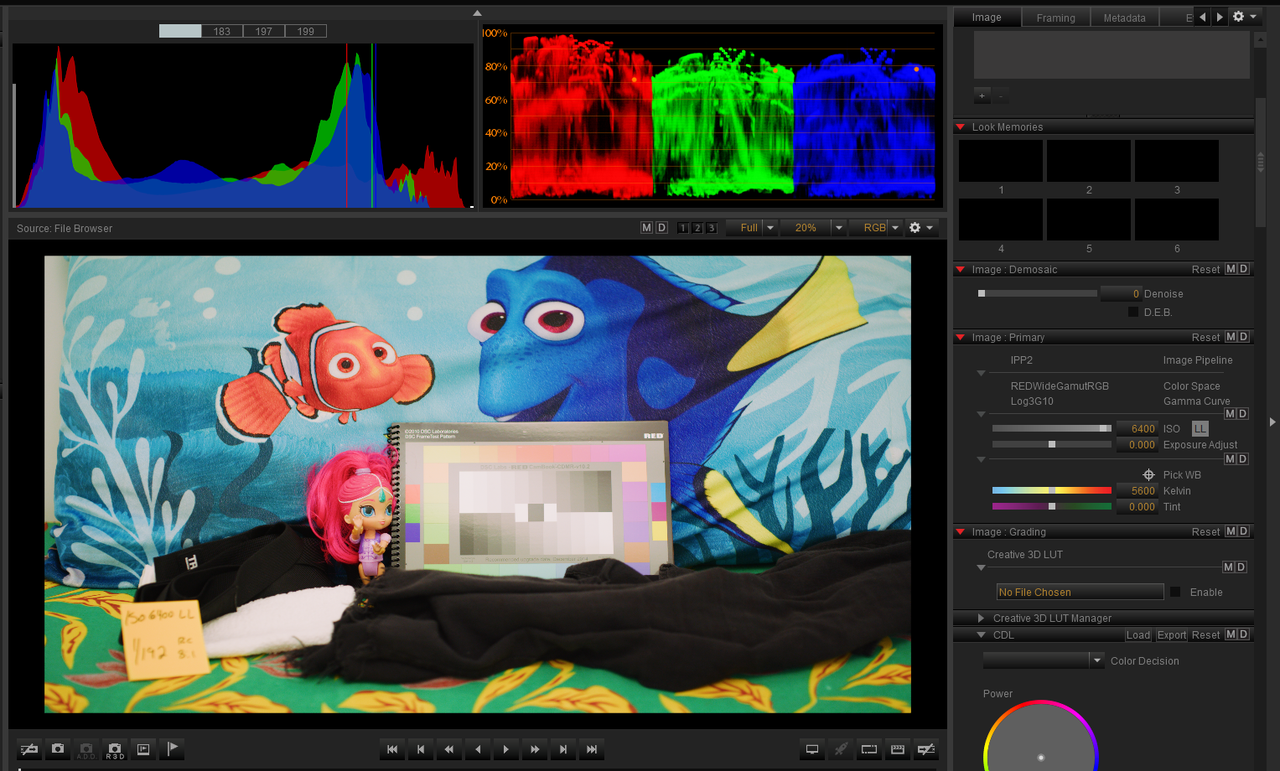
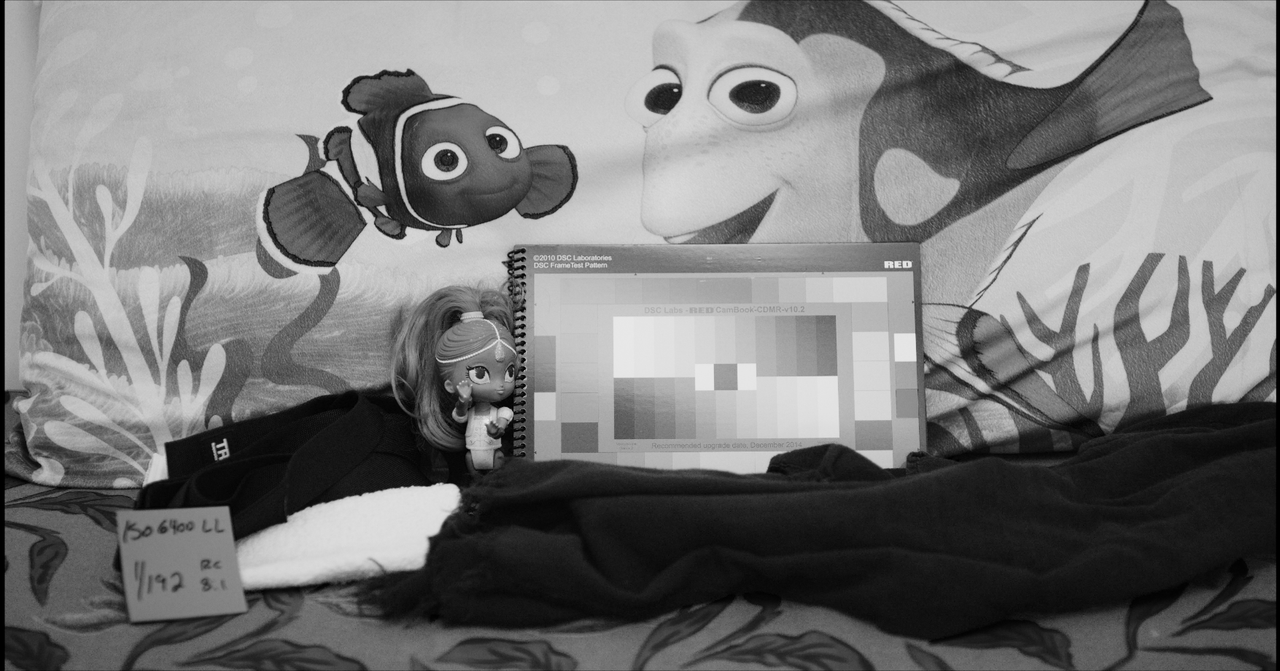
The 6400 iso image without lowering the iso along with the "Blue" channel image.


A006_C010_0917_UU.0000000_F.0000000_F.0000000.jpg


Screenshot_434.png


Screenshot_435.png
 
Zeb,


The 6400 iso image raised to 12800 iso graded without lowering the iso with "Blue" Channel image.


12800.jpg


Screenshot_436.png


Screenshot_437.png
 
Aaron,


For the same reason as the 6400. You could bring down the iso on either the 6400 or 12800 image and get it to a point where either would be properly exposed, no problem. What I wanted to see was what would be the consequences and or side effects of bringing them both down from those respective iso's, increase noise, artifacts, color abnormality...etc.
 
Newbie question here:
Is there a thread explaining the Gemini specific ISO ratings and Standard / LL Modes? This cam is different that other RED's with the turbo Dual Mode switch. Wondering if Phil or others have posted a full explain in 5th grader terms. I've was offline from RU when the Gemini was first released. Have a shoot coming up where there is not going to be room for newbie error.

The simplest way to explain it is that when you engage the mode, the sensor becomes two stops more sensitive to light. Think of it like being able to virtually remove two stops of ND at any time. So what this means is that the sensor clips highlights two stops sooner but you can also see into the shadows two more stops.

It might be easier to picture a histogram. There's a left post, some middle information, and a right post. Imagine the same histogram but you moved the endpoints to the left two stops, truncating your highlights, but opening up more room in the shadows for detail.

Another way to explain it: let's say for the sake of easy math the sensor sees 16 stops DR. But you have a scene with 18 stops of DR. So let's say you shoot in normal mode and you set your exposure so, you can successfully capture stops 3-18. If you do nothing else and switch to LL mode, you're now capturing stops 1-16.

That's it. Someone correct me if I'm wrong.

So the practicality of this is that if you're in a dark environment and you're at your limits of trying to capture shadow detail, e.g., you're wide open on your lens, your shutter speed is as long as you are comfortable with. Where can you go from there? LL mode. Trade two stops up top for two more stops below

You like to ETTR, so in your workflow, I wonder how useful you'll find LL mode. Because you clearly have enough light to slam the image to the far right of the histogram. When you enable LL mode, you'll be moving that goalpost two stops to the left. To continue to ETTR without clipping highlights, you'll have to compensate two stops via shutter speed or aperture, etc. So not only will you shrinking total DR (by a small amount), you'll also be adding more noise to the image.

Thx! So it’s no magic gain staging but rather a shift in the middle gray point. So the question is, when shooting let’s say a nightclub interior that is both dark and very bright - Standard or LL? Guess you can’t have both so have to make the decision of which to sacrifice: highlights v shadow detail.

Links to anything that has been posted on Gemini by the RED Wisemen like Phil is appreciated. Any good +4 / -4EV tests posted out there to see what happens in over / under exposure?
 
Thx! So it’s no magic gain staging but rather a shift in the middle gray point.

It's exactly the opposite of what you just said. Middle grey is determined by ISO and your personal preference for balancing highlights and noise. LL mode is an alternate gain stage, that increases sensitivity by roughly two stops at the sacrifice of a relatively small amount of total DR.

Like I said, imagine it like being able to virtually remove 2 stops of ND at any time. If your highlights were sitting just below clipping and you removed some ND, you're now clipping those highlights, but you're also exposing your shadows more. So it's a trade-off. But ISO is just metadata, you can always move your middle grey around.

So the question is, when shooting let’s say a nightclub interior that is both dark and very bright - Standard or LL? Guess you can’t have both so have to make the decision of which to sacrifice: highlights v shadow detail.

There's two schools of thought. Since you're an ETTR guy and you're always trying to maximize your signal-to-noise ratio, then I would say if you have the room to open up more on your lens or shadows aren't as important as highlights, Standard. If you're at your limits and you desperately need to see into the shadows, then LL. Standard will always have more total DR captured. It's also a touch cleaner, too.

The other mindset is switching between the two modes throughout a project would be like establishing two different noise floors. I can see some folks who might want a consistent grain profile throughout a piece and would opt to set the camera to LL mode and just put two stops of ND on, essentially bringing it back down to Standard sensitivity levels, but with a touch more grain. That way when it gets dark and they remove those two stops of ND, the grain will be exactly the same as the other material that was shot.
 
It's exactly the opposite of what you just said. Middle grey is determined by ISO and your personal preference for balancing highlights and noise. LL mode is an alternate gain stage, that increases sensitivity by roughly two stops at the sacrifice of a relatively small amount of total DR.

Like I said, imagine it like being able to virtually remove 2 stops of ND at any time. If your highlights were sitting just below clipping and you removed some ND, you're now clipping those highlights, but you're also exposing your shadows more. So it's a trade-off. But ISO is just metadata, you can always move your middle grey around.


There's two schools of thought. Since you're an ETTR guy and you're always trying to maximize your signal-to-noise ratio, then I would say if you have the room to open up more on your lens or shadows aren't as important as highlights, Standard. If you're at your limits and you desperately need to see into the shadows, then LL. Standard will always have more total DR captured. It's also a touch cleaner, too.

The other mindset is switching between the two modes throughout a project would be like establishing two different noise floors. I can see some folks who might want a consistent grain profile throughout a piece and would opt to set the camera to LL mode and just put two stops of ND on, essentially bringing it back down to Standard sensitivity levels, but with a touch more grain. That way when it gets dark and they remove those two stops of ND, the grain will be exactly the same as the other material that was shot.

2ftUhi.jpg


Luckily my other brain half makes up for the stoopid half. I think ;-)
 
Ha! Yeah, funny thing about RED cameras is that they are actually easier in some regards to use and get amazing images from than many lesser able products. I mean Sony A7 Picture Profiles v keep it between the goal posts. Even special children like me can make pretty pictures with a RED ;-)
 
Ha! Yeah, funny thing about RED cameras is that they are actually easier in some regards to use and get amazing images from than many lesser able products. I mean Sony A7 Picture Profiles v keep it between the goal posts. Even special children like me can make pretty pictures with a RED ;-)
A lot of us on h4vuser were hoping for a Gemini sensor in the new r3d module coming sometime in the future... Jannard said Helium instead at 5k+ resolution.

Completely understand your decision to go Gemini, but Jim and his team are doing amazing things with imaging vis a vis the Hydrogen phone cam. Just hope they can make the r3d 2D module output amazing as well. If they can, I'm sure what they come up with can also translate to RDC cameras.

Can't wait to see what they have in mind for Hydrogen and RDC coming one day soon.
 
Last edited:
A lot of us on h4vuser were hoping for a Gemini sensor in the new r3d module coming sometime in the future... Jannard said Helium instead at 5k+ resolution.

Completely understand your decision to go Gemini, but Jim and his team are doing amazing things with imaging vis a vis the Hydrogen phone cam. Just hope they can make the r3d 2D module output amazing as well. If they can, I'm sure what they come up with can also translate to RDC cameras.

Can't wait to see what they have in mind for Hydrogen and RDC coming one day soon.

Yeah, I have no doubt it will be awesome. RED seems to be putting together a string of hits over the last several years. The images coming off the Gemini are inspiring to a point where they are creating film concepts for me. Spent the last several days creating a shot list for a project that I started to pitch last night. That did not happen for me with Dragon. The last RED camera I loved was my Epic-M. Gemini seems to motivate the creation process because it has more range imho
 
Back
Top