Welcome to our community

Be a part of something great, join today!

  • Hey all, just changed over the backend after 15 years I figured time to give it a bit of an update, its probably gonna be a bit weird for most of you and i am sure there is a few bugs to work out but it should kinda work the same as before... hopefully :)

First-time Red user

dhruv

Banned
Joined
Aug 16, 2010
Messages
4
Reaction score
0
Points
0
Hi,

I'm an Indian cinematographer and I'm about to shoot a feature on Red. I've previously worked on 16mm, HD and other video formats but since I haven't shot on Red before, I have a few queries, some of which may appear very basic but I request you to be patient with me.

- What’s the ideal resolution to shoot? Assuming that it’s 4K, what exactly is the difference between 4K 2:1 and 4K 16:9 (Isn’t the aspect ratio chosen separately?)

- Does the ASA work similarly as that in a still camera? Why is 320ASA preferred? Some users say that they shoot at 320ASA but set their light meter at 250ASA because the camera handles overexposure better than underexposure. Is that true? Also, keeping in mind that the film is intended for theatrical release, is there a threshold that I should keep in mind, i.e. some point beyond which noise will appear in the image?

- What’s the difference between Redcode 28 and Redcode 36?

- I didn’t completely understand the meaning of a base frame rate and a variable frame rate?

- I got really confused at some places while going through the operating manual? At a lot of places (e.g. the Sensor Menu, and the Video sub-menu in the AV Menu) it says that one can make changes but ‘They do not affect the actual REDCODE RAW data being recorded,. What does that mean?

- Does the zebra work on the same values as in the regular video cameras, as in is a 70% value of a video camera same as a 70% value in the Red? Also, what is a HI IRE and a LOW IRE?

- What about the latitude? For example, how much overexposure can a textured wall in the background take to retain the texture and not burn out?

- A lot of people mention the ‘hot mirror’ filters? What exactly are these and what problems may occur if not used?

- I’ll be shooting in a combination of ambient daylight and indoor lights (HMIs and other daylight balanced ones). As the day progresses and the ambient light changes, shall I white balance?


I'll look forward to your replies!

Thank you,
Dhruv
 
Hi Dhruv:

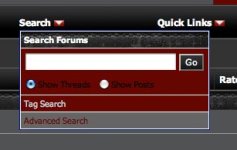
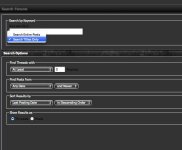
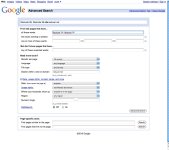
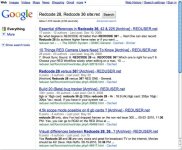
RedUser.net is one of the greatest user forums ever built. All of your questions can be answered by past threads containing easily identifiable keywords using the search tools provided. Sometimes it helps if you restrict your search to subject only which you can do with the drop-down menu on the search page. Sometimes I'll even use Google's advanced search by restricting the domain to RedUser.net and can often find things using their site-restricted search engine that I'm not able to find using the forum search tools.

Please let us/me know if you are not able to find answers to all of your questions above within a couple of hours of smart searching. The good thing about that approach is you will find and read and learn many other things in your quest that you didn't even think to ask. The users and moderators on this forum are an extremely knowledgeable and helpful lot but consequently their time is also quite valuable so if you can save them some time by searching past threads and then posting your questions in terms of what you couldn't find or figure out after hours of searching, they will be much more responsive.

"Give a man a fish and you feed him for a day. Teach a man to fish and you feed him for a lifetime." - Chinese Proverb

Sincerely,

-michael zaletel
 

Attachments

  • One.jpg
    One.jpg
    11.6 KB · Views: 0
  • Two.jpg
    Two.jpg
    30.9 KB · Views: 0
  • Three.jpg
    Three.jpg
    95.2 KB · Views: 0
  • Four.jpg
    Four.jpg
    96.1 KB · Views: 0
- What’s the ideal resolution to shoot? Assuming that it’s 4K, what exactly is the difference between 4K 2:1 and 4K 16:9 (Isn’t the aspect ratio chosen separately?)

The aspect ratio is not chosen separately. You need to decide between the two settings.

- Does the ASA work similarly as that in a still camera? Why is 320ASA preferred? Some users say that they shoot at 320ASA but set their light meter at 250ASA because the camera handles overexposure better than underexposure. Is that true? Also, keeping in mind that the film is intended for theatrical release, is there a threshold that I should keep in mind, i.e. some point beyond which noise will appear in the image?

250 ASA is better of course. But you can push the picture in post up to 500 ASA (old RED One Version).

- What’s the difference between Redcode 28 and Redcode 36?

Redcode 36 has less data-reduction

- I didn’t completely understand the meaning of a base frame rate and a variable frame rate?

The base framerate is a setting for your final project i.e. 25 frames for PAL - with the variable frame rate you`ll record for examples slomos

- I got really confused at some places while going through the operating manual? At a lot of places (e.g. the Sensor Menu, and the Video sub-menu in the AV Menu) it says that one can make changes but ‘They do not affect the actual REDCODE RAW data being recorded,. What does that mean?

Because most of the parameters can be eduted in post and are just stored as meta data.

- I’ll be shooting in a combination of ambient daylight and indoor lights (HMIs and other daylight balanced ones). As the day progresses and the ambient light changes, shall I white balance?

You can do it - but you also white balance inpost without negativ effect.

Cheers Thomas.
 
  • Thread starter
  • Banned
  • #4
Thanks

Thanks

@ Michael: Thank you for the suggestion. I tried it and it does work, though I'm still getting used to it.

@ Thomas: Your answers were crisp and informative. Thank you. I still have two questions though - what exactly is 4K 2:1? and, for an intended theatrical projection (for footage shot in 4K), beyond which ASA setting (while shooting) does noise/grain begin to appear?

Thank you all for your help.
Dhruv
 
  • Thread starter
  • Banned
  • #5
Settings

Settings

Thomas, when you say that 250ASA is better, do you mean setting the camera at 250ASA or the light meter setting (with the camera at 320ASA)?

Also, talking of the light meter, how much difference is there between its reading and that on the camera metering system, e.g. the zebra?
 
Dhruv,

Welcome to the group of RED users in India. I will try and attempt to answer some of your questions.

1.) 4K 2:1 is an acquisition aspect ratio. For theatrical distribution you can set your frame guides to 2.35:1 or 2.4:1. The cropping of excess images can be done in post. The extra room is great to have for our typical Bollywood dances and fights.

2.) ISO/ASA: Any electronic imaging system has noise issues in the shadows. Moreover since the RED sensor is optimized to work at 5600K, tungsten lit images tend to fall short of the sensor's light needs. These are the two primary reasons (IMHO) why an ISO setting of 250 is preferred. Anything beyond ISO320 with 5600K lighting is an invitation to grain in the shadows.

Setting your lightmeter at 250 gives the image some headroom to work with in post (if necessary). The ISO setting is a lossless change as the image being saved is RAW.

The Histogram offered is another great tool that helps make DR decisions.

-Sandeep
 
  • Thread starter
  • Banned
  • #7
@ Sandeep

@ Sandeep

Thanks Sandeep. Sorry if it's dumb but what exactly is an acquisition aspect ratio? I wanted to know how different is a 4K 2:1 from a 4K 16:9 (1:78:1). Also, which is preferable for a shoot that will go in for a theatrical release?

I got your point about why ISO250 is preferred, but you didn't mention if you meant 320 on the camera and 250 on the meter or 250 on both?

I've been hearing about the camera giving better results with daylight, because of, as you said, its sensor being optimized for it. So, what setting does one make while shooting with tungsten lights - shoot at 3200K normally or shoot at 5600K with correction gels on the lights?

Thanks,
Dhruv
 
Back
Top