Welcome to our community

Be a part of something great, join today!

  • Hey all, just changed over the backend after 15 years I figured time to give it a bit of an update, its probably gonna be a bit weird for most of you and i am sure there is a few bugs to work out but it should kinda work the same as before... hopefully :)

First Epic model could shoot 3D by itself

Robert you still fail to understand the basic concept of stereoscopy, two images with a distance between them. The thing your proposing does not work , please understand this.
 
Robert you still fail to understand the basic concept of stereoscopy, two images with a distance between them. The thing your proposing does not work , please understand this.
:iamwithstupid:
That is something I already understood the moment I started this thread. The extra horizontal lines, that generates distance between the two images. Now fail to see that because the 3D software that I got isn't adequate enough for handling left eye and right eye images.

Kyle, didn't you look at what that Nikon lens does before you decided to post a link to it. This is what it does to your stills:
camera_3dcap_001_800.jpg
That ain't happening with me, if you bought that thing you should turn around and get your money back.

But you Jay, I got good reason to say why your with stupid. I'm surprised that I'm actually looking at this because even though I wouldn't be caught dead with this lens on my camera, I'm shocked to see that my theory actually does hold water after all despite what you've been saying.

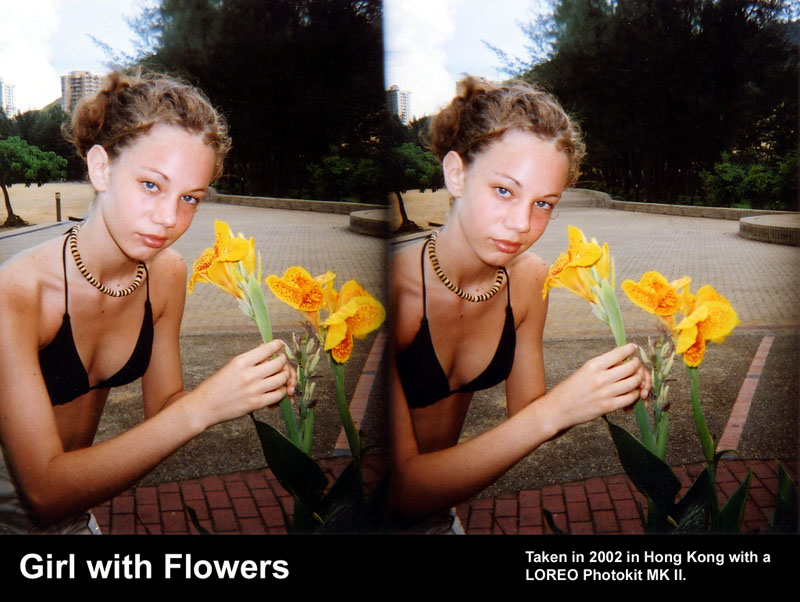
Original from website:
sample_mkii_001_800.jpg


My 3D conversion of the same image:
samplemkii0018003d4.jpg


I think I also keep talking about horizontal lines, well when have extra horizontal lines for the purposes of creating true S3D images, you don't want to many. I put the image throw the software again, this time horizontal alignment is a bit closer by 5 lines:
samplemkii0018003d5.jpg
 
Last edited:
When this innovative technology is perfected, I am going to use it to build a time machine. Cuz, it means you can be in two places at once - without moving. Very quantum-mechanicky, don't you think? :lol:
 
When this innovative technology is perfected, I am going to use it to build a time machine. Cuz, it means you can be in two places at once - without moving. Very quantum-mechanicky, don't you think? :lol:

Hey Terry, I gotta tell ya, it's won't make a good time machine but somebody could do this. You talk about Time Travel, you got me thinking of my favorite all time movies so where is something you can do with this Technology, and be sure that Robert Zemeckis gets this cause it would rule.

Back to the Future IV in 3D

Now that statement was just to humor you Terry, but here is how you fully perfect the technology. All you would have to do on the Epic is on 5K mode. The next step is for LOREO to produce a a 3D lens that can fit on the Epic, it needs to be somewhat like the lens that fits on the Canon EOS 300 and it needs to capture 2 images and have anamorphic capabilities. If LOREO can do this, then here is an example of what you would see when viewing the full 5K image but keep in mind, for LOREO to get this one right, this not only has to be a 3D lens, it has to be an anamorphic lens.
redepicxs353dexample5.jpg


No special software inside the camera, just software for the PC or Mac that will be capturing the raw footage. When you see the image below, you'll understand why I mean the 3D lens also needs to be an anamorphic lens. The software would record left and right eye images at 4K resolution at 4096x2160. And if there anything like the lens mounted on the Canon model, then where sure to have depth, and that word "parallax" image. We got it with the Canon Lens, lets see if LOREO can make a step up and make a 3D lens for the RED epic, also I read on wikipedia that the first Epic model will be in RED ONE bodies so that means that this lens would also have to fit the RED ONE as well.
 
Last edited:
Hahaha, I totally forgot about those Loreo 3D lenses...you know what? If I can find one at a reasonable price, I'll try it out.

Sorry to digress, back on point.

Robert, your claims have no validity.

Stereo image on 1 sensor requires muliple lenses. Weather it's an adapter with 2 lenses or a plenoptic lens array doesn't matter.

Just splitting the sensor into two recordable fields is just....ugh. Sorry. No.
 
Well Anyway Eren, I don't know if your going to get your money's worth on that lens or not.

Just keep in mind that I just found something that keeps on giving.
Original Image from website:
sample_3dlenscap9005-apsc_004_1024.jpg


New 3D output that I converted from the same image:
sample3dlenscap9005apsc.jpg


The one advantage for the Epic is that they won't be anaglyph, the alignment will be perfect and the images will be moving. Now from what I do understand, moving images will allow you to see more depth. Now I like the pictures taken with this special lens on the camera because everytime I run it throw the 3D software, all I have to do is just do a little bit more alignment work and I always get depth and it's done in less then a minute.
 
Last edited:
That is something I already understood the moment I started this thread. The extra horizontal lines, that generates distance between the two images. Now fail to see that because the 3D software that I got isn't adequate enough for handling left eye and right eye images.

Incorrect. You are manipulating a single image by slightly trimming the sides, laying them over top of each other, and tinting them. You can't create depth that way. The only method for creating 3D out of 2D is by separating the layers to simulate depth. In your proposed method, there isn't even the possibility of simulating depth, just a muddy, red and cyan image.

Kyle, didn't you look at what that Nikon lens does before you decided to post a link to it. This is what it does to your stills:
camera_3dcap_001_800.jpg

That ain't happening with me, if you bought that thing you should turn around and get your money back.

This proves you don't understand what convergence and parallax are. Those side by side images are the left and right "eyes" of the image. As you discovered by overlapping those, they do create the 3D effect advertised:

Now I like the pictures taken with this special lens on the camera because everytime I run it throw the 3D software, all I have to do is just do a little bit more alignment work and I always get depth and it's done in less then a minute.


That's because it is creating TWO images on a single negative from TWO different points of view. In stereoscopic photography, DEPTH is created once they have been combined. Your method, however, doesn't work, ever. The Loreo 3D still lens is actually two lenses. Its internal optics are creating two images on the negative that are side by side(hence the effect that you don't want on your photos and therefore a waste of money).

Understand how steroscopic photography is done, otherwise you're wasting your time.
 
Last edited:
How old are you, people?

I just want to know how many years of experience you may have.
 
Last edited:
It works perfect! My red/blue glasses coupled with my eyes and brain put a... oh wait... 2D image back together.
 
TheStupid.jpg
 
Incorrect. You are manipulating a single image by slightly trimming the sides, laying them over top of each other, and tinting them. You can't create depth that way. The only method for creating 3D out of 2D is by separating the layers to simulate depth. In your proposed method, there isn't even the possibility of simulating depth, just a muddy, red and cyan image.
Listen boy, haven't you read what I posted. When I said it was something I already understood and also, I watched this video before I even downloaded my software, and long before I posted this thread.


This proves you don't understand what convergence and parallax are. Those side by side images are the left and right "eyes" of the image. As you discovered by overlapping those, they do create the 3D effect advertised:
Yeah I thought I was gonna get more trash when I took those two images off the website but I was surprised to see what I got. I know what convergence and parallax is. Didn't you see my previous post linking the Wikipedia article?

That's because it is creating TWO images on a single negative from TWO different points of view. In stereoscopic photography, DEPTH is created once they have been combined. Your method, however, doesn't work, ever. The Loreo 3D still lens is actually two lenses. Its internal optics are creating two images on the negative that are side by side(hence the effect that you don't want on your photos and therefore a waste of money).

Understand how steroscopic photography is done, otherwise you're wasting your time.

I think I've been asking a question as well, is it possible to capture a true S3D image with just one lens with just one camera? I always asked that question because all of the 3D rigs that I've seen except for the IMAX 3D camera have all been the same and that is simply two cameras side by side in some shape or form. I had no idea how the first few minutes of Half-Blood Prince was converted to 3D until I saw that video cause when I heard "Maya" I just figured you get an outcome that just wouldn't be photo-realistic. I know for like Toy Story 1 and 2, all you really need to do is just go back into the source files to create a second camera pass since their CGI to begin with.
 
I think I've been asking a question as well, is it possible to capture a true S3D image with just one lens with just one camera?

The simple answer is, yes. But it has to be a special lens, that delivers two spatially different images, like the Nikon lens shown in this thread. Two images simultaneously on a single sensor or film exposure has its own share of problems, but can be done as shown with that Loreo lens... There are a few other lens products out there similar to that. 3D in this regard would be very attractive on a camera like the Epic 617. And yes, that has been discussed in the forums here a time or two.

The way single-camera 3D is primarily done is by using a dual-lens set up with a prism that syncs with the camera. If you are shooting for 24fps, you would actually run the camera at 48fps and the prism or beam splitter in the lens system would alternate each lens image to alternating sensor or film exposures. As I said before, this works very well for temporally-offset delivery as we see with shutter glasses. But is not as well suited to simultaneous delivery as we would see with passive 3D / polarized image technology as the projectors or display systems are delivering both eye images simultaneously. It still does work though, just as well in this regard as taking temporally-mathched frames and running them to an offset (shutter glasses) display. Most people can't see the offset.
 
Last edited:
AFAIK, Henri, those sytems all depend on recording interlaced and being played back the same way (i.e. on a CRT monitor).

Yep, that's true.

I'm just trying to show Robert some of the possible ways to record 3D video...

No one told his age...
 
Listen boy, haven't you read what I posted. When I said it was something I already understood and also, I watched this video before I even downloaded my software, and long before I posted this thread.


Yeah I thought I was gonna get more trash when I took those two images off the website but I was surprised to see what I got. I know what convergence and parallax is. Didn't you see my previous post linking the Wikipedia article?

Robert you prove yet again and again you dont know these subjects at all.
Reading a wiki article doesn't give you an in depth knowledge of a subject.

And your attitude could do with some refinement too.
I'm bowing out of this stupid argument.

Peace

Jay
 
AFAIK, Henri, those sytems all depend on recording interlaced and being played back the same way (i.e. on a CRT monitor).

The RED cameras record progressive media because the .r3d codec is the only video format that is used in all RED cameras and I am amusing it's going to be used in the Epic will too.

I've seen all the tricks, but I'm looking for something new and exciting. Just a special lens that you put on on the Epic XS35, due to the fact that they shoot up to 5K resolution would be new and exciting.

Robert you prove yet again and again you dont know these subjects at all.
Reading a wiki article doesn't give you an in depth knowledge of a subject.

And your attitude could do with some refinement too.
I'm bowing out of this stupid argument.

Peace

Jay

I'm beginning the form the opinion that you don't even take the time to read my posts.
 
haha, this is the best thread that's ever been written. I hope it's all a joke Robert and you're some comical genius, because you've managed to make me laugh every time I've revisited this thread. Applause to you!
 
I cannot believe this thread is still going!

I think if we split the Epic sensor into 4 parts, we can actually achieve 4D imaging. Although I'm having a hard time picking out the two other colors to use in the glasses and where my other two eyes are.

:)

On a serious note, I am going to see if my local camera shop has one of those Loreo Lens in a cap. That looks like I could have some serious fun with it! I wonder how many stops of light get lost in that thing and what the focal length is. looks like 60mm on the vertical side. I'll just film everything rotated 90 degrees and call the wide aspect "cinematic" :)
 
4D? From what I've read on wikipedia, 4D is suppose to be some sort of theatrical "smell-a-vision" During a 3D presentation of a film they'll disperses several odors in the theater that's suppose to actually give you more of sense that "your actually there."

Rick, what do you mean by 4D imaging? You kinda got me a bit lost here.
 
Back
Top