Welcome to our community

Be a part of something great, join today!

  • Hey all, just changed over the backend after 15 years I figured time to give it a bit of an update, its probably gonna be a bit weird for most of you and i am sure there is a few bugs to work out but it should kinda work the same as before... hopefully :)

film for mentally ill patients

Maira Fravel

Well-known member
Joined
Jul 2, 2014
Messages
162
Reaction score
0
Points
0
I am tasked to create a film for some mentally ill patients - those with depression, PTSD and bipolar disorder, among others. It should be part of their therapy so I need it to be creative and informative, but I do not want it to be boring. Any suggestions on how to do it - I mean, the concept? Do you think interviewing doctors would make the film boring?
 
If this is for a treatment center , my advice would be to get patients who have been through the program and are living their best lives now.

Profile their success stories, highlight the results but perhaps show how they might ocassionally run into challenges in their daily lives that would potentially trigger them, but that they now have tools to help them process events.

It’s not about a “cure” but a continuum of wellness and enabling someone to have care and compassion for themselves.

Disclaimer : legally not advice, just some creative input for free.
 
I am tasked to create a film for some mentally ill patients - those with depression, PTSD and bipolar disorder, among others. It should be part of their therapy so I need it to be creative and informative, but I do not want it to be boring. Any suggestions on how to do it - I mean, the concept?

The problem (illnesses, social analysis, causes)
Manifestations, examples - stories
Potential solutions, challenges
Success stories
Conclusion & closure with a hope


Leave drugs out of it, no melancholic music, negative notions balanced with positive ones and hope. Let patients see others a) facing their issues; b) working on them; c) getting better; d) having hope on their faces.
Do research on the matter in advance and don't do the job if the heart won't participate.


Do you think interviewing doctors would make the film boring?

If they dominate. And you if don't have a healthy storytelling flow.
 
[feel free to pm me, i am happy to do everything i can to help you succeed in this]

let's talk about some specifics like who this is for, what kind of time you have, and how many different videos and situations you are dealing with, etc.

i do think that an engaging and informational audio-visual presentation can be effective, but you may also be able to create short narratives or present some kind of documentary-style video with a variety of content that is educational and entertaining. personally, i would look into presenting some condensed case studies and experiences by professionals and auto-ethnographies from patients. you might also want to present some narrative content in a way that promotes healthy interventions, perhaps pausing the action as someone explains - this would be a good use of green-screen as it is helpful to see body language and facial expressions most of the time. you will need to carefully consider each person or character building rapport and trust with the viewers. maybe this could be potentially controversial for some people, but i think that some comic relief could be extremely effective if done appropriately. some conditions/treatments can enhance or otherwise alter a sense of humor, and also realize that there can potentially be an extreme range of education level, intelligence, mood, memory, and current ability of patients to accept and retain advanced or even basic understandings. that does not mean one should be patronizing or talk down to them or even dumb down anything because i think a lot of patients would still be in an average range but just experiencing complications that affect them in different ways.

it really depends a lot on what the viewing/viewers situation is, there is some stuff that generally applies across the mental health spectrum, but i am telling you now that it may be difficult to create a single program targeting the entire range of causes, symptoms, and treatment strategies. it might be worth considering a primary route looking at common symptoms rather than common conditions since there is a lot of overlap and getting into causality is pretty tricky and may not even be an effective use of time. you may be able to use this piece to prompt professionally led discussion or narrative inquiry, especially for group settings, if not healthy introspection and self-psychology.
 
i would recommend you start researching now, because there is a ton of information out there. i think you need multiple consultants/experts on this project, whether they are on screen or not. do a ton of research before you approach/select this team - just because someone has basic credentials does not mean a lot. do not discount outside perspectives and commentary from family and friends of patients. probably these patients are separated from their families and friends to be watching this and this relation could motivate them to listen to those who love them and increase their desire to get and remain healthy. unfortunately, full recovery can be difficult and may be rarely achieved - some patients experience chronic symptoms or neuro-degenerative problems without improvement. there is a lot going on in between. an educational "reality pill" can be helpful.

on the whole, i think the status quo of the system is woefully inadequate at fully implementing evidence-based treatment besides or beyond prescription drugs. unfortunately, what seem to be some of the best options for some of these symptoms and conditions are either largely undervalued, not widely approved, accepted, recommended, insured, or otherwise ignored for various reasons. there is a strong bias towards (nonexistent) medicinal magic-bullet symptom management while underlying causes and concerns are often ignored. there is currently some use for the pharmaceuticals that generally represent the standard of care today, but there is evidence to suggest they should be prescribed less overall and not generally indefinitely or as the first and/or only option. in addition to plant-based medicines and other natural supplements as alternatives or adjuncts to synthetic pharmaceuticals, there are quite a few things to be focused on generally and specifically for maintaining or improving mental health. all that being said, many professionals are beginning to focus on individualized treatment and there are a lot of good mental health professionals and advocates out there to be found.

i firmly believe that all health and wellness needs start with diet and exercise. to me, this concept can include everything necessary for a healthy body and brain, and going beyond what is necessary to what is helpful for improvements. this is not just for those who are at risk or already suffering, but everyone. finding the right nutrition in your food and beverage selections with regard to a healthy variety of options, sustainable cultivation, cost-effectiveness, and perseverance. maintaining a healthy weight and staying hydrated. getting enough sleep and waking time. moving around in nature and sunlight. socializing. meditating. learning. working. having fun. you get the idea, but might be surprised how difficult some of these simple things can become for someone that is impaired.

if someone is symptomatic, some kind of intervention is likely necessary. i think the starting point even during an assessment is to begin some form of talk therapy. a psychologist is not always the only mental health professional for patients to see, but should be a staple before going to psychiatrics. neuropsychology and neuro-imaging can be a very important early step as well to eliminate imminently dangerous causes like brain-tumors that may manifest as strange behavior or significant personality/mood changes, etc. there are a lot of approaches to psychology and generally i would recommend looking into cognitive-behavioral, analytical, gestalt, and integrative/holistic wellness approaches. talk therapy is pretty essential, but there is so much more potential to add to it like art-therapy, support groups, activities, guided meditation, electrical stimulations to activate important regions of the brain... things like that. part of these interventions should in some way be encouraging healthy thoughts and actions, like basically improving what i would call an expanded view on the 'diet and exercise' staple. although it may co-occur in other forms of therapy, stress management is really important and could be one of the most overlooked factors out there. if just knowing something is going wrong isn't stressful enough, many mental health conditions heighten your stress to unusually extreme levels, even engaging a potentially sustained kind of fight/flight response or leading to complications beyond the initial condition. these can be compounding and degrade your ability to execute self-management, so it is an important theme to focus on. hospitals and other institutions are not always the most relaxing or best environment for healing, which i find inherently problematic. it is also surprising to me how often someone is put - say - on a powerful, potentially addictive or dangerous anti-depressant without much of anything that could be considered thorough psychological analysis, even when there is not an immediate risk of harm that needs to be addressed. beyond that, there is a lot of internal discussion and debate between psychological schools/strategies and figuring out when and how to implement harm reduction and other treatment methods. while i really appreciate the diversity of thought, i really like the simplicity of thinking about cognitive-behavioral therapy as a starting point because it is all about the relationship between thought and action and is relatively easy to grasp. a major factor is success for many conditions is related to education. learning and accepting the realities of dealing with a condition (or even accepting/re-entering reality) and being able to implement effective self-management strategies is extremely important. chronic or even temporary cognitive impairments often create great difficulties in making or maintaining progress. therapy is not only for the patient - group and family counseling can be critical as a powerful social support structure is so helpful. so beyond imbalances and impairments, some of this stuff is way out of the patients' control and unfortunately access to quality care, insurance, and financial resources makes for significantly variable outcomes in our current system.

finally, you get to things like vitamins and minerals and extracts/supplements and medicines/drugs, which to me are essentially a more serious interventional aspect of improving diet & exercise. sometimes it can be necessary and effective to use some of these options very early in treatment to help the patient to a place where these other long-term strategies become possible and effective. it is not uncommon for patients to receive a whole lot of different medicines at once and while all of these medicines alone can and do have different and sometimes rare or novel effects on individuals, medicinal interactions can be even more extremely complex. some medicines and interactions can worsen outcomes in various ways in the short-term, long-term, or even do permanent damage. lots of common mental health medications can singly lead to otherwise non-present suicidal ideation and attempts or other drastic changes in personality, mood, aggression, depression, etc. etc. etc. some of these can be habit-forming and/or carry withdrawal symptoms, many can possibly lead to overdose/death, and quite a few can cause strokes and other serious side effects even before the entourage of multiple strange chemical combinations in the complex and dynamic system that is your body and central nervous system. plus, there are lots of less serious side-effects, some of which can be managed with even more medicines and further potential complications. all of this plus a whole host of other factors leads to very low rates of compliance. absent other forms of therapeutic treatment being offered or management techniques being taught, this leads to high levels of relapse, recidivism, and just generally poor outcomes. extreme measures and caution must be taken in extreme situations. for the most part, when someone is brought in or comes to a mental health facility, they are having significant problems of some kind for the first time or are otherwise in bad shape and need help. while it is not necessarily the norm, some patients may be harmful or threatening to themselves or others and may have to be physically and/or chemically restrained at least temporarily.
 
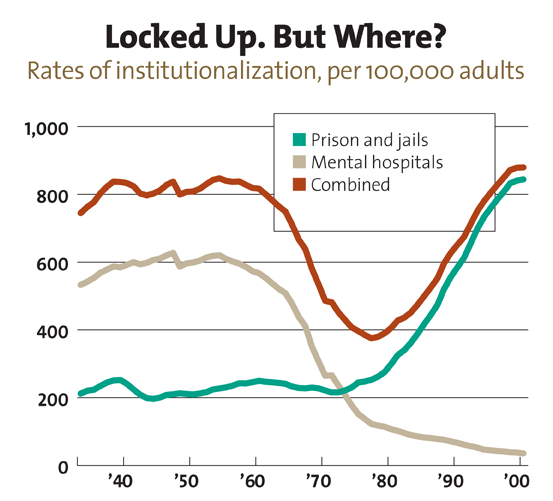
i heard a story once about a guy who was picked up by police and instead of charging him with something minor they brought him to a hospital where he legitimately thought they were about to lethally inject him. as you can imagine, he fought like hell for his life and some of the healers were significantly injured. they decided not to file charges, and the man was able to receive treatment and begin recovery. basically same situation happened to a man picked up with a minor infraction who was instead stuck in a small solitary confinement cell that he never left. there are routine checks that have to be done of these spaces that require a prisoner to be briefly somewhere else. he refused to come out as he thought an execution was imminent and they were forced to perform an 'extraction'. as you can imagine, he fought like hell for his life, although no one was injured. however, assaulting an officer is a significant potential offense, especially as compared to whatever the initial minor charge was and he has slim chances of ever making a full recovery. in this way, many mentally ill patients get wrapped up in the system with compounding violations and are stuck in an environment where they are not able to get the treatment they need, which usually has a compounding effect on neuro-degeneration and disease progression. this is all on top of systemic-level discriminatory outcomes involving minorities and low-income individuals that sometimes occurs in criminal justice. there are 10x more mentally ill individuals incarcerated than there are in hospitals and mental health facilities.

institutionalization.png


teaching patients about their rights and how to deal with the authorities and properly respect the law is vital and learning to navigate our complex system of care is critical, but a major paradigm shift is past due to address the egregious shortcomings in our system. it must reach the level of improving education, standards of care, and public policy if we are to truly love and help those unable to help themselves. good luck.
 
I am tasked to create a film for some mentally ill patients - those with depression, PTSD and bipolar disorder, among others. It should be part of their therapy so I need it to be creative and informative, but I do not want it to be boring. Any suggestions on how to do it - I mean, the concept? Do you think interviewing doctors would make the film boring?

I thought the request to begin with was kinda funny (in tone)...

"I am tasked to create a film for some mentally ill patients"...

(You know just a bunch of random mental disorders of this type or that type amongst a few other things... You know random "mental conditions"... ).

But in spite of being a general "Bucket" of randomly cobbled together mental disorders "I" am tasked to produce (with immense care and sensitivity) an actual "Film" that is an intrinsic part of the "Therapy"... BUT it seems the most important criterion is to not be "Boring"...

And I am soliciting the core concept/script outline from an online forum?

But don't forget the "Film" I make will indeed have an impact on their mental health as it is going to be used as an intrinsic part of "Their" treatment...

[Probably someone might have to hire a lawyer to create some serious indemnity clauses here... (Just saying); hard not to think about 'Clockwork Orange"... (In this context).].

What could possibly go wrong?

_____________________________________________________________________________________________________________________________


@Maira Fravel Without a true context of your role and relationship to the client and clear and focused objectives for the project it comes across as being a little "Out there"?

So are you part of an AV department in a University or teaching hospital or larger institution or faculty, or is this a notional student project or are you guys loosely being tasked to submit a "Pitch" for commercial work etc. etc. To a particular client.

No disrespect but there is a lot missing there in terms of project rationale and who the clients are.

_________________________________________________________________________________________________________________________

@Paul nice to see you floating about Reduser...

Eric, maybe you are correct but judgemental?
Or in other words: "how did you help?"
 
Eric, maybe you are correct but judgemental?
Or in other words: "how did you help?"

YES judgemental, in the sense of how various media professionals and colleagues (over the years) might be minded to use very serious human topics and subjects in a somewhat exploitative way. In other words a cursory and superficial treatment that is rendered in an almost disposable way.

Obviously no one should traverse such a subject (OP) unless they are working very closely with co-authors that are qualified "psych" professionals.

So OP introduces the idea that a single "Film" (to be made) is prescriptively useful for ( and I quote), "or some mentally ill patients - those with depression, PTSD and bipolar disorder, among others.".

Depression (causes thereof),

PTSD (causes thereof), and other manifestations such as CPTSD (Complex-Post Traumatic Stress Disorder) from long term abuse,

AND Bi-polar disorder... Which frankly is now an out-moded/outdated diagnosis (now controversial) which has the capability to actually encompass certain pathologies that can present themselves from a spectrum of personality disorders that can manifest from certain aspects of specific "Cluster-B" personality disorders (as defined by the DSM-IV "Diagnostic and Statistical Manual"), as well as from completely different pathologies.

Each "Illness" or "diagnosis" or "Specific pathology" or dare I say even "Label" correct or other wise or even personality disorder or even pervasive and pathological personality style really requires very specific and separate treatment and therapeutic modalities. There is not one therapeutic bullet "Cure all " for that nor necessarily one therapeutic "Film" for all that? The issues for depression can also be very closely linked again to specific brain chemistry, so that is almost a completely different frontier. Again especially with disorders caused by trauma and abuse there are very complex interfaces and interactions between permanent alteration of brain chemistry and neural pathways that do show up as "pathological" behavior that in a lot of cases are not responsive to "Cognitive therapy". Some of the Cluster B personality disorder are not responsive in any way to therapeutic and neurochemical or pharmacological treatment.

This frankly is not a subject to be meddled with or deal with in a very superficial way... So hence I pose some "framing" questions to gain clarity on the specific situation and project objectives and relationship with the client. OP used the key word "Tasked" here.

______________________________________________________________________________________________________________________________________

On the other hand there has been recent research on the use of "Psychedelics" to give the brain a serious re-boot for handling a range of seemingly disconnected pathologies and illnesses. So maybe OP has something to do with that as there is no direct therapeutic all encompassing (therapeutic) relationship with the "Illnesses" cited. Oddly enough the results seem quite positive?

______________________________________________________________________________________________________________________________________

And (also on a side note): Aalso not atypical that those suffering from various forms of co-dependency would be minded to be excessively conscientious and offer to help and throw everything they have at a somewhat ill defined scheme and thematic problem. Or as some call it "People pleaser" syndrome (in some cases). So sometimes being well boundaried (sp) requires one to actually not help those that might be minded to be exploitative.

______________________________________________________________________________________________________________________________________

It's important to have a bit of a sense of humor and one's feet planted firmly in the ground. Having been very active in the "Psych" community especially for victims of abuse and abuse recovery, and the plethora of new work and research being carried out in this area that sometime the bickering and territorial claims between experts in the field that are often made would really make excellent material for very satirical movies, books, plays etc. [It is sometimes a very Woody Alensian and Mel-brooksian space and have often wondered when I would ever "Render" a script to bring light and lightness to such goings on and such matters... I have to say in such a field there is almost a never ending "Reality tunnel" of unresolvable ironies]. .. And that's where a good sense of humor is really important IMO.

_____________________________________________________________________________________________________________________________________

Long story short to OP's question. Answer : Humor. (But humor, that shows empathy and understanding of otherwise very difficult struggles that folks have dealing with such matters... And frankly has the capability to poke fun at those that really don't understand their plight, including so called "Doctors" and experts and outdated modalities of treatment and associated attitudes.).


To OP there is ton of stuff you can draw upon on the "Interweb"/YouTube as approaches to handling such topics and issues. More ways of traversing these subjects than you could possibly shake a stick at ... Including animation.
 
eric, i had a slightly similar opinion about bipolar disorder and know others who share the same sentiments, however i did speak with an individual once who identified a patterned cycle of what is understand as mania and depression and found the diagnosis was helpful in understanding that he needed some help and guidance with what he was experiencing and just based on the brief time that i spoke with him he did not seem to have any personality issues, so that kind of helped me form an opinion and i don't think it's useless, even if it is sometimes incorrectly applied, like potentially in the case of an acquaintance of mine who confided to me that she was bipolar, but obviously displayed some very serious issues on the emotional/personality spectrum that i observed, however that could be a comorbidity situation or something that i (and potentially she) was not made aware of directly. you are right to suggest that there is a wide range of manifestations and problems to address and consider, so i think getting into the idea and demonstrating healthy relationships with proper boundaries is key. one thing that is almost humorous to me is that it can seriously help patients sometimes to understand and observe and learn about those with totally different situations and illnesses than them because they are able to see someone real who definitely needs help and support, which can lead sometimes eventually to a realization in themselves when the evidence adds up for them and they are able to accept that they have a problem of some kind that needs to be addressed.

other than the fact that it is actually happening clinically and even slowly becoming approved in our current system, i am not sure that it is so surprising that some of these psychedelics and likewise controversially alternative medicines/drugs are proving successful, sometimes with considerably better results than the currently accepted standards of treatment and care. we have known for a long time about the significant levels of self-medication and substance use/abuse in this population and it has long been theorized that what is often labeled drug abuse can be at least partially explained as a coping mechanism and form of symptom control or self-care that is at least partially or temporarily effective at times. that is not to say that there are not significant issues much of the time, even beyond health factors and risk/danger plus exacerbation of financial instability, etc. etc. i kind of treat everything as a medicine so to speak (kind of going back my ideation of diet and exercise, food/nutrition in turn at least sort of counts as medicine because of how it can effect us), alcohol has always been a medicine and for me it is at least a kind of social medicine where i am always considering the therapeutic range, thus i drink quite infrequently and moderately-sparingly based upon the particulars of my body and how it affects me. i think that clean tobacco is effectively therapeutic, but frankly i'm really not sure why there is a bunch of shit in it here, so i will occasionally use swedish tobacco and find that it can significantly help my alertness, focus, and relaxation - although the cherokees and others have known about other important uses beyond that, which is personally interesting to me considering my heritage here. i have never felt the need to try psychedelics, but i expect that the major perspective-shift they bring could ironically jolt someone into reality if not alter their state of mind and consciousness - folk practices are interesting in this regard, especially the ancient and native use of such substances, as well as all the anecdotal evidence that is out there. there's a lot of other stuff out there along with these examples that really needs to be being administered safely and effectively within a therapeutic window. substance abuse and addiction is mostly a very serious situation and a lot of things statistically cause high rates of dependence, and honestly just about any habit can be psychologically addictive and frequency or amount of use is not the only determining factor in recognizing a problem. on the other hand, just because some one claims or even is using something just because it 'feels good', does not mean that it is purely recreational as opposed to therapeutic use - i mean that is kind of the point of therapy after all, isn't it, to feel and get better? (that is not necessarily an excuse to use anything though, and really i think we just need to improve the way we think about and talk about and research/implement these things to be of ethically, responsibly, and considerably sound mind)

i'll just leave you with this graphic to consider, i think it is fairly indicative of the national situation.

Homeless%20have%20multiple%20health%20problems.png

https://www.tcdailyplanet.net/wp-co...ay/Homeless have multiple health problems.png
[it is not shown, but basically imagine another circle roughly the size of the blue one representing those that were not identified to have these problems at a clinically-significant level, which does not leave out the possibility that they may just yet to have developed, or were otherwise hidden or not recognized issues, as well as other factors like alternative lifestyles and other things that lead to prejudicial treatment and such - basically there is a significant portion of the population that we are largely failing to help and these matters do not reflect what i would consider markers of a healthy and successful society right now]

:crying:
 
eric, i had a slightly similar opinion about bipolar disorder and know others who share the same sentiments, however i did speak with an individual once who identified a patterned cycle of what is understand as mania and depression and found the diagnosis was helpful in understanding that he needed some help and guidance with what he was experiencing and just based on the brief time that i spoke with him he did not seem to have any personality issues, so that kind of helped me form an opinion and i don't think it's useless, even if it is sometimes incorrectly applied, like potentially in the case of an acquaintance of mine who confided to me that she was bipolar, but obviously displayed some very serious issues on the emotional/personality spectrum that i observed, however that could be a comorbidity situation or something that i (and potentially she) was not made aware of directly. you are right to suggest that there is a wide range of manifestations and problems to address and consider, so i think getting into the idea and demonstrating healthy relationships with proper boundaries is key. one thing that is almost humorous to me is that it can seriously help patients sometimes to understand and observe and learn about those with totally different situations and illnesses than them because they are able to see someone real who definitely needs help and support, which can lead sometimes eventually to a realization in themselves when the evidence adds up for them and they are able to accept that they have a problem of some kind that needs to be addressed.

other than the fact that it is actually happening clinically and even slowly becoming approved in our current system, i am not sure that it is so surprising that some of these psychedelics and likewise controversially alternative medicines/drugs are proving successful, sometimes with considerably better results than the currently accepted standards of treatment and care. we have known for a long time about the significant levels of self-medication and substance use/abuse in this population and it has long been theorized that what is often labeled drug abuse can be at least partially explained as a coping mechanism and form of symptom control or self-care that is at least partially or temporarily effective at times. that is not to say that there are not significant issues much of the time, even beyond health factors and risk/danger plus exacerbation of financial instability, etc. etc. i kind of treat everything as a medicine so to speak (kind of going back my ideation of diet and exercise, food/nutrition in turn at least sort of counts as medicine because of how it can effect us), alcohol has always been a medicine and for me it is at least a kind of social medicine where i am always considering the therapeutic range, thus i drink quite infrequently and moderately-sparingly based upon the particulars of my body and how it affects me. i think that clean tobacco is effectively therapeutic, but frankly i'm really not sure why there is a bunch of shit in it here, so i will occasionally use swedish tobacco and find that it can significantly help my alertness, focus, and relaxation - although the cherokees and others have known about other important uses beyond that, which is personally interesting to me considering my heritage here. i have never felt the need to try psychedelics, but i expect that the major perspective-shift they bring could ironically jolt someone into reality if not alter their state of mind and consciousness - folk practices are interesting in this regard, especially the ancient and native use of such substances, as well as all the anecdotal evidence that is out there. there's a lot of other stuff out there along with these examples that really needs to be being administered safely and effectively within a therapeutic window. substance abuse and addiction is mostly a very serious situation and a lot of things statistically cause high rates of dependence, and honestly just about any habit can be psychologically addictive and frequency or amount of use is not the only determining factor in recognizing a problem. on the other hand, just because some one claims or even is using something just because it 'feels good', does not mean that it is purely recreational as opposed to therapeutic use - i mean that is kind of the point of therapy after all, isn't it, to feel and get better? (that is not necessarily an excuse to use anything though, and really i think we just need to improve the way we think about and talk about and research/implement these things to be of ethically, responsibly, and considerably sound mind)

i'll just leave you with this graphic to consider, i think it is fairly indicative of the national situation.

Homeless%20have%20multiple%20health%20problems.png

https://www.tcdailyplanet.net/wp-co...ay/Homeless have multiple health problems.png
[it is not shown, but basically imagine another circle roughly the size of the blue one representing those that were not identified to have these problems at a clinically-significant level, which does not leave out the possibility that they may just yet to have developed, or were otherwise hidden or not recognized issues, as well as other factors like alternative lifestyles and other things that lead to prejudicial treatment and such - basically there is a significant portion of the population that we are largely failing to help and these matters do not reflect what i would consider markers of a healthy and successful society right now]

Yeah... I agree with everything you set out there.

I am not endorsing /pushing psychedelics (per say). Diclaimer lol. But in some cases from long term abuse and PTSD what is called the HPA axis in the brain IS damaged and its function is impaired and to an extent the Amygdala... These connected regions of the brain and important pathways are responsible for emotional regulation become compromised, and the wider and more normal pathways go "dark" resulting in more simplistic emotional responses and inability to express those emotions or communicate properly in some instances. So the HPA axis kinda gets stuck in a control "loop" of its own as very abused individuals are somewhat stuck in permanent flight or fight response (present with fertive gaze and glances) and general high levels of "doom" and cortisol and fried adrenal function. Long term very corrosive and damaging. So it seems either by very specific "Shrooms" and LSD that (it has been reported) that re-opening those formerly darker pathways (as the psychedelics basically Switch everything on at once without causing seizure) and maybe have that re-boot effect/ unlock dormant pathways to free the afflicted individual that was previously bound into that flight and fight HPA axis dysfunctional 'Loop"...

I know folks in Neurology and also X-military (X-bomb squad) + PTSD that are doing interesting research and tests in this area. Early days but seems to show some promise.

@Paul H I completely agree (at least in my personal experience) with the homeless very large fraction dealing with mental health issues that really do in some cases really keep folks on the streets (Very sadly).

YES self medicate in all kinds ways but have in recent years found a cleaner life style, Gym, (don't smoke anymore) and only the occasional scotch. I knew a couple of practitioners on the Neurology/ADD dyslexia front that had a pretty strong "Thesis" to bring about how we should pay attention to the human basic ability to "Self-medicate".

If you are interested I know a couple of people in Psych community that really could do with better and more professional writing, "direction" and basic film craft to get their message across. I feel like saying if "you"/or anyone out there, are a good film maker (or good enough) adopt a YouTube psyche channel (that you might deem as being "Good" for the world), to help raise their game and get their message out there to a wider audience.
 
PTSD is something i am definitely interested in studying and understanding more, especially as a few of my friends, mostly veterans, that i know of deal with it to some degree. i have not reached an expert level on any of this stuff but very well may. it is kind of funny how i decided early that i did not want to pursue being a 'doctor' (which to me encompassed the entire health and wellness profession) because i was worried about the most extreme specialties like dealing with surgical procedures and traumatic deaths and such. it's even funnier because i basically made this decision after hearing a story that involved scalping and i'm not sure how i was able to accurately imagine what that looked like but i didn't like it. so, i didn't realize how much healing and wellness is really dealing with life and the body/brain in a non-invasive way. but then i might not have gotten into studying art and narrative and how powerful they can be for other types of healing and of course otherwise everything would just be different (and chaotic, butterfly yadda yadda, dinosaur eats man, woman inherits the earth).


but then i ended up training anyways in things like first-response and wilderness first-aid and realized that i actually was mostly mentally/emotionally prepared to deal with the worst case scenarios when the situation demanded it, although i prefer not to regularly be the one dealing with that kind of trauma and really dislike situations where i happen to be the most medically-advanced individual available even if i've always performed well with good outcomes under that stress. some of the firefighters i worked with would complain about getting bored when there were no fires for a significant period of time, i'm like we don't want any action. i don't want to see lives or property or memories or anything good destroyed and i certainly don't want to risk my life or see others get hurt because somebody got bored and set something on fire. i like helpful and productive and nonhazardous creative fire where it's well-contained and supposed to be thank you very much. but it's just fascinating how many ways there are to help others through various positions and pursuits, although it can be difficult sometimes to choose how to spend our time and efforts as there are so many various causes that need attention currently, so i think it's helpful (and honestly guys probably a 'safe' and solidly valued investment, even economically speaking) to find an underserved/underutilized niche as at least secondary to your primary occupation (and look at all these intersecting, overlapping, and wide-ranging issues revealed already in this discussion that really potentially affect anyone and everyone). helping oneself is generally good, but if our whole life is only consisting of helping ourselves how sad is that and i'd say absent any other symptoms that one may need to watch whatever this video is going to be for a start and we do need to think about social dynamics and positive mental health patterns and habits at every level of our society, even and maybe even especially for 'healthy subjects' so they stay that way with preventative care. prevent the fire and you don't have to put it out, but always be ready to contain the problem as quickly and safely as possible when it inevitably occurs. i am a huge fan of what the "positive psychology" movement is attempting to make plain and believe that a lot of this stuff should essentially become a better "pop" psycho-sociology for the entire population to practice in some ways.

anyways, i think the most obvious use for some of these currently controversial treatments is in severe cases of say, depression, where suicidal tendencies/ideation are present or suspected simply because some of these 'novel' treatments are seriously fast-acting, and when appropriately dosed only produce the not-always unpleasant side effects of basically being high for maybe an hour, but can continue their therapeutic effects for a month or more without any further treatment - sometimes potentially ever - and are very likely just more effective overall anyways. besides messing up interests other than actually caring for patients in the best available and possible ways, this kind of flips the whole 'drugs are bad, drugs kill' POV because here you have a situation where some 'club drugs' are literally preventing casualties and loss of life. that does not mean they work across the board and don't produce extremely negative outcomes in rare cases, which is debatably somewhat true of almost any powerful drug or medicine, but in this case considering the risk factors of anti-depressants and how long it takes for them to potentially not even produce results that are better than walking around in the woods... it bears further study and wide implementation among other reforms.

so, take the case of pregnant women everywhere. it is generally accepted that their cravings and desires should be accepted and granted within reason, and even some of the unreasonable requests may represent genuine nutritional deficiencies and it is all absolutely fascinating. in some cultures it is extremely taboo or just bad luck or worse to not meet a pregnant woman's request, no matter how ridiculous - you can imagine how this could be used to humorous, if not manipulative effect. hopefully, i will have more experiential knowledge of such matters if i am not fortune's fool.
:willy_nilly::sifone::biggrinjester::gnorsi:

i'm sure y'all are most familiar with the tale of rapunzel, personally i am very fond of it so it is one of my absolute favorites lately that i am studying and have been performing traditionally for children and adult audiences in my region in the sharing and promotion of the storytelling arts (which is often also a way we raise funding for our program). you may not know that the protagonist's name, rapunzel (see variants like parsley), is referential to a plant that has nutritional and thus potentially therapeutic value. you may not remember or have ever heard that she gets her name because her mother becomes ill during pregnancy, asking the father for the lettuce that is growing nearby and is only being cultivated in a high-walled garden owned by a 'witch' (note the historical connections of what once and sometimes still are considered [accurately or otherwise] the arts of healing/medicine/shamanism/witchcraft/etc). thus the poor man is obliged to scale the wall to obtain the only life-preserving cure available, where he subsequently gets caught and compelled into an agreement to hand over the child as a sick form of extortionary contractual payment. the girl is raised in solitary confinement with dependence issues, but is able to use art therapy (singing) at least somewhat effectively as a coping strategy, which directly leads to her eventual rescue. in some versions, her prince is pushed (always figuratively although interestingly sometimes literally as well by the witch) to attempt suicide after the planned extraction catastrophically fails and he believes he will never see his love again and is literally blinded by his fall, but after much misfortune they are reunited and he is essentially healed by his wife's love and affection (with the aid of magical 'tears' as ointment), so they are finally free together to experience life, liberty, and the pursuit of happily ever after (and european property rights).

every single character is suffering in some way throughout this story as you will notice especially if you read really whatever version. it is hard to imagine that any one of them could have escaped a mental health diagnosis at one time or another, potentially labeled chronic or degenerative in nature with a prognosis of slim to none in regards to full recovery based on currently approved and widely utilized treatments. something 'magical' is happening in their recovery (beyond the obvious) and these important elements are apparently not yet totally obvious to today's body of mental health professionals or the patients they serve (although debatably such fortunate circumstances can be hard to just 'produce' 'magically' on-demand, especially with rationed resources).

i love 'tangled' but much of this is missed unless you dig. there is a lot going on here. ;)

a83141_06f0f03f13624c5b87d614da44e60ac9.gif

https://media.giphy.com/media/A7mcrZHAok4OQ/giphy.gif

OP and/or Eric: i'd be happy to do an appropriately accurate rendition of this story geared towards this audience as a part of your project, possibly with analysis or including points to ponder, discuss, etc. (and i can easily also bring in someone i have in mind with a specialty focus in holistic healthcare, narrative inquiry, and auto-ethnography designed to enhance health/happiness outcomes) and otherwise lend my talents and research in any way that is helpful and I'll gladly discuss and coordinate with experts, specialists, and professionals. i can also write an evidence-based proposal with peer-reviewed sources if you think that is necessary. this is not just a story for kids and I can attest from experience that adults enjoy it, too, and could probably back that up with hard and 'soft' data as well and i think we can present it in such a way that adults will not feel patronized at all while still keeping things appropriate for potentially younger audiences. you can be assured that i will use proper capitalization, etc. and generally write more professionally than this, but for some reason i just really prefer these humble little i's on here or maybe it helps me code-switch between modes of conversation or maybe it's like i just need that rapunzel or i'll die. :)

anyone feel free to pm.
 
Oh, my. Some very good suggestions, thank you very much! Yes, I think talking to patients and creating something about their experiences would be very interesting. And yes, no sad music that I think would destroy instead of add 'life' to the film. I also gathered some suggestions from BetterHelp, an online community, which included interviewing the doctors of bipolar patients that I will have interviewed, sort of a combination of the two, on and off while creating some sort of reenactment. Wow, now I think this would be a winner! Thank you all!
 
Paul, that's a very sad chart to see, of the rate of incarceration versus the decrease in mental hospitals, which lands up costing us all more.
 
Maira, I understand where you are coming from, but if you are doing this for somebody in particular, ask them what they require in it. If it's a general personal project I can offer some minor hints.

I was going to suggest to talk with Paul and Eric, as they seem to have an understanding of these people. I have autism spectrum disorder and Tourette's, along with another two condition that's related to autism. Except for some depressive patients, they're all bonkers to me, and my idea of a holiday is not having them around me (I do know a number, they apparently get attracted to the Asperger's like vibe, but it is like chalk and cheese. They get near me and find I'm a fair bit rational). But, some depressives get rational.

Now some minor hints, some types will respond to a chirpy vibe, some other types will likely find that too much and too irritating. These types may well have an aversion to light and sound, so the volume, speed and visual flashiness of fast action might be an issue for one group, and desirable for another. So, there is an issue to be aware of. Party, party, people will tell you "Nah" don't worry about it, like the little devil on the shoulder in one of those old cartoons. But, despite what they may feel, they are not everybody in the world. As far as tone of film goes, a tough one. I don't even think I could make something both groups would like a lot. Maybe two videos of different tone aimed at these two different groups. You could cover all the material in each, but just present it differently to set a different tone. It might help each group see each other's condition from their perspective.

Tone is important, because there is very big noncompliance in these groups. One will be aggitatted because it's too boring, another overwhelmed and with blurred vision and hearing because it's too fast for them, want to get out of there. I presume it is something you want people in a treatment centre, it at home, to watch. But getting it right for them so it helps them, is a big reward.

Now, depression and schizophrenia are really like catch phrases that cover many different and even unrelated conditions. So, these people vary very wildly through the subtypes.

A real conspiracy is the way these people have been treated by inadequate community care inorder to close down mental institutions, resulting in more sick people in jails, likely to greatly deteriorate health outcomes (due to deficient biology of various conditions). And how medical practice, and authorities, have been blanking real progress into getting people better off medications (in the case of schizophrenia, reducing medication) and moving many back to productive lives, with hopes of eventual full epi/genetic cues. For medical - medicine, not really health - healthine.

Look up the Walsh institute and the book they have out.

Anyway, let us know the specifics of what you are aiming for Maira, and I'm sure we might be able to offer some more advice? And by the way, which country, population is this for?
 
thanks for your input, wayne, sorry we didn't touch on those aspects as they are important, too, although quite different from some of these other situations. i like your humor about that.

i think he makes a lot of good points here and you want to pay attention to age-related situations like alzheimers and other issues that might make this difficult for those with various impairments without offending the sensitivities (physically and mentally) of other patients. in addition to the variety of effects of some conditions, things like blurred vision and general slowness or emotional problems are typical results of singular and certainly combined medications especially based on some methods overly-insistent on high dosages of powerful psychiatric drugs.

my current feeling is that there is fairly substantial mis-education, missed opportunities, and mal-practice issues (especially when one considers it might sometimes be considered mal-practice to even suggest evidence-based treatment, smh). generally, i think that the practitioners want to help their patients as best they can and uphold their oaths always to the extent that it is possible, but in some ways they are very seriously victims of some of these same institutions as well which is not conducive to virtuous cycles. i think of primary concern is doing what they can with limited resources and the ethical dilemmas they are non-stop trying to navigate - they are generally so busy and wracked and they need outside forces to come to their aid to bring clarity and conscience for everyone. still wrapping my head around the problem-solving web, here.

i'm not overly familiar yet, but think what walsh has been proposing is probably a pretty sound place to start as a part of any given case and i think it is interesting that even before i started reading medical journals and texts extensively i came to some of the same conclusions mostly based on what i understood from studying folk arts and stories involving plant-based therapeutics, especially native american methods.
 
Yes, some are difficult, like schizophrenia, but some are deceptively simple, but still problematic to diagnose and self treat.

I heard of ABC Radio somebody been interviewed a few years ago (you can see my long term memory has come back, but not perfect) saying the research showed that the law and mental professions are the two practices that most attract people with mental problems. I've known people to get in very bad states because of inappropriate treatments, and amounts of treatment, because they have varying bad health side effects lead by to decline. Very time the family objects they raise the dose. This is the sort of thing that happens. There definitely are mental issues here with some people treating. One of my friends, was always having trouble, but got off her own back to see a psychiatrist in another city, and received finally the right medication and could make a living. I've heard of very bad outcomes in the general health professions. Some of these people are motivated by their own desires leading to harm rather than no harm, and desire to be in control. My recommendation to people is to look after their nutritional health on one end to hopefully reduce the negatives on the other end (treatment) and get second and third opinion if necessary to find sufficient treatment. It is horrifying to see these poor people decline not just from their condition but side effects from treatment. The latest DSM is recommending to treat the health conditions now. If the recommend to treat the nutrition and biochemistry, sometime in the future, we could see a major shift in the situation. The lovely thing about science, is even though people like to hide it, and distort it, eventually the real truth inevitably comes through. The genetic/epigenetic angle will ultimately improve things.

I however, overstated things a bit before, considering the list of main patient types Maira gave.
 
Back
Top