Welcome to our community

Be a part of something great, join today!

  • Hey all, just changed over the backend after 15 years I figured time to give it a bit of an update, its probably gonna be a bit weird for most of you and i am sure there is a few bugs to work out but it should kinda work the same as before... hopefully :)

Epic Underwater Housing

James, welcome to Reduser.

Sorry, I can not name our manufacturing facility. It is a medium size business mainly focused on defence projects, such as components for helicopters, missiles, satellites, torpedos, etc... They have several 5-axis machines, verification and measurement department, etc. I've been working with them on other large and small projects for over a decade. Arguably the most capable engineering facility on this hemisphere...I'm convinced it will set a new standard in this industry.

now waiting only for the patent attorney...the first dozen single-camera housings are being assembled. Also five 3D housings are being built after a brakthrough in removing the side SSD recording module and placing it away from the camera, thus allowing close inter-axial distance.

Private demonstarations (with real housing) can be arranged now after signing an NDA.
Sounds great to bad I dont live in Tesmania!
good luck, I hope to hear about it soon.
so have any dates for production?
Jim
 
Sounds great to bad I dont live in Tesmania!
good luck, I hope to hear about it soon.
so have any dates for production?
Jim

There is one housing in Sydney, 1200km north of Tasmania, if it helps :)

i am looking for a splash housing which I can rig to a jib.

please contact me by email on pawel.achtel (at) 24x7.com.au
 
Introducing DeepX. More information here http://achtel.com/DeepX

Hey, you took my idea and ran with it, well done! :-)

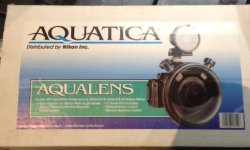
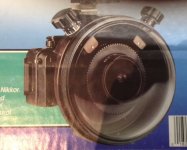
However, I'm a little curious how that affects a patent since I published the idea of making the front plate of the housing the lens mount for the Red camera with the nikonos lens mount in it three or four years ago on this very forum. I even picked up both an old Nikonos and a couple of Nikonos RS bodies to fool with so I could check the flange focal distances. And your implementation seems to be exactly what I proposed. And it's a fairly obvious idea to adapt nikonos system. In fact the way that I started using the Aquatica thread style domes that have been the stock interchangeable domes on our Redone and Epic housings is that I bought about 20 of the old Aqualens setups from Helix (brand new in the box) at a good price which included the six inch domes. And that's one of the things that made me think of using the regular nikonos lens mount on a housing - it was just an extension of what I was already doing. The main reason I never went through with it on the Redone was because of the major freak out and warranty voiding over the birger mount or any mount which took the Red mount all the way off, which was required. And I sketched it out for Epic but hadn't gotten around to it because this will surely require approval from Red to avoid voiding the warranty.

BTW: Customers that go this route may be very interested in buying one of these Aqualens setups because as far as I know the widest lens that was available for the regular Nikonos mount is the 15mm which is really a 20mm - 94 degree diagonal lens on 36x24mm SLR full frame so only about 75 degrees on the Epic 5K and 63 degrees on 4K - when these days (past 10-15 years) we are typically shooting 95 to 110 degrees on high quality underwater sytems .

Nikon called the UW15 a 15 because it has the coverage if a 15mm behind a flat port which was the comparison back in the 1960s when it first came out. Domes were just becoming known at the time. With the Aqualens you can use regular Nikon lenses and the gearing for focus and iris control is built into the aqualens just like it is on the regular nikonos lenses (although you need a gear on the lens itself as well but these are pretty common) which would allow you to go wider (for example the 14mm Nikon):

http://www.bhphotovideo.com/c/product/201421-USA/Nikon_1925_Super_Wide_Angle_AF.html

which behind a dome would get you back to a true 94-96 degrees on 5K.

Here's a link to an article about the aqualens:

http://undercurrent.org/UCnow/issues/y1995/ID0995/Aqualens0995i.pdf

I'm not knocking what Pawel did, he did a nice job of implementing it and I may even want to sell some for him if the deal is okay because there are some potential uses where compact size trumps all else regardless of a lot of other shortcomings. . I just think that, however sexy it looks at first glance, it isn't the end all/be all - there are some serious caveats - primarily the lack of sufficient wide angle (kinda bad at 5K, superbad if you shoot 4K), which will mean a substantial loss of clarity in normal shooting due to shooting through much more water. The widest Nikonos lens was designed for full frame and not even superwide by today's standards so really only makes sense when we get to a true full frame 24x36 sensor like the proposed 6K FF Epic - due who knows when?

Secondly, since virtually all of the available lenses for that mount were discontinued a long time ago you will probably only get them that are probably 15-30 years old - which doesn't bode well for reliability. Nikonos lenses are known to leak occasionally (and certainly more likely the older they get) and if it does it will be leaking directly into the sensor area and mount area of the camera which is almost certainly going to be catastrophic as opposed to a port or other leak in a regular housing that will usually first pool at the bottom of the housing and is much less likely to damage the camera. Possibly trashing -(although some of the Nikonos' could be easily fixed even after flooding)- a $350 Nikonos camera is annoying, but drowning a $30K Epic is a lot scarier.

Third, although use of the Aqualens will allow use of other lenses, it still attaches to the base Nikonos mount which is fairly small (45mm or so) so there is a lot of leverage there when you add the big Aqualens housing and would seem to allow a bump of the housing against a reef or wreck to cause a leak, which again would likely be catastrophic.

Finally, since this replaces the red mounts, it seems certain that it will require approval from Red to allow it without voiding warranty, and given the above safety concerns combined with the difficulty other much simpler mounts have had getting approval I wonder how this if Pawel has submitted it to RED and where that stands.
 

Attachments

  • aqualensbox.jpg
    aqualensbox.jpg
    69.2 KB · Views: 0
  • aqualens1.jpg
    aqualens1.jpg
    70.9 KB · Views: 0
Hey, Mike.

Thanks for the questions and feedback.

The patent is not affected. The essence of the patent is the way the interchangeable mount connects the camera and the lens. It is not about using Nikonos lenses. Nauticam has done it before.

I think the usage of Aqualens defeats the purpose. The main reason for using Nikonos lenses, specially the 15mm, is that it is superb and sharp corner-to-corner just as sharp as the best land lenses are in the air.
We can service and supply Nikonos lenses, if needed.

If the Nikonos 15mm is not wide enough, you can try Sea&Sea 12mm fisheye. I haven't tested it yet as I do not have one. The Nikonos 15mm is classified as super wide-angle and I personally do not consider it too narrow for the vast majority of large underwater subjects. I think the trend to use extremely wide lenses (more than 90 degrees) underwater was more to do with the increased DOF and to counter act the inability of land lenses to close focus on the virtual image through the dome. Nikonos lenses do not suffer from those problems and close focus just inches from the lens.

I provided two LP ports and the housing can be pressure tested or/and purged of air to form negative pressure seal. We also provide optional titanium cage around the lens to prevent damage or extensive force applied to the lens.

The lens mount features appropriately shaped holes for locking pins allowing for thermal expansion. I see no reason for them to void warranty. We are currently seeking approval from RED.

3D version coming very soon :)
 
snip:

Hey, Mike.

Thanks for the questions and feedback.

The patent is not affected. The essence of the patent is the way the interchangeable mount connects the camera and the lens. It is not about using Nikonos lenses. Nauticam has done it before.

Pawel:

Understand on the patent.

And I agree that the beauty of the Nikonos 15mm is that the glass dome on it is perfectly matched to the lens which is VERY difficult to achieve with standard housings and larger domes. The nikonos flat front lenses don't have much advantage other than size (not trivial when it comes to 3D, see my comments below). My point with the Aqualens was just that there is an off the shelf answer to using standard nikon lenses with your system that has the built-in focus and iris gearing and multiple dome and flat port options.


snip:

If the Nikonos 15mm is not wide enough, you can try Sea&Sea 12mm fisheye. I haven't tested it yet as I do not have one. The Nikonos 15mm is classified as super wide-angle and I personally do not consider it too narrow for the vast majority of large underwater subjects. I think the trend to use extremely wide lenses (more than 90 degrees) underwater was more to do with the increased DOF and to counter act the inability of land lenses to close focus on the virtual image through the dome. Nikonos lenses do not suffer from those problems and close focus just inches from the lens.

This is where I have to strongly disagree and think you're being a bit misleading. The general definition of a super wide is that the focal length is smaller than the short side of the sensor/film size. i.e. 24mm for SLR full frame; 14.5mm for Epic 5K and 12.4mm for Epic and Red1 4K.

The 15mm (which again is actually a 20mm - 15mm was a 1960s marketing misnomer/lie) is only a super wide on the FULL SLR 36mmx24mm FILM FRAME FOR WHICH IT WAS DESIGNED. On Epic 5K it is only a moderate wide angle and even less so on 4K.

Secondly, I think it is completely inaccurate to suggest that the trend to wider lenses was about DOF or inability to focus on the dome virtual image. The vast majority of high quality underwater footage has been shot on 2/3" or smaller sensors where DOF is much greater than on the large Red1/Epic sensors, and focus was never a real issue. Virtually all AF video cameras for the past 15 years have had no problem focusing on the virtual image, and the wide cine and video lenses focus down into the range needed as well. If focus was the issue then Fathom, Amphibico and Light and Motion would never have made their special underwater optics in the 90-110 degree range since they created the focus within the optic so they could make it focus wherever they wanted.

In the past 25 years I have worked with, talked to, rented to, or sold to, virtually every major underwater filmmaker and I don't know ANY that would suggest that 75 degrees (diagonal) on the Epic 5K (or worse 63 degrees if you shoot 4K) would even approach the degree of wide angle you would prefer to shoot with.

No, the reason for going wide as reasonably possible is two fold:

First: in both still and video - even in the clearest water - clarity AND COLOR SATURATION is dramatically increased by being able to move even a bit closer to the subject.

Second: In motion pictures, unwanted camera movement tends to be disturbing and the on-screen effect of camera movement is greatly reduced the wider your lens.

Finally, yes you could use the 12mm fisheye but besides the obvious issues of shooting with a fisheye, you lose most of the advantage of dedicated underwater lenses like the Nikonos 15 since fisheyes actually perform quite well in the regular dome ports on most housings since the optics of a fisheye match quite well with the dome.


3D version coming very soon :)

Now 3D is where I see some significant advantage to what you are doing. From what I understand It allows you to get a very compact unit with a side by side interaxial of 4 inches or so. Certainly not ideal, but pretty good for large subjects/scenes where you can stay back at least 4 or 5 feet or so (but even there you are pushing it for proper 3D and will lose a fair amount of picture when you software converge). However, you are getting the quality of the Nikonos without giving much on the angle of view since with regular housings in either side by side or beamsplitter you are kind of stuck with flat ports and limited wide angles anyway. And there is no question, you are approaching the limit of compact size - at least until Jim makes us a dual lens 2/3" scarlet with those mini primes :-)

Beamsplitter rigs will still be required for closer subjects and macro - but I'm working on a (relatively) compact beamsplitter dedicated macro unit that might be a great complement to your side by side 3D rig.
 
Thanks Mike for the feedback.

The Nikonos 15mm has about 76 degree angle on the current Epic sensor and 94 degrees on a full frame. It has superb contrast in comparison to housed lenses as I found from my measurements with Imatest and real-life images seem to confirm it.

I also tested the standard and inexpensive Nikonos 35mm kit lens and it is actually quite a good and sharp lens from about f/4.0. It actually performs better underwater than a housed land lens especially in the corners. It seems to have sharp and undistorted edges with no chromatic aberrations (measured at less than 1 pixel)

I agree with you about the 3D. We can actually put two 15mm Nikonos lenses side-by-side with less than 4" inter-axial distance. You are also correct about macro and closeup, which would be much better covered with a conventional beam splitter rig. I can't wait to test the 3Deep with some large subjects, like whales, coral reefs, kelp forests and big schools of fish.

I think the biggest advantage is freeing yourself from using ports. Water contact submersible lenses have no distortions underwater and render very natural, high contrast, razor sharp images corner to corner, which is essential for cinema, and particularly 3D.

The part I would question is your implying that the available ports for "land" lenses are so much worse. Remember the Nikonos 15mm is "just" a 20mm lens with a glass dome port and the proper extended flange distance to correct the focus for the refocusing that occurs with that very small diameter dome. (for those that haven't studied dome optics - the dome when put in contact in water refocuses the image to where infinity is 3x the radius of the dome in front of the dome - i.e. a 3" radius dome puts infinity at 9" in front of the dome, and all other distances are progressively closer. All of this was studied quite scientifically for the US Navy in the early 1960s and published by Gomer T. McNeil. I was given a copy in 1986 by the late Rick Frehse) This refocusing is handled in the 15mm Nikonos by extending the FFD in the same manner as using extension tubes for Macro. The 15 also probably benefits from some internal AR coating on the glass dome which tends to increase contrast.

So, if you read through that you will see that it isn't radically different than current land lenses behind glass domes with AR coatings. IIRC your tests were done with some acrylic domes which had no AR coatings - hardly a fair apples to apples comparison. I'd really like to see a side by side test between the Ruby 14-24 (or the Nikon 14-24 it is based on) behind our glass dome versus your version with the 15mm Nikonos. If you can get one to the states I think I can arrange some testing with some people that you would agree would be pretty fair minded about it.

I can tell you that the 14-24 Nikon is one of the finest super wide lenses ever made, the combination of the nano coatings, ED glass, and aspheric lenses gives it superb contrast and chromatic aberration correction that was clearly better than the 14mm ultra prime in a side by side projection test where all parties (including the owner of three sets of ultra primes) agreed. We also agreed that sharpness was very close and if anything the 14-24 was slightly sharper. It is hard for me to believe that this ultramodern design (august 2007) can't be made to perform better underwater than a 20mm housed lens from the early 60s. I think our glass dome may be sufficient to do that, but it may also be time to let it out that I know of at least one full water correction optic (similar to those made by Fathom for video cameras) is currently being developed and near completion for the 14-24 Nikon.

Even with just the glass dome the 14-24 Nikon gives a 96 degree wide angle on 5K and 83 degrees on 4K. For 4K shooters you can simply switch to the tokina 11-16 and get 96 degrees.
 
Thanks Mike,

I was expecting to have comprehensive comparative measurements by now and I had a setback after thousands of dollars worth of my testing rig was smashed to pieces by TOLL Tasmania - a local transport company. It will take me several weeks to rebuild my testing rig.

I'm sure I will be sending you some housings soon and I don't have any doubts you can do excellent evaluation. However my preferred method is to use industry standard SFR plus charts accurately aligned in controlled conditions and analyze with Imatest. It is an excellent, repeatable and comparable way of evaluating lenses. You can even compare the results to land based lenses published on many websites.

Dome ports have one nasty feature: field curvature. However, Nikonos 15mm and 20mm do not suffer from that. Nikonos lenses are optimised to produce flat and undistorted view for close focusing.

Also, domes tend to project the virtual image very close to the lens where land lenses do not perform very well. I was suprised that Nikonos 15mm resolved underwater almost as much in the corner as a Master Prime in the air. I was trully amazed how good those lenses are despite their age.

Anyway, despite obstacles, I'm working hard to replace my test rig and publish comparative results as soon as possible.
 
Pawel, how do you monitor what you're shooting and control things like shutter speed, frame rate etc?

Hey Paul,

I think DeepX has more monitoring options than any other housing:

1. Internal through 5.6" RED monitor
2. Internal through small HDMI monitor, for example smallHD DP4
3. External RED monitor
4. Any external HD-SDI monitor
5. There is also an option for an optical Nikonos range finder for framing shots.

Control of functions other than Power on/off, rec/stop, User 1 (generally mapped to 1:1 zoom) can be done through Redmote. At this stage this is the only option to control extended functions in RED Epic. I discussed this off-line with Mike from Aquavideo and he seemed to be keen to offer Redmote housing for DeepX and 3Deep.

Accordingly, at this stage I do not intend to offer external monitor housings or Redmote housings. I feel confident that currently available solutions will meet the requirements very well.
 
Hi Michael,
What depth rating have you ( or anyone else ) pressure tested your glass dome for the 14-24 to ?

Thanks,
gavin.
 
Do you have pix of the rear in a fully configured state with a monitor inside?

LOL, I spent whole day on a photo shoot and still didn't manage to get even 5% of different configurations.

The internal monitor can be mounted either vertical, but I prefer it tilted on an angle facing upwards.
The rear window has sealed edges to eliminate glare.

One of many options is to use the rear monitor for focusing using 1:1 magnification and optical range finder for framing.

There are top rails coming, long and short, side handles, top handles - all made of Titanium grade 4.
There is HD-SDI output that can be installed using Fischer underwater connectors for cable to surface monitoring or for external monitor.

Please bear with me as more details and pictures will be released soon.
 
Back
Top