Welcome to our community

Be a part of something great, join today!

  • Hey all, just changed over the backend after 15 years I figured time to give it a bit of an update, its probably gonna be a bit weird for most of you and i am sure there is a few bugs to work out but it should kinda work the same as before... hopefully :)

Dynamic Range

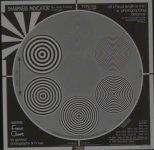
On the center pattern there seems to be an asymmetry in the vert and horz resolution, I seem to see that in other sensors as well and have been looking into the cause.

The first thing that seems logical would be the pre-amp bandwidth before the ADC, since before they have posted sine wave charts used for adjusting the so called 3.2K resolution, if the horz resolution is lower than the vert resolution then if they adjust for the horz the vert will be peaked too much.

To compensate for that you need to blur the image in the vert to make the resolutions equal? (or use better preamps)

That's because the centre of that chart IS asymmetrical.

Graeme
 
ok. This question is so basic I am embarrassed to ask. But I have to know anyway. How does HD look on a cinema screen? Can you even project it with a 2K digital projector? Is it practical to spend the extra thousands and wait and wait for a RED SCARLET 3K compared to just buying a Sony PMR EX3 now? My ambition is to screen a film at a film festival. Is HD 'good enough'? And if it can be done what about the 'look'. Audiences are used to seeing film. It's not a 'theatrical movie' in alot of peoples minds unless they see that film look. I mean, people watch video all day long at home on TV. But when they shovel over money they want something different. Film is beautiful if in the right hands. Audiences see it. And what about all the glare and blown out bits video produces. I submit 'Knowing' and 'District 9' as examples. Red digital, Sony, etc............it's all CMOS sensors isn't it?. Now I understnad content is king. The academy award went to a film shot 2k digital.

Jannard has made alot of claims so far about the amazing progress he is making. Of course we are all waiting to see it. All we know now is that the hardware is pleasingly estetic Do I wait and take it all on faith? I'd like to know what a professional cinematographer such as Mr. Mullins thinks as well. It's hard to ride this wave of bleeding edge digital technology for months on end. I want to make ART now. But I don't want to waste money on an HD camera or for that matter 'todays technology' ie RED ONE, if on the near horizon is the SECOND COMING. Know what I mean?

Paranormal Activity was shot on a cheap HD camera. Really low grade cameras have been used to shoot indie features for quite some time. People don't choose to go see a film based on what camera is used. However, shooting green screen and special effects shots benefit a great deal from using the best camera possible.

The Scarlet 2/3 will be a price performance breakthrough. It delivers the best pixel power for your money. The problem is that nobody knows when they will actually be able to get one. It could be a six month backlog from the still to be determined ship date.

Therefore, get a camera that you can use now if you can't wait six months for the Scarlet. If you can hold out, it might be worth it. However, don't put you life on hold waiting for this thing to ship.
 
Red/Blue vs. Green/Green distance

Red/Blue vs. Green/Green distance

That's because the centre of that chart IS asymmetrical.

Humm?

I think their is a systemic issue with the Bayer filter, because the RED/BLUE distance is larger than the GREEN/GREEN distance if you adjust the OLPF for the GREEN/GREEN then there is not enough blur for the RED/BLUE, and if you adjust the OLPF for the RED/BLUE then you over blur the GREEN/GREEN and you need more sharpen for the GREEN or LUMA and so pick up more noise that way.

If there was a OLPF that had a smaller radius for the GREEN then RED and BLUE it might work, othersize you lose some detail trying to control the yellow/cyan artifacts, like the ones in that test chart.

I have been converting the Kinor-2K and ACAM DII DNG into RAW data files to process and notice the SAME yellow/cyan artifacts that you said newer versions of your de-Bayer code hide better.

The Kinor-2K does not seem to use an OLFP, and the OLPF in the ACAM DII seems too close to the sensor or something, they may not have noticed since they may be shoting indoors at larger f/ numbers, as everyone knows the "plate effect" varies with f/ stop, so if you shoot a test chart at f/2.8 using a Zoom indoors and adjust the OLPF then shoot outdoors at f/6.3 with a sharp wide angle lens you can get more aliasing that you did not see on the chart.

So what is the answer about the OLPF radius not matching for GREEN-GREEN vs. RED-RED or BLUE-BLUE distance?

How does software remove the yellow/cyan artifacts when that job is for the OLPF?
 
Here's what that R3D looks like today.

As for what happens to the chroma moire - there's analysis that detects and cancels it out.

OLPF is tuned for somewhere between the needs of green and needs of chroma, but takes into account the resolution needs of green, avoidance of luma aliasing, appearance of chroma aliasing and removability of chroma aliasing. It's a fine juggling act.

Graeme
 

Attachments

  • today.jpg
    today.jpg
    78.3 KB · Views: 0
Isolated chroma

Isolated chroma

As for what happens to the chroma moire - there's analysis that detects and cancels it out.

Thanks for the reply on the OLPF issues.

The edge finder for the chroma patches does the opposite, so if the "analysis" does not come out right you get speckle or blur in the wrong places...

That is not the same result as you get with a three chip camera though where each point on the image can have any chroma value independently.

At 4K or higher the small spots of color the get de-saturated may not be noticed, but the more such processing you do the less like a "simple" 3 chip RGB camera you get to, not that those are not doing signal processing now also.

When you start doing 3D LUT to "fix" IR bleed through, and "chroma key" to alter the patches of the color chart, the results may look nice, but they are not so much "photography" any longer.
 
Photography has always been about manipulating the image one way or another...

Graeme
 
Back
Top