Welcome to our community

Be a part of something great, join today!

  • Hey all, just changed over the backend after 15 years I figured time to give it a bit of an update, its probably gonna be a bit weird for most of you and i am sure there is a few bugs to work out but it should kinda work the same as before... hopefully :)

DOF test with Angenieux 25-250mm

Hi,

I have used the old one 6 pound one without a support a couple of times. The later lenses are much heavier and opticaly superior IMO.

Stephen

Do you have any information on the six pound one that we are using? A friend of mine purchased it from Visual Products but doesn't have much information on it either.
 
I can support my 20-60 just barely like that, but it would probably do better with a support. Next question, where can I get a support? I've got an extra universal mount for 19mm rods, so I just need something that goes up from that to meet and encircle the lens. Any suggestions?

Matthew

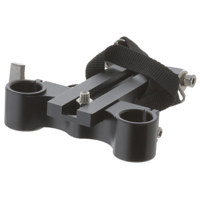
Couple of options: strap lens support from Cavision, price $65.

R15-LS25SET.jpg
CIR15LS25.jpg


or this from Zacuto. $340 for this 15mm rods option, but they sell all the bits separately so you should be able to rig up something with the universal mount for less.

GOODZacuto%20LightweightLockingLens.jpg
 
I don't know about the later series 10x25's but the early ones used just a standard multi start focus thread (just like the 16mm zooms did). So supporting the lens in any manner will have no effect on the load of the focusing mechanisim. In fact even with an internal focusing system (where the lens does not change in physical length during focusing) I don't see how a lens support would have any efffect on it. But otherwise, yes a lens support is called for on a lens such as this.

When stress is placed on any section of a lens, especially a physically long lens, it manipulates the body and components inside the lens. This causes even the very front of the lens, or the focus mechanics to be even more out of place. With the rotating front of the older 25-250 lens, the body flexing in the middle only places more stress on the front. If it is supported from the center of gravity, the lens has much less force to fight with.
 
Do you have any information on the six pound one that we are using? A friend of mine purchased it from Visual Products but doesn't have much information on it either.

Hi,

There is another thread from last week where I was flamed for giving my opinion on the lens. It was indeed used on Barry Lindon by Mr Kubrick, however at the time it was the only zoom available in that range of focal lengths. Mr Kubrick would select his lens from a selection supplied by the factory & would then have his one optimized. His would have been rather better than average lens available at the time let alone 30 +years later. They have a distincitive retro look in my opinion, & about every lens 'fault' known to man, they were very cheap 5 years ago 3-500$ and would attract few bidders on Ebay because they were not really good enough to use as an every day lens with a 35mm camera.

Every rental house is very happy with the launch of the RED one camera because they can offload their old junk at hugely inflated prices ( I include Mk1 Zeiss super speeds & Zeiss standards in that comment)

If you are serious to get the best out of a Red One camera you will have to buy vastly superior modern (expenive) cine glass.

Sorry if I sound like a lens snob, but there are huge differences with modern lenses.

I may add that Visual Products will have checked the lens & probably serviced it before sale so it will be perfectly ok for what it is. A modern Zoom would cost probably 20 times what your friend paid. With lenses (unlike digital cameras) you do get what you pay for.

Stephen
 
What's the max amount of weight should we be able to put on the mount before we need a support?

Matthew

Hi Matthew,

I don't have a support for mine, so I am also also interested, It's not that different in size & weight to some of the S4 range so I think it's probably OK/ Boderline.

Stephen
 
Hi Matthew,

I don't have a support for mine, so I am also also interested, It's not that different in size & weight to some of the S4 range so I think it's probably OK/ Boderline.

Just weighed it. 6 lbs 2.2 oz. I feel like it wouldn't hurt to have a support, but haven't been able to find anything yet. That zacuto looks good, but all I need is the support post and grip. I guess I can email them to find out what they would charge for that.

Matthew
 
Hi,
There is another thread from last week where I was flamed for giving my opinion on the lens.
Stephen, you werent flamed.
You called the product the treadstarter wanted to sell "a piece of s***".
That would call for a "flame" - but didnt happen.

It was indeed used on Barry Lindon by Mr Kubrick,
correct

however at the time it was the only zoom available in that range of focal lengths.
incorrect.

Mr Kubrick would select his lens from a selection supplied by the factory & would then have his one optimized.
I suppose you are confusing things here. Kubrick used, among others, Angenieuxs Lenses for several of his movies, including Clockwork Orange, Barry Lyndon and Shining.

It was for "clockwork orange", that Bern Levy, an employee of Pierre Angenieux, modified a back then usual 20:1 Zoom, (not a 10:1) to Kubricks wishes and added a 1.66 extender.

For Barry Lyndon a usual 10:1 25 was used. Berny Levy modified only the interior shot primes.

Do you have -any- sources about Kubrick selecting lenses or is pure heresay and speculation? If you have any sources, i would gladly integrate then in the bio i am wrinting about Pierre Angenieux.

They have a distincitive retro look in my opinion, & about every lens 'fault' known to man, they were very cheap 5 years ago 3-500$ and would attract few bidders on Ebay because they were not really good enough to use as an every day lens with a 35mm camera.
Every rental house is very happy with the launch of the RED one camera because they can offload their old junk at hugely inflated prices ( I include Mk1 Zeiss super speeds & Zeiss standards in that comment)
Sorry if I sound like a lens snob, but there are huge differences with modern lenses.
Stephen, you made it very clear, very repeatedly, that you want to be somewhat more demanding than Kubrick or Alcott were, many shooters here and elsewhere are. That certainly seems snobish to some people, but for me its rather an personal attitude of yours.

What certainly is uncalled for, is that you call the lenses that made Barry Lyndon (the 25x10), A clockwork orange (the 20x10), a good part of Shining, just to name a few, junk or even s***. Here you cross from snobish to insulting.

No matter if Cookes, Zeiss, Angenieux etc - a good artist will put such tools to use and shoot outstanding images. In the best case as good as the old masters did.

Even if better lenses are available today - and still do have all faults, no matter if Zeiss (aka ARRI), Angenieux, Red, Fujinon, Canon, Elite, Cooke, Nikon, there is one thing to remember: Its the indian who makes the difference, not the arrow.

And finally: The *main* image quality bottleneck for RED is 35mm mechanical projection and film-copies. Not lenses in the class of a Cooke S2/S3 or Angenieux 25x.

A modern Zoom would cost probably 20 times what your friend paid. With lenses (unlike digital cameras) you do get what you pay for.
Stephen
I beg to differ.
I think you will be pretty surprised (as many still shooters are still), what outstanding results 3.000€ lenses, even zooms produce. And i suppose you will be surprised in quite pleasant way by the RED 18-85 and primes, who slash the prices as did the camera.

Cinelenses are mainly expensive because its was *very* small market almost without competition. That has begun changing due to red, and the new Angenieux Zoom in the 15.000€ pricerange, which is sold out until Q1/2009, is an testemonial to this.

Furthermore, i have a pretty good overview here. We have brandew to old Angenieux lenses here, from bought new at 38.000€ to used 300€ (and overhauled for 3000€). 80ties, 90ties, and 200x. I can clearly say that if a shot isnt great with one of these, its certainly not one of the lenses i would change first.

If you are serious to get the best out of a Red One camera you will have to buy vastly superior modern (expenive) cine glass.
If one wants to get the *best* *image*quality, one needs to use new and inexpensive photolenses designed for digital cameras.

They have the best quality of all we have tested - including Arri Masterprimes. As their ergonomics and handling (and absence of focus scales etc) however makes them pretty challenging to operate, we have so far resisted to utilise and/or buy them - even as their quality is better, and stay so far with cooke/zeiss(arri)/angenieux. If the red primes keep what they promise (at 3.000€ a lens) however they might be an highly interesting addition to our tools. Hope to see/use them @ IBC.
 
Wow no need to go to film school.. just be a regular reader on here and sit back and learn. Thanks for the knowledge. :) Well can anyone give me more info about the 6 pound Angenieux 25-250 25x10. What is the model number? I keep seeing 25-250 with "hr", etc... don't know if thats the 10 pound or 6 pound one. Would love to know more about my friends zoom.
 
If one wants to get the *best* *image*quality, one needs to use new and inexpensive photolenses designed for digital cameras.

They have the best quality of all we have tested - including Arri Masterprimes. As their ergonomics and handling (and absence of focus scales etc) however makes them pretty challenging to operate, we have so far resisted to utilise and/or buy them - even as their quality is better, and stay so far with cooke/zeiss(arri)/angenieux. If the red primes keep what they promise (at 3.000€ a lens) however they might be an highly interesting addition to our tools. Hope to see/use them @ IBC.

Hey, side track here, do you have any tests up that shows the difference between the Masterprimes and SLR glass?
 
Hey, side track here, do you have any tests up that shows the difference between the Masterprimes and SLR glass?

I cant publish them (they were done for a large production company for a $.$$$.$$$ shot still in production, in fact i cant share most tests we done here as most of them went into production and still are), i can only share few samples of the tests.

In
http://www.reduser.net/forum/attachment.php?attachmentid=3075&d=1202560852
i published some enlarged shots of the MPs. (Thats MP18 @ T4, upper left, scaled up 400%. The CA was much less on the longer lenses).

The MPs, even if they have some slight flaws, are very good - excellent sharpness is their strenght, slight CA in the outer parts their weakness.

Regarding the images, please consider that these tests were done sept/october 2007 on a XX serial red, with the old mount and a very early firmware.
 
Wow no need to go to film school.. just be a regular reader on here and sit back and learn. Thanks for the knowledge. :) Well can anyone give me more info about the 6 pound Angenieux 25-250 25x10. What is the model number? I keep seeing 25-250 with "hr", etc... don't know if thats the 10 pound or 6 pound one. Would love to know more about my friends zoom.

I dont know *all* versions of the 25x by heart, the HR however introduced a coating allowing more light to pass through the zoom (enhanced from F3.2/T3.9 to F3.2/T3.7). Regarding the different weight: The outer enclosure later added (especially the 25-250 2000-2007 iirc) not only added ergonomics (no front rotation) but also weight.
 
I did a bunch of those 12-240 mods. What you ended up with was a lens somewhere around 24-480 ( it varied depending on how much you enlarged the image with what ever 2x extender you were using). You also ended up with a T stop of around nine. The 20x12 was a 16mm format lens to start with and not all that swell either. But when you put a 2x extender behind it you just magnified what optical problems that were inherent in the lens to begin with. Might be interesting to try the extender trick with one of those little 9.5-57mm zooms. They are a sharp lens to start with and you would end up with something around a 19-114 f3.5 If somebody is going to try this I would recommend that a high quality extender like a Zeiss Mutar or Nikon model be used. You might even be able to get away with a 1.7x extender which would save you about half a stop in light loss and give you a focale length range around 16-97mm.

Here's an example of a 6x9.5 If I remember correctly it covers S16 but best to confirm that.

http://cgi.ebay.com/Cinema-Products...oryZ4691QQssPageNameZWDVWQQrdZ1QQcmdZViewItem
 
I suppose you are confusing things here. Kubrick used, among others, Angenieuxs Lenses for several of his movies, including Clockwork Orange, Barry Lyndon and Shining.

It was for "clockwork orange", that Bern Levy, an employee of Pierre Angenieux, modified a back then usual 20:1 Zoom, (not a 10:1) to Kubricks wishes and added a 1.66 extender.

Do you have -any- sources about Kubrick selecting lenses or is pure heresay and speculation? If you have any sources, i would gladly integrate then in the bio i am wrinting about Pierre Angenieux.
.

Hi,

I don't think there was much use of the Arg in the Shinning, In the documentry making of, the only zoom shown is the Cooke 20-100.

The extender was added to a 16mm lens so the image was enlarged to cover on 35mm.

If you visit the Kubrick exibition
http://www.stanleykubrick.de/eng.php?img=img-l-6&kubrick=news-eng

There is a film by Joe Dunton on Kubrick's lenses, Dunton mentions Kubrick testing 10 examples of every lens. 25 years ago lens selection at a rental house was normal practice, some HD shooters still do today (source CML).

Best wishes,

Stephen
 
I dont know *all* versions of the 25x by heart, the HR however introduced a coating allowing more light to pass through the zoom (enhanced from F3.2/T3.9 to F3.2/T3.7). Regarding the different weight: The outer enclosure later added (especially the 25-250 2000-2007 iirc) not only added ergonomics (no front rotation) but also weight.

A lens with a focale length range of 25-250mm would be a 10 to 1 as in 10x25 not 25x.
 
The 9.5-57 doesn't cover super 16. It was common to use a 2x extender on the cooke 9-50 to cover 35mm. Be advised that with the old Ang. lenses there were 2 flavors. The regular, and the later model HEC lenses (High exchange coatings). Thes looked the same, but were about a 1/3 of a stop faster, sharper, and flared less.

As memory serves, the 25-250s were- Original, original with HEC, Then the HP, then the HR. The HR (or it may be the HP that came later, I may have swapped those) is a very respectable lens.

Thats my old Ang. knowledge in a nut shell.

Nick
 
Thanks Nick, I wasn't sure about the 6x9.5 covering S16. The first 10x25's just had standard mag flouride coating.
 
Hi Guys...I will try to clear up some of the Angenieux 25-250 version confusion...from experience. I have owned all four of the versions (Yes, there are four of them), and still own 3 lenses in two versions.

1. The first version was the one in the picture of the post that started this thread...the "Old Style" T3.9 design that Kubrick and others used some time ago, but are still around and now selling for a lot more than they did just a few years ago (I saw one that sold on Ebay for over $3500.00 recently). I have owned in the past several of these lenses, and they are still quite usable in my opinion (Yes the Optimos and others are superior...but at up to 20 times the cost...law of diminshing returns and all of that)...horses for courses...

2. The 2nd design is the one that most people don't know about as there were very few made...the original T3.9 optical design, but with the Angenieux's newer multicoating that they called HEC for High Efficiency Coating. The new coating made it a T3.7. I still own one of these lenses and use it sometimes for hand held" work as it is much lighter than the newer versions (and shooting handheld, I don't often need the best optics, but do need a light lens for grabbing high energy subjects). I also have a Cooke 9-50 with a dedicated 2x extender for the equivalent 18-100mm lens that goes wider than the 25-250when I need it for this kind of work...but I digress only because the extended Cooke 9-50 was mentioned above. This newer "Old Style" lens is very rare...I have never seen another one like it and was told that I may have the only one still working...what ever that is worth. Paul Duclose has worked on this lens and, Paul or Matt, (or anyone) if you know of others, I would be curious.

3. The Third version is the "HP", T3.7 version (named for High Performance)...this was a newer optical and mechanical design, and weighs quite a bit more than the T3.9. I have two of these lenses as I actually prefer them to the slightly newer "HR" (High Resolution) design as it is a lighter and slightly more compact lens than the HR, for not much (I couldn't tell the difference on a lens projector) less in optical quality (I prefer small and light when I can). This design has the non-rotating, but extending focus group on the front as apposed to the HR which uses a housing over the focus group and an optical flat as the very front "element". As the front group extends while focusing closer, it is not quite as convenient using matte boxes.

4. The "HR" T3.5 version, is the latest version up to the new Optimo design (24-290mm… a way more expensive and much heavier lens than the HR). As I said above, the HR lens is heavier than the HP version and, I feel at least, is only slightly better optically. Due to the housing around the front focus group, it is longer and wider, but the front end doesn't extend so using matte boxes is easier. This lens is a t 3.5 design. I owned one a while ago and sold it.

So that is it...I don't know the actual date each was introduced (anyone know?) but the chronology for the 25-250mm's is:

Old Style T3.9 with MgFl coating
Old Style T3.7 with HEC Multicoating
HP T3.7 with HEC Multicoating
HR T3.5 with Multicoating (not sure...same multicoating?)

And now the…
Optimo (24-290mm)

Also, I am curious if the coating design has changed since the first HEC coatings. I don't believe it has from the T3.7's through the HR's, but quite possibly has been improved for the Optimo designs.

Hope that helps, and if anything is not accurate, please correct.

Larry
.
 
Hi Guys...I will try to clear up some of the Angenieux 25-250 version confusion...from experience. I have owned all four of the versions (Yes, there are four of them), and still own 3 lenses in two versions.
Thanks for the comprehensive list larry!
When i talk with Angenieux the next time, i will try to find out the exact years ot the versions.
 
Thanks Larry & Nick... what a wealth of knowledge that's extremely helpful.
 
Back
Top