Welcome to our community

Be a part of something great, join today!

  • Hey all, just changed over the backend after 15 years I figured time to give it a bit of an update, its probably gonna be a bit weird for most of you and i am sure there is a few bugs to work out but it should kinda work the same as before... hopefully :)

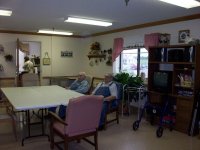
Dealing with fluorescents in this scene. . . what would you do?

Stephen Pruitt

Well-known member
Joined
Sep 14, 2007
Messages
3,309
Reaction score
40
Points
48
Website
www.thetreemotionpicture.com
Okay. . . let's not have any comments about "choose a different location." Nursing homes a notoriously difficult to find that are film-friendly. This one is.

Now, we've got sources from overhead fluorescents, streaming sunlight through the window, and our own local lighting (I have a choice between kinos, tungstens, and small HMIs).

What would you guys do to the overheads? Put a gel inside each fixture? Or maybe shoot with a minus green filter on the camera? Or what? I've never had to face anything like this before and I don't want to mess it up.

Thanks!

Stephen
 

Attachments

  • 100_0732.jpg
    100_0732.jpg
    91.7 KB · Views: 0
Turn off the overheads and just use a daylight kino, problem solved, correct?

Those overheads are just going to flatten the modelling of your subjects anyway.

You could gel and test and correct all day but it would take a while.

Or just embrace the different colors in the frame - god knows Chris Doyle has had incredible success with that...
 
Replace the overheads with proper balanced bulbs...

It's easy and fast to do, gives you some more freedom within the space and you maintain the environment of the home.

Or do nothing and embrace mixing colors! Love this.

Use all of your lights available if nec. You want to gel the overheads? You might as well gel your lights to correct and match them or just go with mixed light.
 
Turn off the overheads and just use a daylight kino, problem solved, correct?

Those overheads are just going to flatten the modelling of your subjects anyway.

You could gel and test and correct all day but it would take a while.

Or just embrace the different colors in the frame - god knows Chris Doyle has had incredible success with that...

If you have enough lighting instruments to kill the fluros and light with HMI or daylight Kinos I would second that recommendation. Those fixtures are doing nothing for the environment. Flip the subjects so they are window lit if possible, fill with kinos?

Regardless if you mix CT lighting or not... shot a grey card as part of your setup to you can correct a balance more easily in post.
 
The real question is, are the overheads going to be in the frame at any time?

If so, then you can either replace the bulbs, gel all of them, or deal with mixed light, as pretty much everyone above me has said
 
I would change the bulbs with a good quality bulb that don't contain Green. Gelling will never kill the green of a bad bulb (600/700/800 and even 900 series). If you want to kill all the green it's going to end up magenta as the minus green gel will not kill the exact color frequencie of the green and add an overall color tint.

for 5500k use Philips Graphica bulb. It's not cheap but as good as kinos!!! Yes they are! and there are the only one's. I've tested a whole bunch.

I would use Lee (and NOT Rosco) Scrim 275 on all windows to lower the contrast with the exteriour and ultimatly if really needed you could put some kinos. In my experience it's more interesting to put them above the windows to emphasis the light direction comming from the windows and not to try to kill the light direction by putting them as a fill in light (opposed to the windows). But this is more difficult as the windows are low and could be in frame.

You can also put some Cinefoil on the lamps to lower the amount of light hitting the white walls but this is really a matter of taste... ;-)

That's my opinion.

You could also do nothing... as this natural light is also the character of the place.

Greatings from Switzerland.

Patrick
 
I would love someone with more experience to critique my answer as I have much less experience than some on this board - but I'm seeing this as an exercise for myself.

First I would decide on the look. If it was a dramatic look I would keep the over head strips off and light with diffused hmi pars thru the windows then fill with flos from inside. If it was something less dramatic and the client wanted the stip lighting on and in the shot I would switch the bulbs if there was budget but thats a lot of bulbs and maybe a hard to match bulb length. Otherwise I would gel them from inside their covers with full ctb or double ctb to bring their light level down and to balance color temp with the window. Then carry them with flo's pointed upwards that bounce off the ceiling.

Looking forward to reading this thread as it develops.
 
Now, we've got sources from overhead fluorescents, streaming sunlight through the window, and our own local lighting (I have a choice between kinos, tungstens, and small HMIs).
Mixed lighting can be a nightmare in post. As long as you don't need natural color, and you're going for an extreme look, it can be effective.

I think the best advice above is to replace the fluorescents, gell the windows, get the light under control, and do it right.

I color-timed an indie fairly recently (which I won't name) where the director was insistent on natural whites, good fleshtones, and an even look throughout a 10-minute hospital scene that was marred by massive amounts of mixed lighting. It took hours of work and a half-dozen tracking power windows in almost every shot to even it all out. In the end, it looked perfectly acceptable, but we could have saved hours in post if they had just shot it right to begin with.
 
Okay, Patrick. . . tell me more about this Lee 275 Black scrim. How does it differ from Lee ND0.9 gel? When would you use one versus the other? They are the same price and the same width. What is the ND equivalent of the 275?

Thanks so much for all of these great ideas!

Stephen
 
Black Scrim 275

Black Scrim 275

Hello Stephen,

I'm just conducting test with the Black Scrim 275 from Lee with the use of the RED ONE M-X.

Black scrim is a black plastic foil wich is preforated with litle 1mm holes. Usually used to put on windows. These holes don't affect film cameras and have litle problems with "low res" cameras like HDV.

I'm conducting some test to see how the Scrim holds with highres CMO arrays. It could lead to some major aliasing problems.

The little test I conducted showed that aliasing is present even when subject is not close to the scrimmed window.

I think in your case, if you use RED ONE, it could cause the aliasing artefact.

The scrim cut about 2 stops of light and has the advantage to be a matt painted surface.
So no glare of additional light reflected like we have with ND gels. No noise when there is wind. And the surface is flat and there is less need to have a big tention on it to get it properly installed.

I send you a sample of the aliasing I'm testing now. More to come.

Patrick
 

Attachments

  • Scrim275_bwindow6.3m_focus_3.2_F2.jpg
    Scrim275_bwindow6.3m_focus_3.2_F2.jpg
    70.7 KB · Views: 0
Yeah. . . that aliasing is pretty noticeable. Bummer. Maybe the gels are a better solution for the RED???

Stephen
 
My vote: ND the windows, replace the bulbs with broad spectrum 5500k, use k55 kinos with diffusion to taste as your side key (motivated from the little kitchen area on camera left) and dress in a tungsten practical here and there to motivate some color contrast for modelling.
 
Like I said, I love these suggestions. I sure wish that Lee didn't show such aliasing. . .

:-(

Stephen
 
Hi Stephen

While all the suggestions seem workable to me my first question is what is the scene about? Drama or doco, light hearted and amusing or dark emotionally. These are the things which dictate the light in my humble opinion. Take all the good advice above but start with the scene's emotional and psychological values. Sometimes I have felt the opposite lighting to what is emotional sometimes work too. In would be great if you could post frames after shooting to see what you did.
 
JPs point is right to the heart of the matter, of course.

I'm really curious about the Lee 275 - never used it. What's the benefit over ND?
 
Yeah, I was curious about the 275, as well, but the aliasing in his other thread looks pretty severe, at least in the shot he shows.

As for the scene, it will be a fairly straightforward series of shots, but there is definitely going to be some unexpected drama in the third scene we shoot there.

Thanks all!

Stephen
 
Look at what the tubes are. If they're 4' T12 fluorescents you can usually replace them with daylight kino tubes, then everything can be matched to daylight (HMIs, window & kinos).
 
I don't understand the advantage of 275 at this point, but I would note that it shouldn't moire' if it's out of focus. If you pull out your 11-16mm in there it'll be an issue.

So ND9 gel is probably better for you.

If you are able to replace the bulbs that's the way to go. I bought a 10 pack of Daylight bulbs with 91+ CRI from Lowes or Home Depot for $30. How they hold up against Kinos would require a test, but it's safe to say they'll be way better than whatever is up there now and should do the trick.

And toss a color chart in there. :-) Though an earlier poster is correct to say if the two sources (daylight and interior lights) are different there will be tracking and power windows required in post to balance the windows and the light falling from them.
 
As said earlyer only Philips Graphica 6500k gave usable CRI with less than 5 green in the fluo. No other ones even the 900 series (600 700 800 900 means the quality of the CRI and the 30/40/50/65... are close to match color temp 3000k / 4000k etc...)wich are the best in the usable market are with a big greenish tint.

Lee 275 is really a no go with the red one. With film there is no problem as there is no pattern and film grain do change position and size all the time.

The CMO of the future should have a similar phisics as film grain : no linear pattern.

See you.

Pat

PS: emotion is in the scene, use light just to help you technically to make a great picture but don't think you are in a TV studio... so changing the light to a certain degree to get a better emotional result is illusory... ;-) my 2 cents.
 
...changing the light to get a better emotional result is illusory...

That's a sort of cinematography Zen Koan.
 
Back
Top