Welcome to our community

Be a part of something great, join today!

  • Hey all, just changed over the backend after 15 years I figured time to give it a bit of an update, its probably gonna be a bit weird for most of you and i am sure there is a few bugs to work out but it should kinda work the same as before... hopefully :)

Composition

Remember the shot in Superman where Johnathon Kent falls due to his heart attack.. The camera is was back, giving the viewer a feeling of separation.. You wanted to BE THERE.. You wanted things to change, and yet life, or in this case, death, would play out as it was meant too. A lesson both the viewer and Clark would learn

Jay
 
I've got so many frame grabs collected over the years...

Here's some more deep-focus b&w CinemaScope compositions, from "The Innocents" (a ghost story shot by Freddie Francis):

This picts are a great example how to play with the whole dynamic range, B&W is perfect to understand this process and how to deal with it. It was Ansel Adams, one of the big American Photographer, who invented the Zone system. It gives a very good understanding if you have to deside, where you want tho have your blacks and your whites in the dynamic range.
 
htwww9.jpg

That's Lone Pine if I've ever seen it!

This technology kind of reminds me of that attraction at Disneyland many, many years ago, where they projected 360 degrees. It would make you seasick during the Grand Canyon part in the whitewater raft... heh.
 
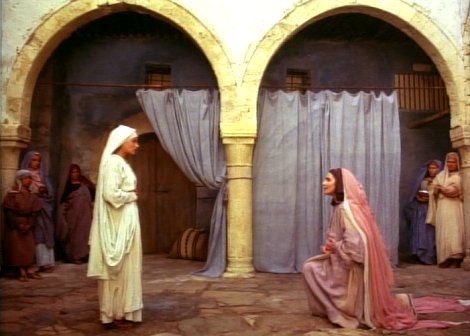
Another interest of mine are movies that mimic other art forms, especially paintings. Director Michael Polish (Northfork, Jackpot, Twin Falls Idaho) and I both went to CalArts and we often discuss paintings as references for the movies we do.

Here are frames from Henry V, Moulin Rouge (1952 version), Taming of the Shrew, Jesus of Nazareth (TV mini-series) that resemble paintings:

paintinglike1.jpg


paintinglike2.jpg


paintinglike3.jpg


paintinglike4.jpg
 
David:
Hello. Those are great screen grabs. Thanks for sharing them. I'm hoping you can respond to a question: how have advances in digital cameras and post production tools (i.e., color correction software, Digital Intermediate, HD, RED, etc.) changed or influenced the work of cinematographers like yourself? With color correction software and digital cameras, one can pretty much get away with shooting in any existing light, make adjustment in post, and acheive any desired look digitally. I've shot some great images using practicals or very minimal light with my DVX 100A, and this is an SD camera! Has this technology diminished the importance of on-the-set lighting?
Best,
Victor
 
With color correction software and digital cameras, one can pretty much get away with shooting in any existing light, make adjustment in post, and acheive any desired look digitally.

No, I don't really believe that. Shooting in existing light is great... if the existing light looks great -- and is appropriate for the story, but most DP's have to learn to simulate existing light so that it stays consistent throughout all the coverage of a scene. It's not unusual to start a day interior scene in the daytime but finish shooting it at night, so relying on available light can be a disaster unless you think things out carefully.

Just because there is enough light to shoot doesn't mean that light is the correct one to tell the story, show the actors in the way needed, or create the proper mood and atmosphere. I mean, what if the script said that this interior scene takes place as the sun is setting, but it will take about five hours to shoot it. Obviously you're going to have to figure out a way of faking that brief window of natural sunset light for much of the coverage. And what if your lead actress is middle-aged and many types of natural light look unflattering for her -- you're going to have to know how to modify it to suit her face. What if your actor is a minor and can't work past 10PM but the whole movie takes place at night? What if story-wise, the scene has to be daytime but the location will only let you in at midnight?

And what if you're shooting day interiors on sets where there is no such thing as available daylight?

Look at this dusk interior scene from "Northfork":

northfork23.jpg


It was shot in midday and the view out the window had a modern city. I had to hide the view with some big white Griflon frames but not light the white so that it looked shaded, then add overhead daylight Kinos to softly backlight the bed for dusk, then augment the light from the warm practical with a tungsten Kino off camera-right. So even though this was shot on location, it's almost entirely artificially-lit. And this was just one of a dozen scenes in that room lit for different times of day, all on the same shooting day -- I had to jump from a sunny look, an overcast look, a dusk look, and a night look regardless of what really was happening out those windows.

As I've done more digital intermediates, it's been more clear than ever that the old rule of "garbage in / garbage out" is more true than ever. The best-looking and most artifact-free shots are the ones that were shot properly to begin with, and the more mediocre shots were mediocre to begin with.

I used to think "oh boy, with these digital color-correcting tools, now I can do for theatrical features what I did for projects that went to home video" -- but I discovered that this wasn't completely true. Broadcast TV, particularly NTSC, hides a multitude of sins. Crushing blacks, cranking brightness, pushing colors, etc. -- common video color-correction tricks -- tend to create artifacts (like noise) that show up on a 50' movie theater screen, so you have to be more careful about using them, whereas you couldn't see half those problems in standard def video resolution.

Yes, certain things are so much easier to do with digital intermediate color-correction tools. Adjusting overall saturation, especially if you want to lower it (boosting it is harder to get away with). Matching shots is easier than ever. Cleaning up dirt, dust, and scratches is possible. "Power windows" are great, being able to adjust one part of the frame, like brighten someone's eyeballs that were too shaded by a top light. Tweaking soft shots to look sharper, or softening shots that were unflatteringly sharp for the actress.

Certainly one has more flexibility to stylize the image now, but the truth is that the majority of movies made today tend to have a natural look -- they don't go too far off the deep end. If you're doing a D.I. for a realistic drama or romantic comedy, you aren't going to push the image around too much, you're going to try and be a lot more subtle.

The best-looking movies in theaters still tend to be the ones that were lit and composed well to begin with, whether or not they went through a D.I.

Any cinematographer working today has to master the art of lighting. Now that may include mastering the art of shooting in available light as well, or incorporating it with artificial light, but it's all part of a larger set of skills in lighting.
 
David, did you get the chance to see the new Rosco Litepads at NAB? They're light enough to tape up anywhere, produce a softer light that a lite panel, and run off of various 12v battery sources. They also come in a ton of different sizes and the best part, the 1'x1' runs for only $500.

The bad, 7000k rated.

http://www.rosco.com/us/video/litepad.asp
 
Yes, I thought about buying one, breaking my habit of not owning any equipment... they were so cheap, like $100 for the small panel. Good for night car scenes and computer monitors. Not bright enough for much else though, but they would be so easy to tape to things.
 
A great thread guys..by the way any woman on Reduser ?

I was reminded when I saw David Leans name. I met him at the Govt Film Studios in NZ around 1979 I think. As he was shown into the camera store and I told him I was new he said; " Well in 6 months you may think you know all there is about Cinematography. Rest assured you won't and you never will !"

Dang ain't that the truth but no complaints.
 
David:
I see what you mean, athough I think lighting is less of a concern (or more of a luxury) for guerrilla filmmakers who don't have the time or money to really make lighting part of the narrative. I know I struggled with this when I shot my 50 minute short, which was extremely guerrilla. I couldn't spend hours lighting scenes and keep my non-paid actors waiting. I had to simply get the shot. This usually meant using whatever existing light was at hand. Having a camera like the dvx was a tremendous boon in this regard. Thanks for your comments.
Victor
 
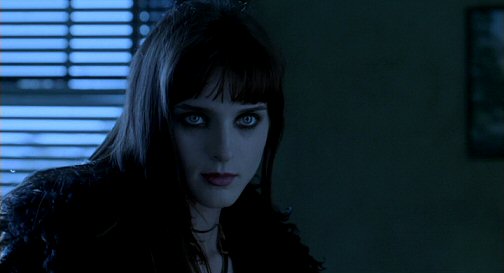
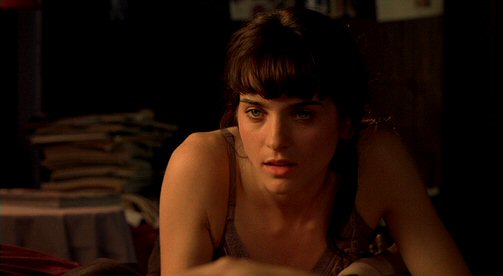
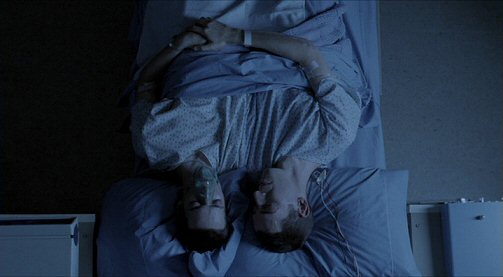
I've never been allowed "hours to light a scene" either. I've done plenty of 18-day features. "Twin Falls Idaho" was shot in 17-days and had plenty of lit interior scenes:

tfi1.jpg


tfi2.jpg


tfi3.jpg


tfi4.jpg


And doing the spelling bee scenes in "Akeelah and the Bee", I did 75 set-ups in one 12-hour days for an interior scene with 2000 extras in the audience and 200 kids on stage. Of course, I designed an efficient lighting plan to get through all of that.

Obviously I realize that some movies are shot in mostly available light, but that was possible in film just as much in video -- base sensitivities are about the same plus film has a wider exposure range that it can capture (look at Terrence Malick's movies, shot on film in mostly available light. Or look at earlier Wong Kar Wei movies like "Fallen Angels", shot on film in Hong Kong at night with a TINY lighting package, if at all.)

And I've done my share of minimal-to-no lighting movies for practical and aesthetic reasons, but honestly, the decision on how to use light should be mainly an artistic one, even on a small budget. If I shoot a movie, I don't want to have to make too many excuses for how it looks. I think it's a big mistake when no-budget indie filmmakers think that a visual design is somehow unaffordable.

Lighting a scene doesn't necessarily mean using a lot of big lights either -- those frames from "Twin Falls Idaho" were mostly lit with one 4' 4-bank Kinoflo for the key light.
 
David,
Good points. Very illuminating--no pun intended.
Victor
 
Wonderful stuff. David, I like how much you can accomplish with a kino, a few practicals and a lot of talent. For interiors with soft light, those grabs hold a lot of detail. Did you follow your 1/2 gel on set, 1/2 color grade in post for those ?

Regarding your cal arts background, I don't have the same formal training (painting etc...) but as a painter, i try and generally convey an aesthetic to my DP's as best as I can. The only question that comes up is, i don't know how to specifically translate the general mood/style/aesthetic composition (not specificity) of the painting to the gear at hand. When I put on my producers cap it gets even more of a sticky wicket... I guess as I try lighting more on my own, i'll get to know the gear and it's relation to shaping light much better. Long story short, I like your use of paintings to communicate with the director. I also like to use music with my DP and even some abstract art (to get some camera motion ideas - Schnabel's stuff is cool).

The other aspect I always question is the balance between technical/compositional awarenesss (perfectionism really) and really going instinctually. When you are framing or composing a shot (when applicable) how much of it is the mathematics and compositional paradigms and how much of it is instinct ? I know each DP is different - for instance Chris Doyle never thinks of z axis etc... while some DP's are analyzing the frame as a proscenium. And even get into the mathematics, as it were, of the location.

Do you think we'll need A lot of lights (like in the golden age of Holywood) for those deep focus movies (using RED)? I'd love to try and accomplish some of the inspired compositions using the traditional masters techniques with the digital medium. I know a lot of it is art direction, production design, location, and talented crew. I'd also like to get new that Gordon Willis look, with low key lighting. His work in "Presumed Innocent" is one of my favorites because he captured not only the story and environment of the script, but also caught the vibe and pace of the city, with lights.

Thanks for the insights into your films.

Here's a painting that I've seen referenced in many epic movies (or similar compositions).

Jacques-Louis David "The Consecration of Emperor Napoleon and the Consecration of his Empress Josephine"
448_1177356650.jpg


And here's a film that was ahead of it's time, daring in it's use of color, and some geat compositions. We need more films that aren't watered down, specifically when the story can benefit.


Seijun Suzuki's "Tokyo Drifter"...

448_1177356831.jpg


448_1177357000.jpg

inspired the pop art of the time or inspired by? probably both :-)

448_1177356884.jpg


As i wait to get more hands on with RED etc... technique vs.instinct is something i've been thinking about a lot.

:beer:
 
This message board just gets better and better !! Absolutely riveting !
 
David,

I like the coloring in those shots alot. Were they done using gels or timed in post?
 
I mostly did that with gels, or in the case of the blue twilight scene, tungsten balanced stock and daylight Kinos (equivalent of Full Blue gel.)

That movie was posted traditionally, photochemically, and I tried to get more of the look in-camera. The only twist was that I slightly flashed the Fuji negative (mostly 250 ASA stock) and then used a mild silver printing process on the prints (Deluxe Lab's ACE process, the same as Technicolor's ENR process.) This softened the color saturation and made the blacks more dramatic in the prints. It's not really a texture you get from the home video transfers, which were transferred from a normal IP to tape.

I was borrowing (stealing) heavily from Vittorio Storaro, who back in the 1980's, often used heavier colored gels but then softened the color with the ENR silver-retention print process, to create more a painterly patina with a color wash.

Nowadays, I'm more likely to use half-blue for moonlight, although occasionally for a twilight scene I still prefer a deep blue look. However, when I'm shooting in HD, I've learned the hard way not to use too much blue because the lack of info in the other color channels makes it hard to color-correct in post. With color negative, you still seem to have "buried" color information in the other layers even when you shoot in full blue light.
 
David, wasn't Kurosawa-san really big on trying to make his shots like still paintings? I know many scenes in RAN certainly feel like paintings. I believe he actually might have painted some storyboards in color himself, if I'm not mistaken.

These paintings you guys are posting are amazing. One I have always loved is this Hylas and the Nymphs by Waterhouse (1896).

gallery%5CW%5CWaterhouse_John_William%5CWaterhouse_John_William_Hylas_And_The_Nymphs.jpg


Imagine trying to recreate that for cinema... good luck!
 
50011.jpg


Those are awesome!

The one from DREAMS looks spot on like the film.
 
You gotta love Nymphs !
-A
 
Back
Top