Welcome to our community

Be a part of something great, join today!

  • Hey all, just changed over the backend after 15 years I figured time to give it a bit of an update, its probably gonna be a bit weird for most of you and i am sure there is a few bugs to work out but it should kinda work the same as before... hopefully :)

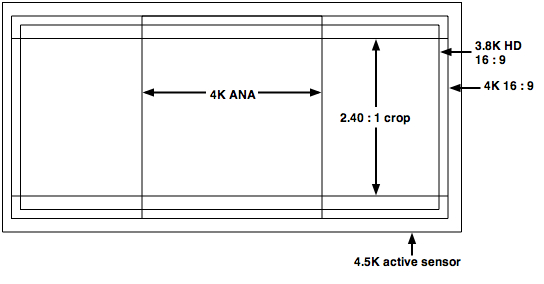
Anamorphic framing chart

Michael.B

Well-known member
Joined
Oct 18, 2008
Messages
59
Reaction score
0
Points
0
Website
www.fotokem.com
That's really confusing.

If you are talking about spherical images cropped to 2.40, etc. shot on the RED, then 1.85 and 1.78 would be taller and share the same width as 2.40, except for 1.78 4K HD, which is slightly smaller than 1.78 4K 16x9.

And 2.44 Red would be there 4K ANA mode stretched out by 2X, but you'd never use the whole 2.44 image. And I'm not sure overlaying that format over the cropped formats on one picture background makes much sense.

It would make more sense to put anamorphic on its own page, with a background with a 2X squeeze showing the 4K ANA cropped area, and then a separate unsqueezed version showing the 2.40 and 2.35 area. Not sure why you'd need to also show a 1.85 and 1.78 area inside that unless you were talking about making a pan & scan 1.78 full-frame version from a 2.40 anamorphic image.

You'd think it would be closer to this (I just sketched this out):

REDframelines.jpg
 
That's really confusing.

If you are talking about spherical images cropped to 2.40, etc. shot on the RED, then 1.85 and 1.78 would be taller and share the same width as 2.40, except for 1.78 4K HD, which is slightly smaller than 1.78 4K 16x9.

And 2.44 Red would be there 4K ANA mode stretched out by 2X, but you'd never use the whole 2.44 image. And I'm not sure overlaying that format over the cropped formats on one picture background makes much sense.

It would make more sense to put anamorphic on its own page, with a background with a 2X squeeze showing the 4K ANA cropped area, and then a separate unsqueezed version showing the 2.40 and 2.35 area. Not sure why you'd need to also show a 1.85 and 1.78 area inside that unless you were talking about making a pan & scan 1.78 full-frame version from a 2.40 anamorphic image.


Hey David thanks for the feedback. This is strictly for the build 18 ana mode with anamorphic lenses. Hopefully this image illustrates that when you are framing in-camera and plan to go out to film, which is projected at 2.40, or 2.39 in the case of DCP, there will be cropping left/right necessary. I also put 2.35 in there because that is a common mastering format. And indeed as you pointed out, I put the 1.78 and 1.33 guides up as a quick reference point for pan and scan. The image in the background is purely to visualize how much image is lost during the pan and scan process for both a FF HD and SD master.
 
Personally speaking, and speaking purely about my personal projects (rather than those of clients), I always have a hard time imagining myself able to care less about traditional aspect ratios when using anamorphic lenses, or any other lense for that matter.

I simply shoot anamorphic to the full sensor@16:9, I like the look when you double it out. 4k ana mode ?? not for me, I can always letter box it later, and my 80mm Lomo seems to cover it all with ease


speaking about spherical lense use etc
Anyone know how to turn on a 2:1 frame guide on the Red? I'm not sure there is one.. would like to shoot 16:9 to a 2:1 guide for cropping later
 
To improve the diagram I would also include a version of what Anamorphic should look like when shot on 4-Perf, this way when cropping even more than one already has too in order to get a 2.40 image from ana lenses on red's 16:9 sensor people can see just how much of the image they are losing. Personally I wouldn't want to crop anymore than 2.40 when using the Red One because of the inherent cropping done by the sensor size. The FF35 Scarlet and Epic on the other hand won't be a problem. If the final format is 16:9 or 4:3 then using spherical lenses on Red One is pretty much a must in my book.

Paul
 
maybe this is a silly question, but is there any reason to shoot anamorphic on the RED besides the optical differences between spherical and anamorphic lenses - meaning do you gain a "higher" resolution as you do in 35mm?
 
The reason it matters -- standardized aspect ratios -- is that a 35mm theatrical feature release has two most-likely projection formats: 35mm 2X anamorphic widescreen ("scope") 2.40 and 35mm matted widescreen ("flat") 1.85.

If you are not shooting for cinema release, you can mess with all the oddball aspect ratios you want, though TV sets generally only come in two shapes, 16x9 and 4x3, so you'll end up letterboxing a widescreen image to fit inside one of those two formats.

Often distributors want your movie delivered in one or more of these standardized aspect ratios.

Shooting with a 2X anamorphic lenses only gets you more resolution over cropping spherical images to 2.40 if your sensor or negative shape is close to 1.20 : 1, in that 4x3 range, like a 4-perf 35mm film negative is. Otherwise, you are cropping horizontally to get something shot with a 2X anamorphic lens on a 16x9 sensor back from 3.56 : 1 to 2.40 : 1. So it's a wash compared to cropping vertically to make 1.78 : 1 into 2.40 : 1. So the only reason to use anamorphic lenses in this case is to get anamorphic lens artifacts.

But if you could get a 1.3X anamorphic lens, then you'd be using the whole 16x9 sensor for your 2.40 image.

Or if you found a digital camera with a high-rez sensor that was closer to 4x3 in shape.
 
Maybe this Hawk Anamorphic info paper would (again) help to get an idea about "real anamorphic" look on RED1...

HawkAnamorphic1.jpg
 
Maybe this Hawk Anamorphic info paper would (again) help to get an idea about "real anamorphic" look on RED1...

1.33x anamorphic is far from the same look you get from a 2x anamorphic.
1.33x would use more pixels but you also lose a bit from rescaling. However, that's different than shooting 2x anamorphic for the traditional anamorphic look.
 
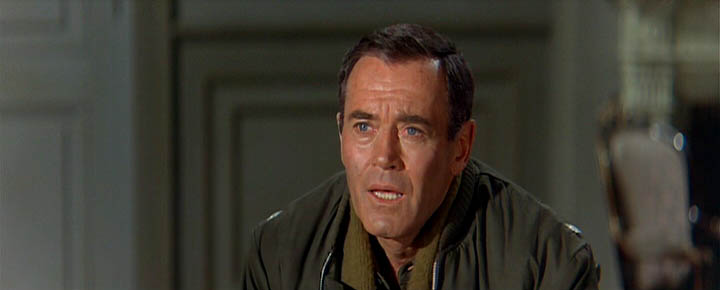
People say that, but I'm not sure that's completely true -- if you ever saw the mild 1.2X anamorphics made for Dalsa, they had some of the anamorphic look, and if you look at this frame from "The Battle of the Bulge", shot with a 1.25X anamorphic lens on a 65mm camera, you see some oval bokeh in the background on the right:

botb1.jpg


They also have some horizontal flares in that movie, though milder again.

So it all depends on how "good" the Hawk lens was designed to get rid of anamorphic artifacts. They claim that their design, which puts the anamorphic element in the center of the lens, gets rid of a lot of anamorphic artifacts, and a 1.3X anamorphic would be even milder, but if you look at some 2X Hawk anamorphic movies like "The Phantom Menace" you still see some anamorphic bokeh and flare.

So in theory, what you'd expect with a 1.3X anamorphic lens instead of a 2X anamorphic lens is just milder versions of the same anamorphic artifacts.
 
People say that, but I'm not sure that's completely true -- if you ever saw the mild 1.2X anamorphics made for Dalsa, they had some of the anamorphic look, and if you look at this frame from "The Battle of the Bulge", shot with a 1.25X anamorphic lens on a 65mm camera, you see some oval bokeh in the background on the right:


They also have some horizontal flares in that movie, though milder again.

That's my point, "some" of the anamorphic look is not the same as the "real" anamorphic look that Sanjin mentioned. The depth compression, bokeh, focus ramping, etc. are significantly different on 2x. It's like saying a 33mm on a 1.5x smaller sensor/back is the same as a 50mm because the fov is the same.
 
Personally speaking, and speaking purely about my personal projects (rather than those of clients), I always have a hard time imagining myself able to care less about traditional aspect ratios when using anamorphic lenses, or any other lense for that matter.

I simply shoot anamorphic to the full sensor@16:9, I like the look when you double it out. 4k ana mode ?? not for me, I can always letter box it later, and my 80mm Lomo seems to cover it all with ease


speaking about spherical lense use etc
Anyone know how to turn on a 2:1 frame guide on the Red? I'm not sure there is one.. would like to shoot 16:9 to a 2:1 guide for cropping later

Just create your own 2:1 frame guide in the User Selection in Frame Guide Menu.
 
That's my point, "some" of the anamorphic look is not the same as the "real" anamorphic look that Sanjin mentioned.

Well, that's a matter of taste, isn't it -- that "some" anamorphic effect is somehow not a "real" anamorphic effect?

Besides, the anamorphic effect is increased as you open the f-stop up, or decreased as you stop down, so perhaps the bokeh of the Hawk 1.3X anamorphic at T/2.8 is closer to the bokeh of the Hawk 2X anamorphic lens at T/4.0 or so. It would be an interesting test.

But I don't think the anamorphic look is an all-or-nothing affair, that either you shoot anamorphic at T/2.8 and get the look, or you don't shoot anamorphic at all because a less-strong effect when you're more stopped down "doesn't count".

Again, it's a little like depth of field -- using a 2X anamorphic lens on the RED camera in 4K ANA mode gets you more depth of field than when you do it on a 4-perf 35mm camera because the focal lengths are shorter to match FOV... so is that somehow "not getting the anamorphic look" if you were shooting anamorphic to get less depth of field?

It's all a matter of degree of effect. If the anamorphic look is more subtle with a 1.3X anamorphic lens, that doesn't mean it's pointless or useless or undesirable, etc. -- that all falls under the category of personal taste.

It's just like when I shoot a 2X anamorphic movie at T/4 instead of T/2 -- the guy shooting his movie at T/2 is getting an obvious anamorphic look because of all the distortions, artifacts, etc. but by stopping down, I'm getting a more subtle effect. Does that mean I'm "wrong" to shoot anamorphic that way because I'm not getting the "real" anamorphic look? What committee defines the "real" anamorphic look anyway???

I can pull up frames from old 1.25X anamorphic Ultra Panavision movies or 1.5X anamorphic Technirama movies and demonstrate classic anamorphic artifacts in them. They just won't be as strong as 2X anamorphic artifacts when shot at wide apertures.
 
Well, that's a matter of taste, isn't it -- that "some" anamorphic effect is somehow not a "real" anamorphic effect?

"Real" is unfortunately a bad to begin with. 1.01x anamorphic could be considered "real" for that matter while under common vernacular, 2x is the defacto standard. Putting a 1.3x lens on any camera as an example of "real anamorphic" does not give you the same representation of the defacto standard as would a 2x anamorphic.

Of course once you start getting into discussion about semantics it becomes a never ending circular one...
 
My point is that the 2X anamorphic effect or look is modulated by what stop you shoot at, so the more subtle anamorphic look from using a less-than a 2X compression is not much different than the look from stopping down a 2X anamorphic lens. So it's not an all-or-nothing thing where only 2X anamorphic photography shot near wide-open is an authentic anamorphic effect and all others are somehow inferior to that. That's like saying that a heavy ProMist filter is "real" diffusion but a light ProMist filter doesn't count as diffusion.

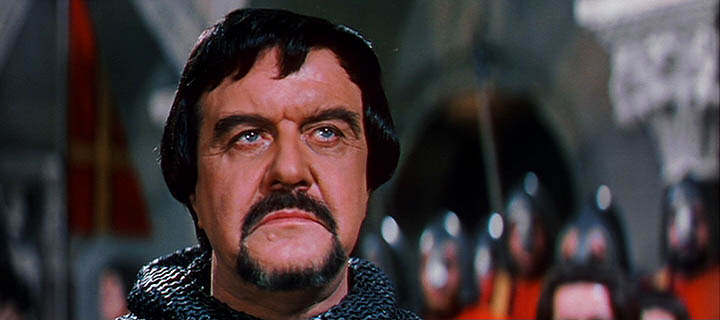
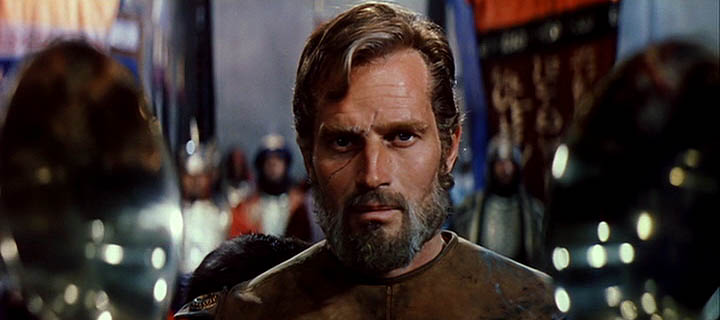
I mean, look at these frames from "El Cid", shot with 1.5X anamorphic lenses:

elcid1.jpg


elcid2.jpg


elcid3.jpg


The anamorphic bokeh is there, it's just less strong than 2X anamorphic bokeh when shooting at wide apertures.
 
Back
Top