Welcome to our community

Be a part of something great, join today!

  • Hey all, just changed over the backend after 15 years I figured time to give it a bit of an update, its probably gonna be a bit weird for most of you and i am sure there is a few bugs to work out but it should kinda work the same as before... hopefully :)

AN IMPORTANT TEST vs. R1- REDCINE-X

David Battistella

Well-known member
Joined
Apr 30, 2007
Messages
10,003
Reaction score
6
Points
38
Hi all,

A few weeks back when Jim posted an ISO 2000 shot on RedUser I was pretty shocked at the quality.

To help people see how much more sensitive the new M-X sensor is over the existing R1, I posted a quick shot of a Colour chart, lit by a single candle to show how much the image quality improved.

It's pretty radical to see the R1 vs. the R1 MX.

Today I decided to revist that exact same shot but use REDCINE-X and the new colour spaces offered to process the file. I was pleasantly amazed at how much the "old" footage is improved by just the new software alone.

To be completely fair I thought it would be best to offer up the exact same file again so that you can all see how much you can squeeze out of your RED ONE footage, even if you have not or don't plan to have the sensor upgraded.

Not everyone will do the upgrade, but every single frame of footage shot on RED to date will benefit from the new color science in REDCINE-X.

That is pretty friggin' cool if you ask me!

There are four files up there:

4K tiff of ISO 2000 from RED ALERT shot on build 21
4k tiff of SAME shot proccessed in REDCINE-X
The R3D so you can play around yourself
espresso is a 2k shot I reprocessed in REDCINE-X

Thanks RED TEAM.

Please follow this link to view the files:

http://www.f8films.com/client/red/

Username: red
Password: red

Please note that the username and password are case sensitive.


David
 
I've been going back through a bunch of my old footage and looking at it with the new REDcolor and FLUT. The new color science is definitely breathing new life into old footage here. There were shot's I've had in the past that were just OK, but now they may actually be reel-worthy with a re-grade and fine tuning.

This is the power of shooting RAW. As the processing software improves, so does everything ever shot with the camera, as long as you still have those camera files.
 
I've been doing the same thing as Jeff, with an old (Build 16/17) project I've managed to not finish yet. The usual first-time director stuff. "I want it to be perfect!" and all that. (I'm the director, lest anyone think I'm bad-mouthing someone else)

The best shot in the film was HORRIBLY underexposed. Like "We shot at 320, but I have to crank the ISO up to 640 or more to get anything like the detail I need" underexposed. The film's still not finished, but that shot has become my benchmark for the new color science builds and various other tools.

Based on my tests last night, it's looking like I might actually have to finish the project now. That shot, which was horribly noisy using the original CS, and better, if still a little too noisy for my tastes, with the old new CS, now looks pretty damned good with the new-new CS (RedColor/FLUT).

Definitely a testament to the power of RAW.
 
Yes.

I'm really impressed. I really wanted to repost this so people could really see how much of an effect just the post side has.

I'm very curious to see some slow shutter timelapse shots on the m-x after seeing off hollywoods 1600iso night test.
 
Hi,

I´ve load the R3D from David in RedAlert and in RedCine X and without touching any settings I´ve exported an TIFF file. The file form RedAlert and Redcine X, are identicals, same noise, same everything. Why David tiff´s look so different?
 
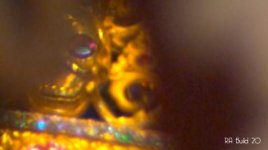
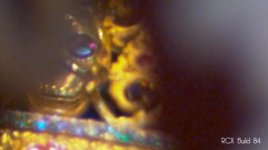
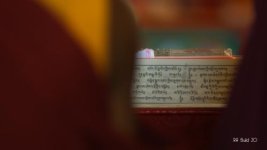
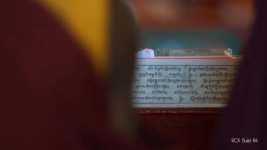
The following images were shot on build 17 and earlier processed in build 20 and now on build 84 of RedCine X. Full debayer on all images. No noise reduction. CameraRGB/rec709. Color Temp is identical in both. No other changes from the defaults other than saturation.

I have to say, I am quite pleased at the continuing improvement to color accuracy.

Filmed handheld with Arri 25mm T1.3 Master Prime at 1.3 with Formatt HM. The camera was rated at 500 (that's all we had for light). There is a mix of indirect daylight measuring 5800K from windows about 15-20M away (and slightly behind my position) on both sides, tungsten in various fixtures and a bizarre mix of fluorescent sources of different temperatures making white balance a general nightmare.

I think the images speak for themselves in terms of the color accuracy improvement. Both use CameraRGB and rec709. General noise reduction remains perceptually equivalent to my eye.

Full Frame 4kHD:HD 1080:Here are two 480*270 reductions of the original shot and two 100% crops from an area of detail showing the noise and specular highlights.
 

Attachments

  • build20_480.jpg
    build20_480.jpg
    11.5 KB · Views: 0
  • build84_480.jpg
    build84_480.jpg
    11.8 KB · Views: 0
  • build20_detail_100pct.jpg
    build20_detail_100pct.jpg
    12 KB · Views: 0
  • build84_detail_100pct.jpg
    build84_detail_100pct.jpg
    12.2 KB · Views: 0
did you change the settings to red colour and red gamma?
 
did you change the settings to red colour and red gamma?

Yes and I am not a fan, for whatever it's worth.

If I had a CIE chart showing me what 'redcolor' and 'redgamma' were I might use them, instead all I can say is that RedGamma and RedColor are undefined marketing terms (read: Koolaid). Having taken a cursory look, like RedSpace, I'm going to give this one a pass. I'll reevaluate this once I can get something on the scope (in software) and look at what's going on with it. That will require the new SDK. But what's really encouraging is that existing gamma/color spaces continue to show improvement.

I will note that what they are doing with RedGamma/Color may very well be clever and cool, but without them defining what's going on, who really knows. If we had spectral sensitivity charts for the sensor (I mean ones from Red, not the ones floating around out there) and they would define their color and gamma transforms, it would be a whole different situation.

When I grade my shows or work with colorists who grade my shows, we work to output gamuts that match the target display. For broadcast HD that's rec709, for Digital projection that's DCI-P3, for various IN/Print stock combos we have some stuff we've developed with our lab partners were happy with.

I'll be very happy when we see the new SDK and can get this into a real grading app though.
 
If I had a CIE chart showing me what 'redcolor' and 'redgamma' were I might use them, instead all I can say is that RedGamma and RedColor are undefined marketing terms (read: Koolaid).

Really? Gamma encoding has nothing to do with CIE or color space.
 
If we had spectral sensitivity charts for the sensor (I mean ones from Red, not the ones floating around out there) and they would define their color and gamma transforms, it would be a whole different situation.

I'm impressed by the level of detail of your work! I gather you are using that information for the elements of your current workflow (eg., you can map an input spectral function through the lens to the sensor response functions and all the matrix transforms to R,G,B values in your final deliverable)? It's something I'm interested in personally, but I've met few people working in the field (that is cinematography, not engineering or applied physics) who use spectral sensitivity charts.
 
Hi,

I´ve load the R3D from David in RedAlert and in RedCine X and without touching any settings I´ve exported an TIFF file. The file form RedAlert and Redcine X, are identicals, same noise, same everything. Why David tiff´s look so different?

Guillermo,

The X tiff shows it with REDCOLOR and REDGAMMA, the new color spaces. I think I also might have used the FLUT science as well to generate that image.

I'd have a hard time getting that R-X tiff out of Red Alert.

David

I'll go back and check what my settings were. Usually I post a snapshot of the software settings but I forgot to do that in this case.

Also, this test is not scientific. I would call it an aesthetic test and I feel that you can get a more aesthetically pleasing image from R-X.

In terms of calibrated color space.

If your monitoring path is set to REC 709 and calibrated that way, then are you suggesting that you have to use those spaces to export RED footage? I wouldn't agree with that.

David
 
I'm impressed by the level of detail of your work! I gather you are using that information for the elements of your current workflow (eg., you can map an input spectral function through the lens to the sensor response functions and all the matrix transforms to R,G,B values in your final deliverable)?

I'm not impressed. If Jonathan thinks that red gamma is part of a color space then he doesn't understand the basics of color science. That puts into question everything posted as expert opinion when even a basic concept is so grossly missed.
 
I really enjoy all the learning I get on reduser, but it's hard to learn when people confuse a gamma curve and a color space.

I've worked with many video cameras, and none of them, although conforming to 601 or 709, actually use the exact formula for their gamma curve. All use a knee with an undocumented equation, all use a toe with an undocumented equation. All of them say, specify REC709 colorimetry but we all know Panasonic's colors look different to Sony's colors, both to the same spec.

Albert
 
I'm not impressed. If Jonathan thinks that red gamma is part of a color space then he doesn't understand the basics of color science. That puts into question everything posted as expert opinion when even a basic concept is so grossly missed.

Careful, Mike. Gamma is a separate function, but [combined into] part of the same transform that is used in calculating how colors are rendered to the color space. It may not directly define the color space itself, but it does affect how colors within the space are rendered, especially when you are rendering colors that are on the edge of, or outside, the gamut.
 
Yes and I am not a fan, for whatever it's worth.

If I had a CIE chart showing me what 'redcolor' and 'redgamma' were I might use them, instead all I can say is that RedGamma and RedColor are undefined marketing terms (read: Koolaid). Having taken a cursory look, like RedSpace, I'm going to give this one a pass. I'll reevaluate this once I can get something on the scope (in software) and look at what's going on with it. That will require the new SDK.

In the meantime you can pick and pluck individual RGB values and learn the same thing or more than looking at a scope. Call it koolaid if you want, but it tastes pretty good and behaves really well within a REC709 space as it's built to compliment REC709, but extend beyond.

I'll be very happy when we see the new SDK and can get this into a real grading app though.

New SDK should show up this week according to what's been said. So I don't think it's too far off.
 
I always thought that if you're talking about CIE you're talking about the CIE 1931 color space which has nothing to do with and says nothing about the gamma. It's assuming linear to light. From what I've been reading a color space is very different from gamma.

Albert
 
I'm not impressed. If Jonathan thinks that red gamma is part of a color space then he doesn't understand the basics of color science. That puts into question everything posted as expert opinion when even a basic concept is so grossly missed.

MG,

I don't claim that it is. In fact I make no claim about it other than it's a totally undefined transform.

You can make up things all you want, call into question anything you like, but the fact is RedGamma and RedColor are "magic buttons" until we get some definition for them.

You might like that. I personally don't.

Karsten & Albert, by looking at RedColor on a CIE chart you can at least see what it can represent relative to 709. The fact that you're using the CIE chart as a baseline for reference does not mean that CIE 1932 has anything to do with what we're talking about here. That chart is an industry common reference. Some color gamuts fall within it, some outside of it. It's just a reference.

Frankly MG, I don't see anything in your posts that makes me believe that you have any more idea of what's going on with RedColor/Gamma either. If you have any special knowledge of how to define it/them then by all means, illuminate us.

J
 
Here are two more shots, both somewhat different lighting from the previous post in that both used predominantly indirect daylight illumination. Again, just a simple saturation tweak for each, full debayer and no noise reduction.

The first is on sticks with the Arri 75mm T1.3 MP shot wide open with a .9 ND as I recall. Camera was rated 320. CameraRGB/rec709.

The second is handheld with the Arri 100mm T1.3 MP shot at T2.8 with no filtration. Camera again rated at 320. CameraRGB/rec709.

In both shots I feel there is much more accurate color representation. Skin tones are better and the color temperature seems much more accurate.

Shot 1Shot 2On the second shot I would actually prefer a slightly warmer timing, but for the sake of comparison the output from RCX and RA use identical settings.
 

Attachments

  • build20_720-2.jpg
    build20_720-2.jpg
    19.7 KB · Views: 0
  • build84_720-2.jpg
    build84_720-2.jpg
    19.9 KB · Views: 0
  • build20_720-3.jpg
    build20_720-3.jpg
    9 KB · Views: 0
  • build84_720-3.jpg
    build84_720-3.jpg
    9 KB · Views: 0
Back
Top