Robert Hart
Well-known member
- Joined
- Feb 26, 2012
- Messages
- 1,258
- Reaction score
- 3
- Points
- 38
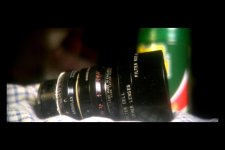
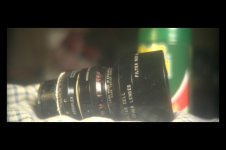
Zoomitar Sr. 254-1581 40mm f2.8 Macro Kilar
This is another of the uneconomic-to-repair fungussed and tropically humidified lenses I referred to in a post some time back. Those were two old Cooke Ser 2 lenses and a 90mm Zoomitar Macro Kilar. For lens techs, it is probably not something you would want spreading spores and infection around in your workshop. Given their condition, cost of shipping, low market value and having a bit of facility in cleaning lenses myself, I decided to tackle these, so far with good outcomes given their damage. They cannot be perfect as the coatings were too far gone.
I have been putting this one off. Like the 90mm, there are signs this one had a previous tourist inside in its past as there are two missing screws.
So far so good except that I have run into a snag with the rear optical elements. They have to be dismantled because there is oxide contamination within. Luckily the iris blades are clean this time round.
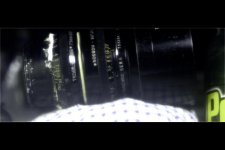
This group appears to be a doublet, retained from the rear by a metal cylinder and single element in a rear shoulder in this cylinder. The cylinder is retained by an internally shouldered threaded ring which bears on the rear element itself. This is where it gets tricky. There is a buildup of metal bloom. With patience I have been able to get the threaded ring off. However the rearmost element is wedged into the cylinder which itself is stuck. It does not appear to be a swaged cell as there is about 0.5mm of the optical element protruding and the sides are square, not chamfered for swaged retention. The 90mm of similar design had no swaged cells.
I am also unable to find any screws which release the two extending focus barrel segments. With the 90mm it was not necessary to dismantle this section. However with the 40mm, to entirely remove the rear optical/iris assembly, either the focus barrels must be screwed out or there are two sections to a rear fixed body which screw together. There is a machined seam in the rear body but no sign that this is a joint. There are neither locking screws nor any holes/slots for lens tools. If this section has been pressed/bonded together, then that's my lot.
If any lens-smiths out there have it within their generous souls to advise, this would be muchly appreciated.
Last edited: