Welcome to our community

Be a part of something great, join today!

  • Hey all, just changed over the backend after 15 years I figured time to give it a bit of an update, its probably gonna be a bit weird for most of you and i am sure there is a few bugs to work out but it should kinda work the same as before... hopefully :)

3Deep - 3D underwater housing for Epic

Pawel Achtel

Banned
Joined
Oct 12, 2007
Messages
3,648
Reaction score
0
Points
0
Location
Tasmania
Website
www.achtel.com
Made entirely out of precision machined titanium....the world's first and only 3D underwater housing resolving 5k (and beyond) is coming soon...

This is revolutionary. From about 150 line pairs per image height of corner resolution using traditional flat port to full 5k in corner resolution with no chromatic aberrations and no distortions introduced by a lens port.

The housing uses submersible Nikonos lenses specifically designed for underwater.

Comments welcome.

 
Nice.
Looks pretty smaller then Liquid Pictures 3D System.
dimension and weight? please
 
  • Thread starter
  • Banned
  • #3
Thanks Kwan. How does 25kg (55 pounds) ready to dive sound?
 
  • Thread starter
  • Banned
  • #5
less than 10 cm.

Underwater you can get away filming closeup with large interaxial as there is no background at infinity usually.
 
less than 10 cm.

Underwater you can get away filming closeup with large interaxial as there is no background at infinity usually.

I hate to be a party pooper but, although it's true that you can get away with a bit more underwater, this is a ridiculously large IA for anything but maybe a long shipwreck shot, or establishing shot of a reef.

Not to mention that you will throw away a huge amount of resolution when you converge in post.

We have a lot of footage shot at 7cm IA and even that is pushing it, not really acceptable for any serious production.

TANSTAAFL (There ain't no such thing as a free lunch)
 
  • Thread starter
  • Banned
  • #8
Mike,

The loss of resolution resulting from converging in post from 5k using superb lenses that actually resolve full 5k underwater, and not less than 150 lines per picture height like a flat port does, is insignificant. At worst you end up with 4k razor-sharp images, not half the standard definition material with severe pin-cussion distortions and chromatic aberrations spanning 17 pixels. BTW, CA for Nikonos 15mm (your party pooper) lens measured in the corner is about 0.3 pixels - as good as Master Prime in the air.

Not to mention that it is a common practice to converge stereoscopic 3D material in post as it is a relatively easy and reversible process as opposed to converging in the filed that is not-so easy to correct in post if you get it wrong. I personally would find it next to impossible to converge cameras underwater due to task loading and other limitations.

As to the interaxial distance, I disagree. Human eyes can easily focus and fuse images that are 30cm in front of the nose. Likewise, you can focus and converge as close as 50cm from lenses set 10cm (4") apart as long as there is no distant background at the same time, which is rarely the case underwater due to limited visibility of water medium.

As you know, the vast majority of underwater filming is done with wide angle lenses: coral reefs, kelp forests, divers, schools of fish, sharks, whales, wrecks, dolphins, etc...and only a small percentage requires a macro setup, which is best handled with a beam-splitter rig.

I never claimed 3Deep is for macro. For specialised macro and some closeup situations a beam splitter rig would be a better choice. However, I do believe that 3Deep is a perfect setup for the vast majority of underwater subjects and situations. Horses for courses.
 
Pawel,

Your housing looks cool, but it is not the first or only 5K underwater housing. We have an underwater beamsplitter housing for EPICs out shooting right now for a major feature. We have Side-by-Side housings for EPICs and other cameras that are in use as well..

Best,

Lucas
 
Last edited:
Mike,

The loss of resolution resulting from converging in post from 5k using superb lenses that actually resolve full 5k underwater, and not less than 150 lines per picture height like a flat port does, is insignificant. At worst you end up with 4k razor-sharp images, not half the standard definition material with severe pin-cussion distortions and chromatic aberrations spanning 17 pixels. BTW, CA for Nikonos 15mm (your party pooper) lens measured in the corner is about 0.3 pixels - as good as Master Prime in the air.

Not to mention that it is a common practice to converge stereoscopic 3D material in post as it is a relatively easy and reversible process as opposed to converging in the filed that is not-so easy to correct in post if you get it wrong. I personally would find it next to impossible to converge cameras underwater due to task loading and other limitations.

As to the interaxial distance, I disagree. Human eyes can easily focus and fuse images that are 30cm in front of the nose. Likewise, you can focus and converge as close as 50cm from lenses set 10cm (4") apart as long as there is no distant background at the same time, which is rarely the case underwater due to limited visibility of water medium.

As you know, the vast majority of underwater filming is done with wide angle lenses: coral reefs, kelp forests, divers, schools of fish, sharks, whales, wrecks, dolphins, etc...and only a small percentage requires a macro setup, which is best handled with a beam-splitter rig.

I never claimed 3Deep is for macro. For specialised macro and some closeup situations a beam splitter rig would be a better choice. However, I do believe that 3Deep is a perfect setup for the vast majority of underwater subjects and situations. Horses for courses.

I have no problem with converging in post. As you say, it is quite common and often the preferred method., however IIRC the greater the IA the more you have to crop to get the images to overlap, thus more loss of resolution.

I would strongly disagree with your assessment of the interaxial being fine. I don't think you will find many experienced 3D people to agree with you, and I strongly suggest that anyone considering this do some independent research on the subject. The fact that you CAN converge, doesn't mean that you should or that it is good or that you can do it for extended periods. One of the biggest things hindering acceptance of 3D is the amount of poorly shot 3D that causes problems with viewers.

It is one thing to do this like we did with a $3000 dual consumer camera rig with (and even then we had 7cm IA with equivalent or wider lenses), totally different to suggest that professionals spending at least $50K can/should compromise to this extent.

I have a lightly used dual canon 1080P camcorder underwater 3D rig with wide converters that we built for the sinking of the Vandenberg in Key West, that I would be happy to sell to someone on Reduser for $2500 if they would like to experiment with a 7cm interaxial - includes 2 canon HD camcorders, side by side with manual controls to synchro start.
 
Hi Lucas,

The fact that you can keep a 5k camera dry underwater, does not necessarily mean that you can record 5k underwater images.

My tests (shot in controlled conditions and analysed with Imatest) show that shooting wide angle (90 degrees FOV terrestial lens) underwater results in approximately 17 pixels CA in the corner, which is approximately 150 lines per picture height. That's the resolving limit of a wide angle lens placed behind a flat port underwater.

Even underwater domes do not seem to resolve more than a few hundred lines in the corners.

3Deep is different. It uses Nikon Nikonos lenses specifically designed and corrected for underwater. They are submersible lenses and do not require ports (flat or dome) that cause great deal of resolution loss, distortions and chromatic aberrations. They resolve up to the Nyquist limit of Epic sensor corner-to-corner.

Can you tell us how did you manage to resolve 5k in the edges and corners of a flat port? To my knowledge this is not possible.
 
Hi Lucas,

The fact that you can keep a 5k camera dry underwater, does not necessarily mean that you can record 5k underwater images.

My tests (shot in controlled conditions and analysed with Imatest) show that shooting wide angle (90 degrees FOV terrestial lens) underwater results in approximately 17 pixels CA in the corner, which is approximately 150 lines per picture height. That's the resolving limit of a wide angle lens placed behind a flat port underwater.

Even underwater domes do not seem to resolve more than a few hundred lines in the corners.

3Deep is different. It uses Nikon Nikonos lenses specifically designed and corrected for underwater. They are submersible lenses and do not require ports (flat or dome) that cause great deal of resolution loss, distortions and chromatic aberrations.

Can you tell us how did you manage to resolve 5k in the edges and corners of a flat port? To my knowledge this is not possible.

CA is relatively easy to correct and is routinely done on high end underwater 3D productions.

Nikonos 15mm lens is in fact essentially a 20mm nikkor with a dome port so your statement, while technically accurate in its wording, is somewhat misleading.


Also, to my knowledge, even RED does not claim actual 5K resolution from the Epic even in the best of circumstances - IIRC it is approx 20 % less, so your focus on the 5K wording iin your multiple somewhat antagonistic postings on the subject is also a bit misleading.
 
I am not an expert in this area, but I would think Cameron/Pace would be at the top of a short list of people qualified to build things like this.

Jay


Silly man, they only have probably more experience than anyone, and fairly unlimited deep pockets. ;-)

(in case it isn't clear, that is sarcasm in support of Jay's statement.)
 
CA is relatively easy to correct and is routinely done on high end underwater 3D productions. .

Really? Please correct the attached corner crop shot with a Master Prime 14mm through a flat port. How sharp can you make it?

attachment.php


Nikonos 15mm lens is in fact essentially a 20mm nikkor with a dome port so your statement, while technically accurate in its wording, is somewhat misleading.

Michael, you are incorrect. Nikonos 15mm lens is a submersible lens specifically designed for underwater use and, in fact, it does not even focus in air. Unlike terrestial lenses placed behind domes it:

1. Doesn't suffer from severe field curvature caused by the dome
2. Resolves up to full Nyquist limit of the Epic sensor in the corner
3. Has CA of approximately 0.3 pixel in the corner
4. Produces very little distortions when close focussing

The FOV of the Nikonos 15mm is 92 degrees on a FF35 sensor and about 75 degrees on the Epic sensor.
 

Attachments

  • MP 14mm f5.6 flat port 0.8m corner crop 45°.jpg
    MP 14mm f5.6 flat port 0.8m corner crop 45°.jpg
    17.7 KB · Views: 0
I am not an expert in this area, but I would think Cameron/Pace would be at the top of a short list of people qualified to build things like this.

Jay

Jay, I don't come from entertainment industry. As an engineer, I read MTF charts, not title credits or industry recommendations.

They (Cameron/Pace) have some good solution and certainly impressive list of credits, but I'm not aware of anything close to the solutions that my company is offering.

I am yet to see any vendor to come up with anything close to the CinePort, which has been around for 4 years now. You can see some real-life images shot with CinePort here: http://vimeo.com/29346689

To my knowledge DeepX and 3Deep patent pending technology using Nikonos submersible lenses is the only solution producing 5k underwater images corner-to-corner and that means the MTF chart goes right to the Nyquist limit of the sensor.

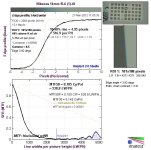
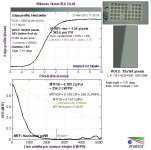
See the MTF chart of Nikonos 15mm lens in the corner of RED Epic frame below.

attachment.php

attachment.php


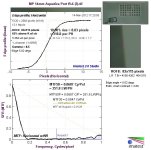
See the chart of Master Prime lens placed behind a 9" dome: chalk and cheese.

attachment.php


Note: the sample of the Nikonos 15mm lens used in the attached test happens to have large degree of de-centering and it is the worst Nikonos sample I've tested. Yet, it is clear from the MTF charts, that it resolves at least twice as much in the corner as Master Prime 14mm placed behind 9" dome resolves in 2/3rd of the frame. It is also clear that the MP 14mm placed behind a 9" dome does not resolve anywhere near 5k except in the very centre of the frame. Place that MP behind a flat port, and it all falls apart even more. You can't even measure the MTF with Imatest - that's how bad the immage is. In Photoshop you can measure the CA to be around 17 pixels.
 

Attachments

  • MP14mm f5.6 Aquatica dome MTF.jpg
    MP14mm f5.6 Aquatica dome MTF.jpg
    59.8 KB · Views: 0
  • Nikonos top corner (1).jpg
    Nikonos top corner (1).jpg
    62.8 KB · Views: 0
  • Nikonos bottom corner (1).jpg
    Nikonos bottom corner (1).jpg
    65 KB · Views: 0
anyway, wish you succes with the further design and testing, and would love to see some finished footage , and maby even some more explanation, because there's no moving ia , how you dealt with postpro and which system was used to finish it.
then seeing on a proper playback system , would do the system right if it's really working, and without going to deep into it and having you guys exchanging knowledge and disagreements, I'm really hoping we will finally be able to see the results of different approaches. Postpro has also a lot to do with it, I know geometric fixes can solve a lot of issues and make a lot of difference on the final product, but that off course depends if you can finish on such a system ( and I mean quantel or mistika for the geo fixes, unless others are doing some magic for NAB we don't know yet?????)))
 
Thanks Sven, totally agree.

We are collaborating with some first tier post production houses here and consult with very respected people. I expect sample 3D images to be published around May - June time frame. Very exciting times :)
 
Really? Please correct the attached corner crop shot with a Master Prime 14mm through a flat port. How sharp can you make it?

attachment.php


Michael, you are incorrect. Nikonos 15mm lens is a submersible lens specifically designed for underwater use and, in fact, it does not even focus in air. Unlike terrestial lenses placed behind domes it:

1. Doesn't suffer from severe field curvature caused by the dome
2. Resolves up to full Nyquist limit of the Epic sensor in the corner
3. Has CA of approximately 0.3 pixel in the corner
4. Produces very little distortions when close focussing

The FOV of the Nikonos 15mm is 92 degrees on a FF35 sensor and about 75 degrees on the Epic sensor.


The fact that it can't focus in air means nothing as to what actual underwater correction was done beyond refocusing since the same would happen (in reverse) if you took the 20mm land lens and shifted the focus with either an extension tube or diopter lens (as you have to to compensate for the negative diopter effect of the dome )

And as stated before 75 degrees on 5k is nowhere near the 95 to 110 degree FOV that has been the norm throughout at least the past 30 years of underwater cine and video - even on the low end consumer stuff. (and it's even more ridiculous if you shoot 4k)

A wider FOV has dramatic effects on clarity, color saturation, and picture stability. If you want to promote your 75 degree cam as a "special purpose ultralight not-very-wide u/w cam" that's one thing but to suggest that 75 degree FOV is suitable as a general purpose professional underwater motion picture camera is just a sham. Sorry to be that harsh with a fellow Reduser but you are creating disinformation that a lot of legitimate manufacturers, producers and underwater shooters will have to spend hours correcting with producers and others that can't be expected to be fully aware of the ins and outs of underwater photography.

I've had to deal with this several times over the course of my career and it's very frustrating.
 
My tests (shot in controlled conditions and analysed with Imatest) show that shooting wide angle (90 degrees FOV terrestial lens) underwater results in approximately 17 pixels CA in the corner, which is approximately 150 lines per picture height. That's the resolving limit of a wide angle lens placed behind a flat port underwater.

Pawel - I have no reason to doubt you when you say your system will do these things. But numbers can be spun into whatever you want to spin them into. Look at the small disagreement you and Michael are having... who should a client believe? And what you have here is a CAD design, not a product.

You're mixing marketing and reality. I do look forward to seeing real pictures from the built rig on a 3D IMAX screen capable of showing the 5K resolution... or can IMAX resolve 5K? In Stereo? Using the 4:3 delivery aspect? From an EPIC?

Just saying - lots and lots of variables. I can spin numbers too. ; )

Lucas
 
Back
Top