Humberto Rivera
Well-known member
I been thinking about the “NEW 6K DRAGON SENSOR EPIC X CAMERA (OR WHATEVER IS CALLED)” yet to come back from its ASIC http://en.wikipedia.org/wiki/Application-specific_integrated_circuit reposes, but while we wait I was thinking about the 2.40:1 “Aspect Ratio” range of the sensor; FIRST; it records and image from one side to the other to the frame; SECOND; from within that image it can be composed so an Image of 1.85:1 can comfortably fit within the image in the DCI Container.
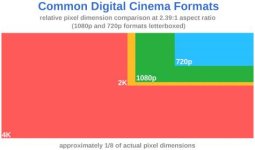
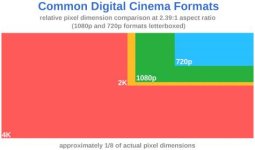
http://en.wikipedia.org/wiki/Digital_cinema ; Digital cinema refers to the use of digital technology to capture, distribute, or project motion pictures. A movie can be distributed via hard drives, the Internet, dedicated satellite links or optical disks such as DVDs and Blu-ray Discs. Digital movies are projected using a digital projector instead of a conventional film projector. Digital cinema is distinct from high-definition television and is not dependent on using television or high-definition video standards, aspect ratios, or frame rates. In digital cinema, resolutions are represented by the horizontal pixel count, usually 2K (2048 × 1080 or 2.2 megapixels) or 4K (4096 × 2160 or 8.8 megapixels), 2.35:1, 2.39:1, and 2.40:1 are interchangeable; they all mean the same thing for professional use!
From within the “6K Dragon Sensor Image” can be “DOWN REZ” to an 4096 X 2160 (8.8 Megapixels) can be “Simultaneously Extended” to a 1.9:1 Aspect Ratio for an IMAX Image AT THE SAME TIME with a “Specially Formatted Image”; All this happens in the “R3D METADATA File Recorded Simultaneity”. It could actually provide a better experience for the Television Viewers because they have the benefit of the “Whole Image Recorded” across the entire spectrum. In “Digital Cameras” one can record the image at “6K and then “DOWN REZ” the image to the appropriate size.
Humberto Rivera