Welcome to our community

Be a part of something great, join today!

  • Hey all, just changed over the backend after 15 years I figured time to give it a bit of an update, its probably gonna be a bit weird for most of you and i am sure there is a few bugs to work out but it should kinda work the same as before... hopefully :)

Introducing the Phantom Flex

Not from this camera.

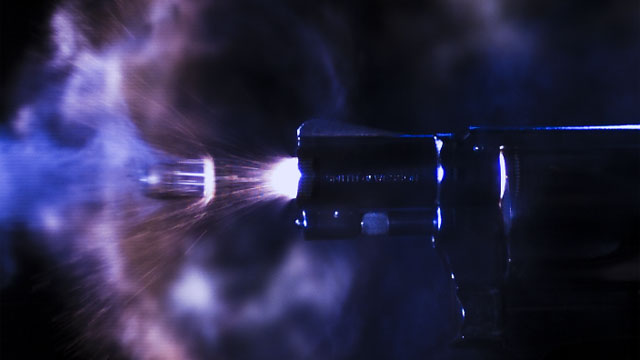
Here's an example from another (industrial monochrome) camera capturing a revolver firing. To really slow down a bullet you need to hit 30,000fps or so. That's pretty cool stuff.

http://www.youtube.com/watch?v=YIqnvdQn5NM
 
Does anybody know, how the high quality mode works?

Stable blacks, lower noise? :001_huh:
Is this a kind of HDR mode,
or is in std. mode the image quality not good enough?


Mark
 
"The Phantom Flex also operates in "HQ mode", Vision Research’s proprietary image enhancement technology which "ensures stable blacks, low noise, higher dynamic range and repeatable shots over the full range of supported resolutions, frame rates, and temperatures, all without the need to conduct pre-shot black references."


I think HQ mode results in a more consistant image where it locks the sensor down within certain conditions. Hence the lower FPS cause you aren't stressing the sensor to it's limit.
 
I think HQ mode results in a more consistant image where it locks the sensor down within certain conditions. Hence the lower FPS cause you aren't stressing the sensor to it's limit.

First i think so too,
but why can i only record the half number of pictures in this mode,
(half record time) than in std mode? :sosp:
 
Good guesses, but what the HQ mode actually does is to take a fresh Black Balance Reference image off the sensor between every frame. That's why it has half the frame rate - it's doing something on every other frame. By striking a fresh BB (Current Session Reference or CRI in Vision Research parlance), the Flex is able to lower the functional noise floor of the sensor, or in the least keep it at its optimally lowest level. This is a real achievement for high speed imaging, as in the past it has been impossible to squeeze in a black reference in the straddle time between frame read/write cycles.

In SQ or standard mode the Flex works just like every other Phantom camera, as does so quite well thank you. Shoot a fresh CRI after changing an imaging parameter (such as frame rate or shutter angle) or after a significant time has passed and you're good to go. The Flex has an internal capping shutter so the CRI takes just a few seconds and can be performed entirely remotely. But with the HQ mode one is removed from every worrying about setting a black reference again because the camera will do it for you between every frame. It makes the camera more, well, flexible.
 
The Flex has an internal capping shutter so the CRI takes just a few seconds and can be performed entirely remotely. But with the HQ mode one is removed from every worrying about setting a black reference again because the camera will do it for you between every frame.


This can't be right, or the advised features are a marketing gag :out:
and only the stable black is right.
because, if the camera do a black reference between every frame,
the readout noise increase not decrease, that's physics,
and the dynamic range can't get better ! :bored:

Mark
 
Well sorry Mark, I do in fact know how it works. Abel Cine Tech is the North American distributor for the Vision Research Phantom cameras and we work quite closely with them on a daily basis. I presented the Flex at NAB this year and I believe I know of what I speak.
 
Without getting into proprietary information...

HQ mode keeps down the noise floor by constantly resampling the electrical float at every photosite as an offset. The sensor is quiet to begin with but the resampling allows for a constant measure of the differential so that a clear signal-to-noise point can be calculated. This means less noise in the final image. Less noise means one can see further into the toe of the exposure, which means that there is greater Dynamic Range.
 
Well maybe not the fastest. The website says in HQ mode it shoots 1390fps. The title for fastest camera belongs to Photron. You would best recognize there work from the BBC's Planet Earth (think slow-mo flying shark).

Here are a couple shots we did at over 20,000fps @ 1/156000th of a sec shutter. At this speed the cameras resolution was a little high then SD.

GunShot1.jpg

GunShot2.jpg
 
No line-skipping... so welcome here. :-)

Jim
 
For it's highest resolutions the Phantom Flex is the fastest digital camera in the world. At 1920x1080 it can shoot 2800fps. That's in SQ mode, which is the only mode the Photron has. If you wish to drop to lower resolutions then there are other Phantom models that hold the title. The Phantom v710 can shoot 1280x720 at up to 8360fps. At 768x480 (NTSC SD) the top speed is 19,300fps. If one is willing to go to extremely tiny resolutions (usually for an optical on/off switch), the Phantom v710 can shoot up to a mind boggling 1.4 million fps. At that point it falls under certain trade restrictions as it is considered by the US government to be a national security asset. I think that in REDuser parlance this would qualify as "bad ass."
 
HQ mode keeps down the noise floor by constantly resampling the electrical float at every photosite as an offset. The sensor is quiet to begin with but the resampling allows for a constant measure of the differential so that a clear signal-to-noise point can be calculated

Can you tell me the readout noise from the Flex camera at HQ and SQ Mode, and the full well capacity (electrons) of the sensor?
VRI have no technical data sheet from all cameras. Worse luck!
Or you can send ma an email if you have any ->detailed<- datasheet.
If your statement is right of the camera, i'm very interested on it.

Mark
 
I do not believe such technical data is available for public consumption. When the Flex is available for client testing you are welcome to do so with us. Feel free to contact me privately and we'll see what we can do together.
 
I have seen that the Flex camera have at the release date now a slower speed rate than advertised :eek6:
Only 2570fps @ HD. Thats not good.
Someone says, thats the reason for best image quality,
but can't Vision Research see this at development?
If this a marketing trick to entice customers at NAB 2010, i'm very spoof of VRI.
I have seen that the image quality of Weisscam and Photron is much better than the flex in HQ mode :undecided:
I hoped that the HQ mode is a step forward, but in reality it is not,
it's only the reason that Vision Research have problems with the black reference by changing shooting conditions, or the offset is not stable.

I have seen that the Weisscam no need a black reference, and the image quality is stable by changing any shooting conditions on the fly.
Next problem to the Flex, i have seen, that it is not possible to have a live view during record.
Thats not good too. This is a feature that would be needed.
And in HQ Mode, it is not possible to use the full exposure time. :furious3:
I hoped that the flex is a good camera for me, to supersede the PHD,

but now i have seen that other manufacturer are better, without a black reference and better image quality.


Mark
 
Back
Top