Welcome to our community

Be a part of something great, join today!

  • Hey all, just changed over the backend after 15 years I figured time to give it a bit of an update, its probably gonna be a bit weird for most of you and i am sure there is a few bugs to work out but it should kinda work the same as before... hopefully :)

Pilot shoot in Chicago

Thank you for that post David. I look forward to hearing what your low light ISO preference will be after you wrap.

Maybe a big set of NDs is something all Red owners should begin to carry themselves, maybe even offer to throw in with the body. A small investment, but one that would help have a conversation with the clients about the beauty of low noise in RAW, and RED's ISO curves.

Maybe RED can make their own set of no-compromise NDs. After all there is a RED MB coming.
 
Hi, David.
Thanks for all your rigorous testing; it's very helpful.
With respect to your findings about highlight and shadow behavior relative to ISO setting, I'm curious if you notice any qualitative difference between shooting with the ISO set at a given value in-camera versus setting that ISO in post... I would expect that the result should be exactly the same, but that's an answer I'd leave to your more experienced eyes.
 
I tested the camera at different ISO settings and opened up the files in RedCine-X using the color temp and ISO metadata, so I can't answer your question regarding opening the footage up at, let's say, 320 ASA, even for shots rated at 2000 ASA or so and then correcting in post.

However, it seems that with RedGamma & FLUT control there is total dynamic range of the original whatever ISO setting you choose to open up the file as, so I would probably say that it's better to let the transcoding & debayering software do the base ISO adjustment for you. But that's a guess.

--

I just got back from Optimus where we looked at the footage in HD, converted by Fletcher from the 4K HD files to 1080P DPX files using RedRocket & RedCine-X. It looked great in HD and it seemed that the new RedGamma images from the new sensor are much simpler/easier to color-correct than the old RedLog images from the old sensor.

I found that there was no clipping problems at 400 ASA in daylight but I was a bit on the border of clipping on a few shots, 500 ASA to 800 ASA would be safer. In fact, I'd say that 800 ASA seems to be the optimal rating for the camera, though if you just looked at a SMPTE chart in RAW VIEW on the camera, you'd find that 400 ASA was about right in terms of placing the midtones dead-center with an even amount above and below. But in practical terms, you'd generally want more headroom than that, which is why 800 ASA seems like a better choice.

I did a test where I overexposed a face by three-stops to see how it looked, and it was between 400 and 800 ASA where three-stops over didn't having any clipped area on the caucasian skin tone I was shooting. At 400 ASA, the brightest spots of the skin were clipping.

So I'm probably going to try 500 ASA for day exterior work until it gets darker, then shoot mostly at 800 ASA until I get into a low-light situation where 1000 to 1600 ASA would be fine. It's an amazing improvement over the old sensor where even shooting at 500 ASA in 3200K could give you some distracting blue noise if you weren't careful to keep your blacks pushed down a bit. Even at 3200 ASA at 32K on the new sensor, the noise pattern is fairly tight and even, without a pattern of blue chunky noise appearing in the image.
 
Hi david, give me a shout if you need an on set Red guy for video assist/data manager and a mobile rocket for dailies! All on one cart and ready to roll! I also have a cinetal.

thanks.

pointblankBANNER.gif
 
You're not going to be able to tell much here in these reduced and compressed JPEG's, but here is an example at 400 ASA:
900%20400ASA%20Normal.jpg


800 ASA:
900%20800ASA%20Normal.jpg


1600 ASA:
900%201600ASA%20Normal.jpg


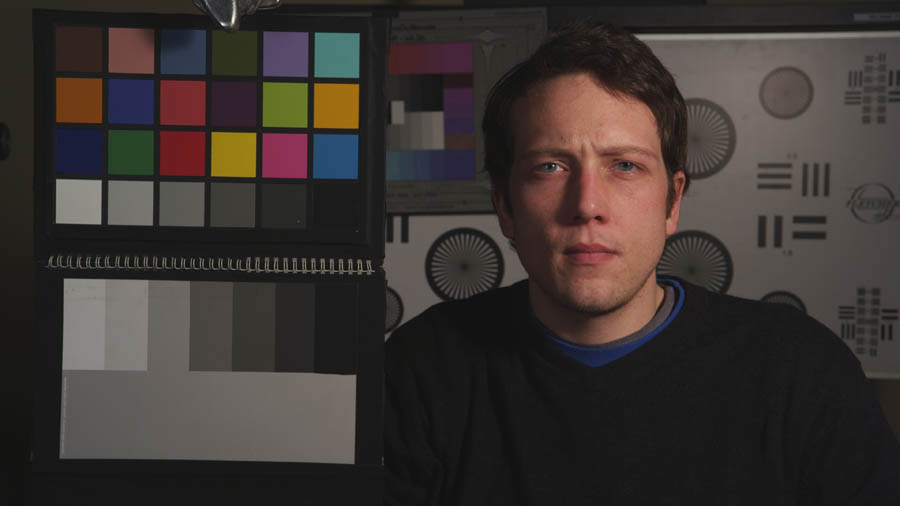
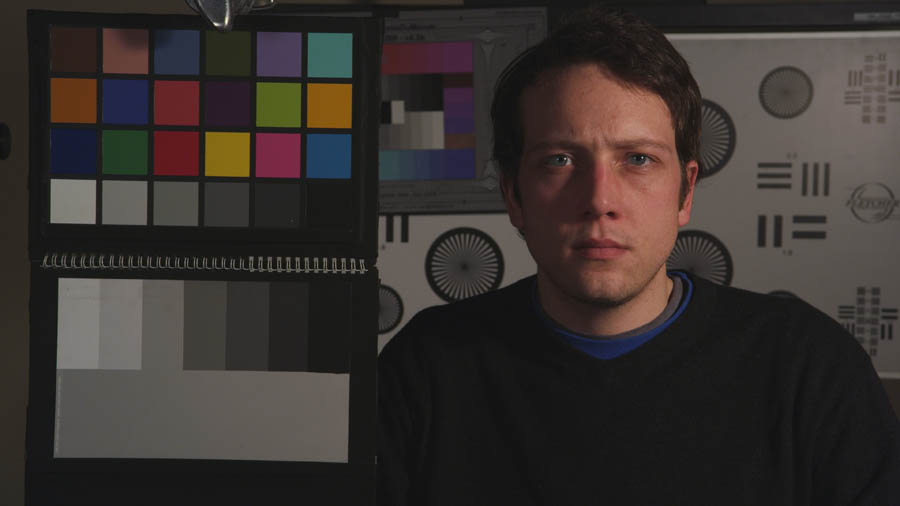
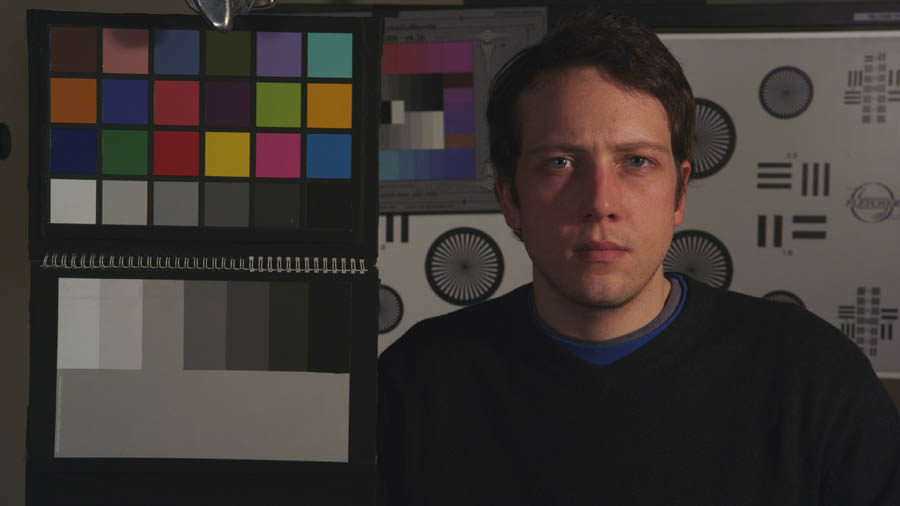
These are RedGamma images, I haven't corrected them to make the blacks blacker. Also note that the lighting is not an exact match in each one because I just had a 650w light that I was moving in and out to get the level I needed, the fill level was done by eye, I just metered the key on the face to get the exposure. So don't try to draw any conclusions about contrast. All you can really see at this size is that 1600 ASA is not particularly noisy compared to 400 ASA.
 
Wow, that 3200ISO does look usable at 1080p, would like to play with curves with it with a Rocket. I regret not pestering the guys with he control boards, RED Rockets, and the Panasonic plasmas more than I did. How does the noise look at 3200 with a minimal crush of the blacks?

If depth was one of your main objectives for an exterior night, how far would you push the ISO David?
 
Well, certainly 3200 ASA is usable, as you see, but it's a little like underexposing film and pushing it, in that you reduce your margin for exposure error. In other words, you don't have as much flexibility to color-correct your images before you fall off of a cliff. So it depends on how sure you are of exposing consistently and balancing your colors consistently.

I'm going to stick to 1600 ASA as my upper limit but 2000 ASA is certainly workable. Yes, you can always crush the blacks to hide some of the noise, but often the reason you are shooting at such high ASA ratings is to capture natural low-level ambience at night so you may be loathe to lose some of that detail by crushing the blacks.
 
Well, certainly 3200 ASA is usable, as you see, but it's a little like underexposing film and pushing it, in that you reduce your margin for exposure error. In other words, you don't have as much flexibility to color-correct your images before you fall off of a cliff. So it depends on how sure you are of exposing consistently and balancing your colors consistently.

Aha. That makes perfect sense. It is great to hear it put this way.

I'm going to stick to 1600 ASA as my upper limit but 2000 ASA is certainly workable. Yes, you can always crush the blacks to hide some of the noise, but often the reason you are shooting at such high ASA ratings is to capture natural low-level ambiance at night so you may loathe to lose some of that detail by crushing the blacks.
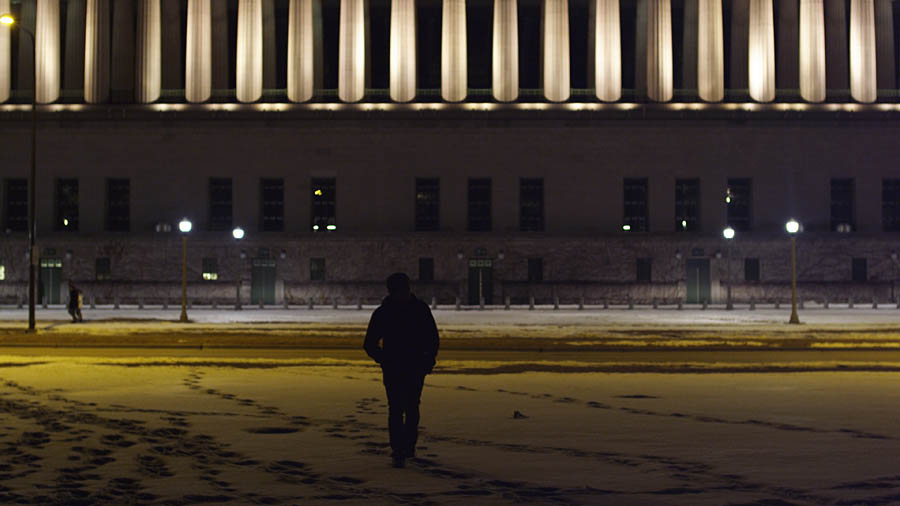
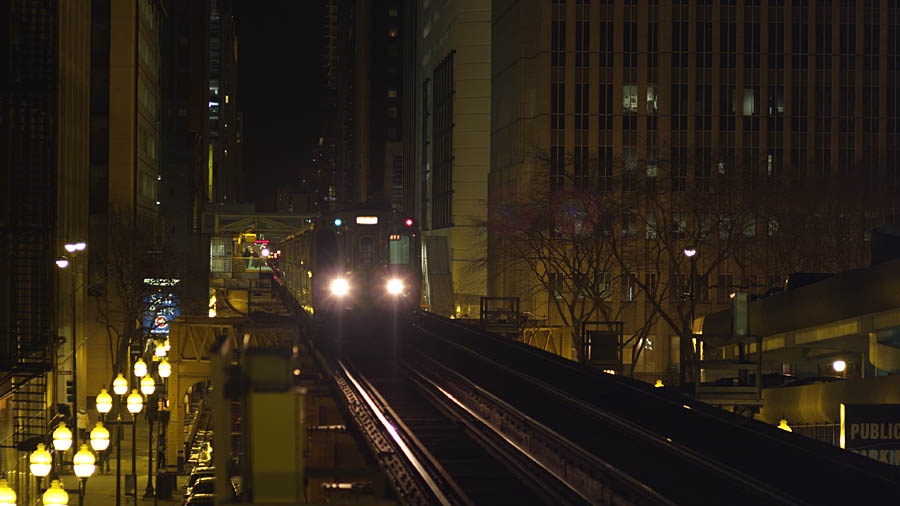
Thank you.

Do you have big night exteriors in the pilot?
 
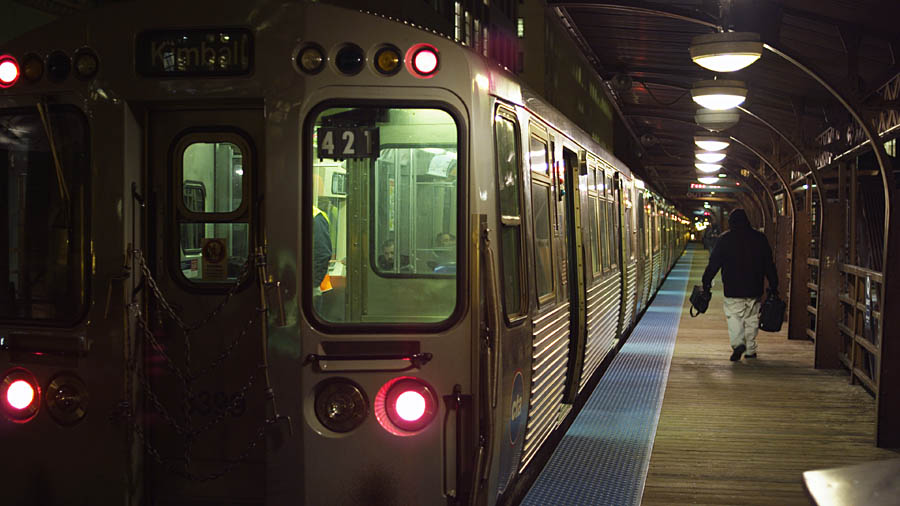
Love the shot of the tube train David. Nice.

Graeme
 
I like the first the best, the third second. I like all three.

Are you planing on keying yellows and modifying them at all?

I love seeing you setting a 270 degree shutter with T2.5, even though these seem to be MPs. So many consider long shutters a sacrilege, under any circumstances. I suppose the subject was walking toward the camera, and if the hands remained in his/her pockets it would have helped even more.

This is getting interesting. I hope you find time to keep sharing more as things progress.
 
I did a test where I overexposed a face by three-stops to see how it looked, and it was between 400 and 800 ASA where three-stops over didn't having any clipped area on the caucasian skin tone I was shooting. At 400 ASA, the brightest spots of the skin were clipping.

So I'm probably going to try 500 ASA for day exterior work until it gets darker, then shoot mostly at 800 ASA until I get into a low-light situation where 1000 to 1600 ASA would be fine. It's an amazing improvement over the old sensor where even shooting at 500 ASA in 3200K could give you some distracting blue noise if you weren't careful to keep your blacks pushed down a bit. Even at 3200 ASA at 32K on the new sensor, the noise pattern is fairly tight and even, without a pattern of blue chunky noise appearing in the image.

Now I'm totally confused. Maybe I just don't get how ASA/ISO works completely, but that seems counter intuitive to me. If you're clipping at 400 ASA, wouldn't you want to go DOWN to 320? Or is there some kind of change in DR with ISO adjustments? Why are you increasing to 500 ASA for your daytime exteriors? Is there some kind of advantage in contrast?
 
These look very similar to the shots offhollywood recorded in New York.
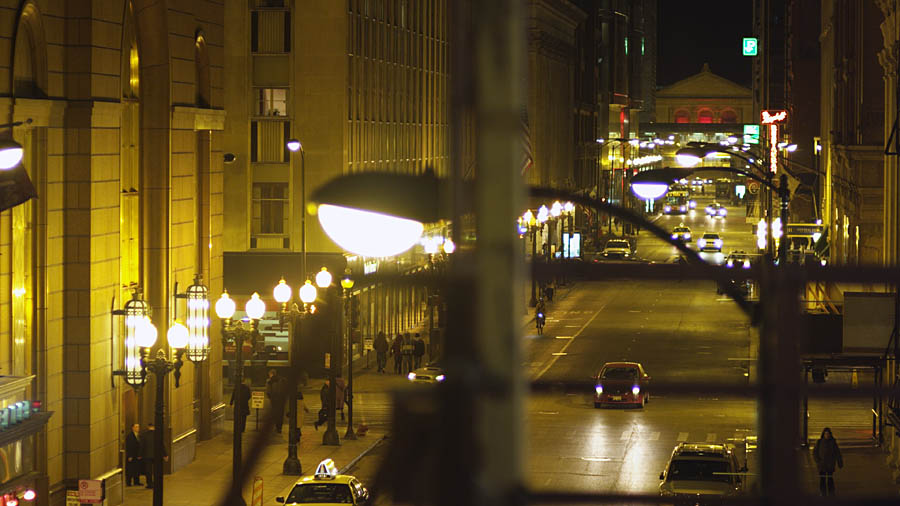
I should hope so... it's his camera!

It's great that I don't have to rent the more expensive Master Primes for this show -- you can see how well-exposed this street is at 800 ASA, 180 degree shutter, T/2.0:

900%20Ridealong6.jpg
 
Now I'm totally confused. Maybe I just don't get how ASA/ISO works completely, but that seems counter intuitive to me. If you're clipping at 400 ASA, wouldn't you want to go DOWN to 320? Or is there some kind of change in DR with ISO adjustments? Why are you increasing to 500 ASA for your daytime exteriors? Is there some kind of advantage in contrast?

Rating a sensor faster is defacto underexposing it more, thus there is more highlight information being recorded, but less shadow information.

Basically higher ratings give you less clipping but more noise, and lower ratings give you more clipping but less noise.

Let's say you have "x" amount of light and your meter at 250 ASA says to shoot it at f/2.8. Well, if you changed your meter's rating to 500 ASA, it would tell you that the same amount of light should be shot at f/4.0. But if the actual sensitivity of the sensor or film stock hasn't changed, using f/4.0 instead of f/2.8 is robbing the sensor/film of one-stop of exposure. So your bright areas won't clip as quickly but you'll be recording less shadow information. And once you lift everything in post back to look normal in brightness, you are increasing the noise level. But if the sensor has a really low noise floor, as the M-X does, you can get away with that.
 
Back
Top