


Jay A. Kelley
member
- Joined
- Feb 2, 2007
- Messages
- 3,803
- Reaction score
- 0
- Points
- 36
- Location
- St. Louis MO
- Website
- www.dreamwelder.com
A lot of people have been looking for a fix to the cold weather problems of the current EVF.
We’d like to offer a solution to this problem until you all can get your hands on a Bomb EVF.
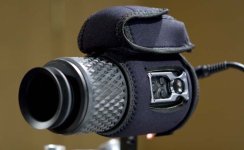
We’re calling this the Arctic-X-Shield. Here are the stats:
The Shield uses three different insulators & and a heater
• Velcro compatible cloth on outside (Wind barrier, not pictured)
• Neoprene open cell insulation
• Industrial closed cell foam insulation
• Electronic heating pad using Microwire™ technology
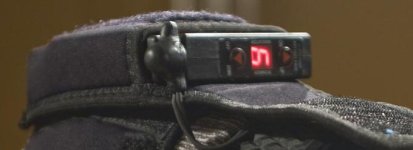
The shield can use two different power sources, Li-Ion (Powers unit for 90min @ 100%), or Li-Poly (Powers unit for 3 hours 45min @ 100%). Both power sources contain electronic “smart” controllers which, using LEDs or a digital display, give feedback on remaining power, charge status, and 4 different power selections which allows you to increase battery life.
The unit is currently tested to keep the EVF working in 5 degrees F and we expect it will actually do better than that. It’s currently on a shoot in a country known for it’s cold weather, so we’ll see how it does.
The flexible nature of the shield allows you to ADD ANOTHER HEATER for really extreme temps (-14 and below).. (we’ll have photos of this soon)
Pricing:
The base package includes:
• Main cover (The Shield)
• Insulated end cap
• Industrial foam insulation pad
• Microwire™ heating element
• Li-Ion battery with “smart controller”
• Detachable battery pocket
• Battery charger
Cost is $399.00
You will be able to upgrade the package to a Li-Poly battery for about $50 more. We’re pretty sure everyone will want the Li-Poly batteries for the longer run time, but the Li-Ions are cheaper, so we’ll leave that up to you.
We’re on the final steps of this now, and I expect shipping in two weeks.
Note: The bomb EVF rules, so we're not going to make butt-loads of these things. However if you have some cold weather shoots coming in the next few weeks, or do not plan to upgrade to a bomb right away, then this might be useful to you.
Contact me at production@dreamwelder.com if you are interested. Or write here if you have questions.
Thanks! Jay
PS: Attached photos are of prototypes, there are a number of changes, and the final product is "cleaner". There is also a removeable, protective cover for the button area. The really observant of you will notice the EVF is UPSIDE DOWN.. No, you don't have to use it this way.. We simply moved the battery compartment fromt the bottom to the top so you can now see the battery display better.. Rather than get a new proto.. We just flipped the EVF so you could get an idea of what it will look like.
Attachments
Last edited by a moderator:


