Welcome to our community

Be a part of something great, join today!

  • Hey all, just changed over the backend after 15 years I figured time to give it a bit of an update, its probably gonna be a bit weird for most of you and i am sure there is a few bugs to work out but it should kinda work the same as before... hopefully :)

macro 2/3 shots, how to?

J Davis

Well-known member
Joined
Sep 22, 2008
Messages
1,267
Reaction score
0
Points
0
Location
NYC
Does anyone have any idea on how to get macro shots on red's impending scarlet 2/3 system for film making? (my use would be ultra cu's for narrative drama)

The only way I can think would be to get a 3rd party lens for the interchangeable scarlet but I would then question the properties of the lens and whether the footage would match.

To my knowledge none of the mini primes are also macro and I don't know of an adapter for the fixed.
 
The fixed zoom would require a diopter filter for close-focusing if it doesn't have a macro mode.

For the interchangeable lens 2/3" Scarlet, you could use a macro lens meant for a 35mm or 16mm camera if the camera or the lens had the right mount. Same goes for still camera macro lenses. Same goes for B4 Macro zooms with the right adaptor.

Or use a diopter filter on the Mini Primes.

Thanks for the input David. Assuming the fixed has no macro mode, what diopters would you recommend?
 
Are there any brands that you prefer?

I've been doing some searches online, there are not that many that hit 77mm thread (scarlet fixed).
For my 7D there seem plenty of options, B&W, Hoya, Sunpak, Tiffen ...
 
i found these on a quick google search:

http://www.adorama.com/HY77CUS.html

ive used something like these for my nikon dslr, and i've been really happy with the results.

I saw that as well. Did you notice the line in the description about 5 lines down
"Depth-of-field is shallow so use as small an aperture as possible"
 
Close-focus / macro photography always needs a lot of light to get any sort of depth of field, it's incredibly shallow even at stops like f/5.8 or f/8. On the other hand, it's not hard to get a high stop when you're only talking about lighting a small tabletop area.
 
I think the same macro techniques apply for 2/3" format as for any other format:
1) dopter lenses in front (for medium magnification)
2) reversed lens mounted in front of normal lens (for very high magnification)
3) extender tubes (although there may not be any yet for Red's proprietary mount?)
4) specialized macro lenses (adapted for mount if needed)

Macro shots are often done with the highest available f-stop, because depth of field drops as you get closer to the lens.

"Matching the footage" would be the least of my worries, I think that's a small tweak in post if need. An extreme close up will be jarringly different from a normal shot just due to the magnification, in my opinion.
 
USE ACHROMATIC DIOPTERS

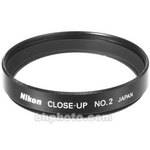
For quality sharpness use ONLY achromatic diopters (that have TWO or more elements to correct for aberations. Made by Nikon, Canon, Sigma, Hoya, Marumi, and others. These are very sharp, unlike the less expensive single element diopters that can lose CONSIDERABLE sharpness depending on magnification.

Also for the fixed lens Scarlet it is not imperative that you purchase a diopter (achromatic or otherwise) in the lenses' 77mm thread size. Since the diopter is magnifying the central portion of the image, a smaller diameter diopter than 77mm can be used without vignetting via a step down ring. How much smaller is the question. It depends on the magnification of the diopter. Trial and error will be needed to determine how much one can step down without vignetting for the Scarlet 2/3" fixed camera. As example I used a 62mm Nikon 5T achromatic diopter (about 1.5x magnification if I recall correctly) on the 72mm thread of the Canon XL1 16:1 zoom some years ago with absolutely NO vignetting.
 
USE ACHROMATIC DIOPTERS
For quality sharpness use ONLY achromatic diopters (that have TWO or more elements to correct for aberations. Made by Nikon, Canon, Sigma, Hoya, Marumi, and others. These are very sharp, unlike the less expensive single element diopters that can lose CONSIDERABLE sharpness depending on magnification...


great info, thank you for sharing.
 
ALSO all the Century Optics close up lenses I have seen are achromatic (main reason why they are so pricey).
 
achromatic

achromatic

I use 2-element achromatic 77mm screw on Fujinon. Works for me.

In addition to using a two element lens, you can reverse mount a view camera normal formula lens in front of a zoom lens or something between 25mm and 150mm on Scarlet.

A good 4 or 6 element view camera "normal" lens will have a flatter field than a 2-element achromat and let you use the zoom open a bit more maybe for subjects that are nott too deep.

You put the "front" of both lenses together and use a fast enough view camera lens that it's opening is large enough to clear.

If you need larger than 1:1 use a 150mm on scarlet and smaller lenses in front reverse mounted, like a 75mm for 2x and a 35mm for 4x etc. The 150mm would be set close to INF and the focus adjusted with the front lens or moving the camera in and out, one of the lenses should be left wide open and the other stopped down.

Leica slide projector lenses or good ISCO 35mm movie projector lenses can also be used as a diopter reverse mounted in front of a Zoom or medium to long lens.

If you need less power than try a 12" to 18" view camera lens made for a 8x10 or 4x5 camera in front of a good 75mm or so on the camera, you leave the view camera lens open and stop down the lens on the camera most of the time.

Because of the light loss, and the need to stop down to between f/5.6 and f/11, you will need some bright light to get best results.

See the movie The Hellstrom Chronicle for a good example of this type of macro shooting,

http://en.wikipedia.org/wiki/The_Hellstrom_Chronicle

For more extream closeups you can use low power microscope objectives on bellows, Edmond may have a microscope objective to C mount adapter (used in holographic work to focus a laser through a pinhole), use APO objectives or maybe 5x to 20x etc. The slide end goes to the subject and the thread end to the sensor.
 
Woot! got my first diopter (for use with my 7d and AIS)
Its the same as the one linked below but I bought it used from adorama
– not achromatic or anything. May have to get the real deal once my scarlet arrives though.

I have to shoot a fashion viral tomorrow - maybe i can add a 'diopterized' ECU to the storyboards and hope no one notices :)

BH linkity link
37294.jpg
 
Back
Top