Welcome to our community

Be a part of something great, join today!

  • Hey all, just changed over the backend after 15 years I figured time to give it a bit of an update, its probably gonna be a bit weird for most of you and i am sure there is a few bugs to work out but it should kinda work the same as before... hopefully :)

Filters in Front of a Long Lens

Pawel Achtel

Banned
Joined
Oct 12, 2007
Messages
3,648
Reaction score
0
Points
0
Location
Tasmania
Website
www.achtel.com
We know that filters degrade image. The longer the focal length and the bigger the aperture of the lens, the more degradation. Filter quality (flatness) plays big role. If a filter is used in front of say 400mm lens, then even a supposedly high quality Hoya HMC Pro will cause very significant (unaccaptable) image degradation. This is because the filter needs to be flat to something like 1/2 light wavelength, so even placing a filter in a frame will buckle it beyond that! Scarry stuff! :scared:

My questions:

1. What filters (in particular NDs) are the best quality?

Pancro, Schneider, Formatt,... they all say they are "flat" but how flat is flat?

2. What is the maximum focal length and aperture one would use a filter in front of the lens for 4k acquisition?

Of course internal filters are the answer, but show me a lens with 3 internal filter frames....
 
Pawel, glad you started this thread. Hope you can clarify if all filters (uv, poli's etc.) have an effect on a long lens. And lastly, is there any filter that will lessen the effects of atmospherics on an image?
 
  • Thread starter
  • Banned
  • #3
Hmmm...no thoughts anyone?

OK, consider the results in this article before you put a filter in front of your expensive lens. Warning: the images may offend and can be very disturbing to filter manufacturers. :blushing:

http://www.clarkvision.com/articles/evaluating_filter_quality/index.html

My results of using HOYA HMC UV filter were very similar, if not worse. I used Canon 70-200 2.8 L and, at first, I thought the lens was faulty because all of the pictures at the long end were so soft. I thought it was the autofocus, but the problem was that nothing was in focus! So, it couldn't have been focusing problem. It ended up to be the "high quality" Hoya HMC Pro you beaut filter.

Anyone with some thoughts? Surely someone set up a test or has some experience using long lenses.
 
Interesting - of course, before dismissing Hoya filters, it'd be interesting to know the flatness figures for other more expensive filters from Tiffen, Schneider, Formatt, Panchro et al, not to mention coatings.

In my opinion, it's still good practice to leave at least one protection filter on, but in the light of these test results, it may be worth leaving it off for specific shots.
 
There is a reason that film is produced with different ISO ratings & color balances.
 
  • Thread starter
  • Banned
  • #6
What's the reason?

Edit: Can/Should one use filters in front of long lenses, which filters and which lenses?
 
Stephen is saying that a 50 ASA film needs less ND filtration than a RedOne with approx. 200 ASA.

With the new sensor, officially rated at 800 ASA, heavy ND filtration is even more needed.

Hans
Hans, I think I remember reading on one of the RECON threads that the greater sensitivity in the M-X means that the noise floor will be lowered, and not that the highlights will clip sooner.

Don't remember if this was someone from RED who stated this or a poster.
 
Pawel,
In my experience, the Nikon 200mm T2 and 300mm T2 (PL versions) can take a standard Tiffen or Schneider filter on the front. The corresponding Canon T.2.8 PL-mount conversions can not. I would never put a filter on the front of the 150-600. I do not know why I have had problems with the Canons. Maybe I was working with DPs in the 1980's who planted that seed in my head, and I have just accepted it as fact... ;)
I filter Optimo and HR long zooms from the front all the time, with no problems. Same with the Panavision 24-275. I have not used their new 70-200 T.3 zoom.
I cannot speak to the Hoya line of filters, as that's less common in my world, nor to the various lines of still camera lenses.
For the long lenses that I own (200mm Nikon T2, 300mm Nikon T.2, 300mm Zeiss T.3) I keep a full set of the appropriate sized 85's and ND's for rear in the case of each lens. This way I can put the basic correction in the rear and the effect filter up front.
I have not put more than one filter on the front of the primes... typically you are doing an ND or an 85ND combo, right? Or perhaps an 85Pola combo for water reflections? Grads sometimes come into play, yes. Then I would typically use a rear ND (or 85ND combo) and put the grad up front. But I cannot recall ever having to put more than one in front in the case of the super long primes. Not saying it cannot be done, or does not need to be done. I just have never needed to. I have, however, stacked multiple filters on the long zooms, so it should be OK.
I would test.
Based on many years as a working AC, and shooting my own stuff as well...
Cheers,
Harry
 
Clearly, this could not have been settled without a proper test.

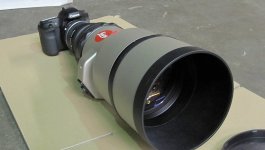
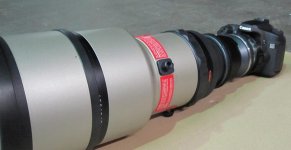
The Setup:

  • Van Diemen Leica Apo Telyt-R 580mm at f/4.0 (the biggest caliber I could find)
  • Schneider 6.6" x 6.6" 85+PL Combo filter
  • Schneider 6.6" x 6.6" Coral Grad #1 Filter
  • EOS 50D with PL mount

Now, you guys have to guess the results :hand:
 

Attachments

  • IMG_0079.small.jpg
    IMG_0079.small.jpg
    83.7 KB · Views: 0
  • IMG_0081.small.jpg
    IMG_0081.small.jpg
    48.8 KB · Views: 0
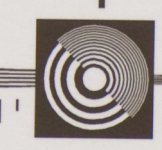
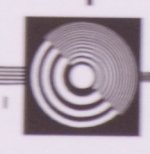
Yes, tested with and without filters in front of a long lens with a large aperture.
 
Please tell us Pawel!

I expect that there will be a loss in image quality, but that "noticeable" difference in the final shots/footage will depend on the size you are viewing at, and also the nature of the footage. With stills viewed on a large screen yes it will be quite obvious, but for a lot of moving footage viewed on the tv or web much less obvious. Eg if you shot a clip of a car speeding towards you in daylight with the ND on, versus not then the overall better image resulting from using the ND would outweigh the loss of sharpness, which would be less of a problem due to the moving subject. However if you are filming a stationary figure for a long distant shot, then yes.
 
Scientifically speaking the result of putting a (high quality) filter in front of a long (580mm), fast (f/4.0) high quality lens lens WFO is equivalent to smearing a layer of Vaseline over the front element, basically. :emote_headwall:

In the next few days I'm going to do some tests at f/5.6 and f/8 but, I think, I will get the idea of using filters in front of long lenses out of my head.
 

Attachments

  • 1 - No filters 0.3s exposure.crop.jpg
    1 - No filters 0.3s exposure.crop.jpg
    39.5 KB · Views: 0
  • 2 - One filter (Schneider 85+PL combo) 1s exposure.crop.jpg
    2 - One filter (Schneider 85+PL combo) 1s exposure.crop.jpg
    30.9 KB · Views: 0
Is this perhaps why some big long lenses have filter slots at the rear? (Other than front element size being too big)
How does a rear mounted filter behave by comparison?
 
Is this perhaps why some big long lenses have filter slots at the rear? (Other than front element size being to big)

Right! And it has one. That's right: ONE! :emote_headwall:
 
How does a rear mounted filter behave by comparison?

You can't remove the rear filter. It is part of the optical design. The lens won't focus properly without it. You can insert different filters, including clear, which is present in both crops.
 
Back
Top