Welcome to our community

Be a part of something great, join today!

  • Hey all, just changed over the backend after 15 years I figured time to give it a bit of an update, its probably gonna be a bit weird for most of you and i am sure there is a few bugs to work out but it should kinda work the same as before... hopefully :)

Red Monochrome - information and resources

Cool Stuff! I would like to know what are the differences, if there are any, in DSMC2 UNI performance when using Monochrom sensor. For example is the compression the same or are the high frame rates the same. Monochrom file should be way smaller then color one and therefore bandwidth of the processing that Unibody has should be able to boost the performance?
 
Luka,

Here's some info from RED.

COLOR VS. MONOCHROME SENSORS

https://www.red.com/red-101/color-monochrome-camera-sensors

intro1.jpg


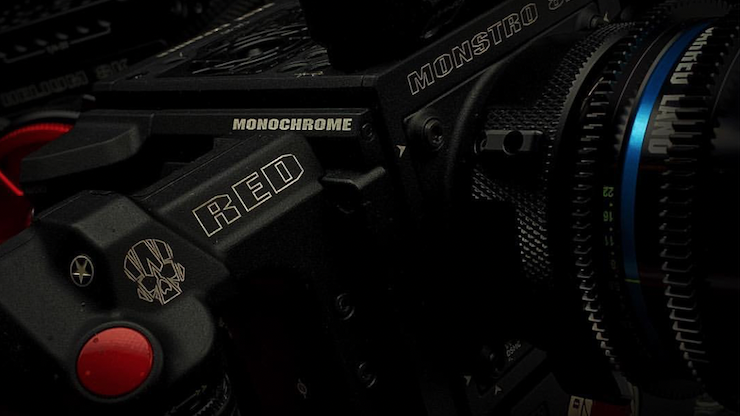
RED “Monstrochrome” – MONSTRO 8K MONOCHROME


By Newsshooter


Article
https://www.newsshooter.com/2018/09/27/red-monstro-8k-monochrome/


Screen-Shot-2018-09-27-at-2-59-55-PM-740x416.png


"Why just not shoot in color and then turn it into black and white in post?
If you compare a color sensor to a monochrome sensor, the main difference is that a monochrome sensor does not use an RGB color filter array. Color sensors have filters over each pixel arranged in a particular grid called a Bayer pattern. By removing the RGB color filter array, it allows for more photons to reach the sensor’s photosensitive surface, therefore, it makes the sensor highly light sensitive. It also lets you capture sharper images with superior resolution, and as a bonus, record a lot smaller file sizes than a color sensor. If you are recording RAW using a monochrome sensor there is no need for Bayer-interpolation. This allows the sensor to read out just the image data instead of having to read out 3:1 RGB. Because each pixel is represented 1:1 in the final recorded media instead of 3:1 RGB, a higher resolution and finer tonality can be obtained with no chance of softness being introduced by the interpolation process.

If you aren’t familiar with RED’s flagship MONSTRO DSMC2 8K VV camera, it can capture 8K full format motion at up to 60 fps, producing ultra-detailed 35.4 Megapixel stills, and incredibly fast data speeds up to 300 MB/s."

 
Last edited:
Thanks Rand, that Red 101 article is really old and BTW its the only thing on Red website about the Monochrome. It gives basic info about the monochrome but there are no details... its strange that Red didnt provide more info. data rats, Speeds and compression, Gioscopes and tools in monochrome, OLPF's and so on

thats i think its impotent that we make this tread with as much info on Mono
 
Luka,

If I can find anything more I will post it here. I'm sure other members and the Red Team will also probably post info as well.
 
Rand- I have talked to Red today and they confirmed to me that all the Spec are the same on DSCM2 Uni Monochrome as they are on a standard model. This is really strange to me. one would say that no color info will be smaller and that there will be more bandwidth for data and that ant least compressions would be less... but no its identical. They couldn't give me any info on OLPFs
 
Rand- I have talked to Red today and they confirmed to me that all the Spec are the same on DSCM2 Uni Monochrome as they are on a standard model. This is really strange to me. one would say that no color info will be smaller and that there will be more bandwidth for data and that ant least compressions would be less... but no its identical. They couldn't give me any info on OLPFs

Luka,

Thanks for the update. If the Red Team says there's no difference, there's no difference. But I understand you reasoning that less color data should equate to smaller file sizes and less compression. Maybe under certain conditions the Monochrome cameras will yield better looking images using the same data rates.

exactly! i was thinking the same; if the frame rates are the same and data rate is still around 300mbs that would mean that compression rate is way lower. But they say no. so apparently at same resolution 8k FF running at 60fps under same limit compression of 12:1 color and BW data output is the same... I dont know it makes no sense to me as i am trying to understand what is the "extra" info that camera provides nut that's not written on R3D?

also another enigma is if the tools are the same or they are monochrome specific? Like a Gioscope or how "traffic light " are interpreted (low, mid, high)?

monochrome is old but there is almost no info on workflow or user experience

Luka,

I think since they were such specialty Red cameras that there wasn't nor isn't the breadth and depth of knowledge available that you have available for their other cameras. The 'EXTRA" could just be the lower noise, dynamic range and resolution.

Maybe it's just:

Strengths and Weaknesses of the Color Sensor file = lets say 2.8GB @ 300mbs
Strengths and less Weaknesses of the Monochrome Sensor file = lets say 2.8GB @ 300mbs


EDIT:

in regard to the OLFP, I believe since they where used to manipulate either the "Colors" in general, with bias toward Skin Tones or the Colors and Dynamic range of the "Color " Sensor that the Monochrome was already optimized for all of that so maybe the OLPF filter in the Monochrome camera was maximized for just that sensor.
 
Last edited:
indeed! it would be nice if we had more info and if that OLPFs was more clear. if i get the Monochrom i will make the tests
 
indeed! it would be nice if we had more info and if that OLPFs was more clear. if i get the Monochrom i will make the tests

Luka,

That would be very helpful for those like yourself whom are interested in the Red Monochrome sensored cameras. Something that if you had known about that would have made you feel better about making your purchase.
 
i think you missed one Rand, maybe i missed it in this wonderful list of Monocrome projects.

https://www.youtube.com/watch?v=IsUsVbTj2AY


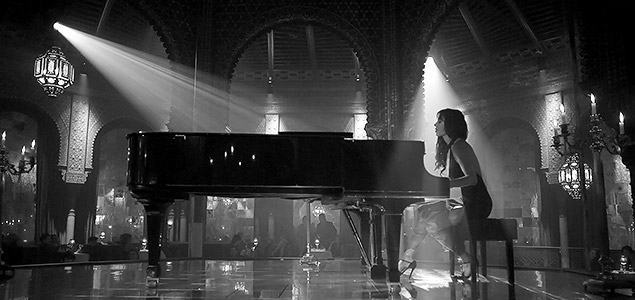
Justin Timberlake and JZ Suit and Tie.
This was one of the First major projects with the Monocrom camera and you can see why when you watch it.
 
exactly! i was thinking the same; if the frame rates are the same and data rate is still around 300mbs that would mean that compression rate is way lower. But they say no. so apparently at same resolution 8k FF running at 60fps under same limit compression of 12:1 color and BW data output is the same... I dont know it makes no sense to me as i am trying to understand what is the "extra" info that camera provides nut that's not written on R3D?

also another enigma is if the tools are the same or they are monochrome specific? Like a Gioscope or how "traffic light " are interpreted (low, mid, high)?

monochrome is old but there is almost no info on workflow or user experience

Luka, RED Monochrome Sensor cameras work exactly the same as their RGB sensor counterparts, except that they record one color basically - greyscale.

They don't compress data any differently. They compress that one color - grayscale - with the exact same data rates that they used to compress 3 colors before - Red, Green, and Blue.

This is what RED is telling you, and this is 100% right.

But Luka - what your gut is telling you - that there is a difference in how the cameras capture light data, is different yes. You are 100% right. And this is what makes Monochrome cameras special. VERY SPECIAL.

Lets go over some quick sensor history, just so we can appreciate this:

With a CMOS RGB sensor, to capture all colors it uses a bayer pattern - it basically dedicates 1/2 of the sensor to capture green pixels, and the remaining 1/2 of the sensor is used to capture Blue, and sometimes to a lesser degree Red. This pattern is very effective and efficient, and can reproduce all other colors/shades well. But it has one defect though. While Green is highly saturated, both blue and red are thinner - ie less data is being dedicated to both. In effect a lot of data is being thrown out. The final impact with any CMOS sensor is that any image perceptibly loses at least 1/4 of its resolution once it's de-bayered into a video file. This is true of all CMOS sensors - whether they are made by RED, Arri, Canon. etc.

This universal truth about how CMOS RGB sensors work has a slightly ignoble history at RED - it was an argument frequently used in the industry - and by RED's competition - to highlight how the original RED ONE wasn't in fact a "true 4K camera", as it never de-bayered a true 4K file. It was the only shade they had to throw at the pioneering camera haha, and throw it often they did.

However, these critics had a point, and to RED's credit they listened. This is what led RED eventually to create the 5K Mysterium Sensor, and later the 6K Dragon - as these sensors all indeed debayer a true 4K file. This worldview on resolution has actually guided RED ever since, and every sensor they make is 5K and up (ie 5K Gemini, 6K Komodo, etc).

Following me so far? Because all of this has as huge impact on why Monochrome sensors are SO SPECIAL.

Because Monochrome sensors only capture ONE COLOR - greyscale - they aren't limited by this particular Color Bayer pattern. They aren't throwing any data out. This is what you're gut was telling you, and you were right. Instead, these unique sensors capture greyscale with extreme accuracy, and don't need to debayer.

So not only do Monochrome sensors get a huge boost in DR, but resolution wise they don't take a hit. An 8K Monochrome sensor is "True 8K". Ie it will perceptibly feel more like 10K, etc.

And this is a pretty bid deal. The clean data pipeline that Monochrome sensors use is a huge part of what makes them so special. They capture black and white way more efficiently than how we capture color, and this puts them in a unique category. As sensors they are in a class of their own - they are unrivaled.

Hope this helps.

PS here's a helpful article on CMOS color sensors:
https://www.opto-e.com/basics/monoch...-color-sensors
 
Last edited:
Luka, RED Monochrome Sensor cameras work exactly the same as their RGB sensor counterparts, except that they record one color basically - greyscale.

They don't compress data any differently. They compress that one color - grayscale - with the exact same data rates that they used to compress 3 colors before - Red, Green, and Blue.

This is what RED is telling you, and this is 100% right.

But Luka - what your gut is telling you - that there is a difference in how the cameras capture light data, is different yes. You are 100% right. And this is what makes Monochrome cameras special. VERY SPECIAL.

Lets go over some quick sensor history, just so we can appreciate this:

With a CMOS RGB sensor, to capture all colors it uses a bayer pattern - it basically dedicates 1/2 of the sensor to capture green pixels, and the remaining 1/2 of the sensor is used to capture Blue, and sometimes to a lesser degree Red. This pattern is very effective and efficient, and can reproduce all other colors/shades well. But it has one defect though. While Green is highly saturated, both blue and red are thinner - ie less data is being dedicated to both. In effect a lot of data is being thrown out. The final impact with any CMOS sensor is that any image perceptibly loses at least 1/4 of its resolution once it's de-bayered into a video file. This is true of all CMOS sensors - whether they are made by RED, Arri, Canon. etc.

This universal truth about how CMOS RGB sensors work has a slightly ignoble history at RED - it was an argument frequently used in the industry - and by RED's competition - to highlight how the original RED ONE wasn't in fact a "true 4K camera", as it never de-bayered a true 4K file. It was the only shade they had to throw at the pioneering camera haha, and throw it often they did.

However, these critics had a point, and to RED's credit they listened. This is what led RED eventually to create the 5K Mysterium Sensor, and later the 6K Dragon - as these sensors all indeed debayer a true 4K file. This worldview on resolution has actually guided RED ever since, and every sensor they make is 5K and up (ie 5K Gemini, 6K Komodo, etc).

Following me so far? Because all of this has as huge impact on why Monochrome sensors are SO SPECIAL.

Because Monochrome sensors only capture ONE COLOR - greyscale - they aren't limited by this particular Color Bayer pattern. They aren't throwing any data out. This is what you're gut was telling you, and you were right. Instead, these unique sensors capture greyscale with extreme accuracy, and don't need to debayer.

So not only do Monochrome sensors get a huge boost in DR, but resolution wise they don't take a hit. An 8K Monochrome sensor is "True 8K". Ie it will perceptibly feel more like 10K, etc.

And this is a pretty bid deal. The clean data pipeline that Monochrome sensors use is a huge part of what makes them so special. They capture black and white way more efficiently than how we capture color, and this puts them in a unique category. As sensors they are in a class of their own - they are unrivaled.

Hope this helps.

PS here's a helpful article on CMOS color sensors:
https://www.opto-e.com/basics/monoch...-color-sensors

Thanks for the detailed explanation Nick! I didn't really know that much about the Red Monohrome cameras so I'm someone like you who does posted.
 
Thanks for the detailed explanation Nick! I didn't really know that much about the Red Monohrome cameras so I'm someone like you who does posted.

Anytime Rand. And yes Monochrome sensors are very special. Hope the above explanation helped. I'm sure someone like Phil can be more detailed exacting, but hopefully I gave the broad strokes explanation.
 
Anytime Rand. And yes Monochrome sensors are very special. Hope the above explanation helped. I'm sure someone like Phil can be more detailed exacting, but hopefully I gave the broad strokes explanation.

Thanks Nick, I have spent a lot of time talking to red and i finally have ordered a Helium Monochrome upgrade. Now the fun will start. so far i have learned that there is only one OLPF for Mono and i will be ordering IR OPLF form Keppertie and bunch of classic BW glass filters. Still i am really interested in the file it self and how will this post pipeline look

do you know by any chance, is there any LUTs developed for monochrome? I wounder how will this work??
 
Any idea how long it took RED sales to get back to you about the monochrome sensor? Its been a few days since I asked about a monochrome helium sensor, and haven't heard back to my support request.

edit: took about a week.
 
Last edited:
Any idea how long it took RED sales to get back to you about the monochrome sensor? Its been a few days since I asked about a monochrome helium sensor, and haven't heard back to my support request.

edit: took about a week.

it takes a long time , i am waiting for Monochrome upgrade more then 3 weeks now. i cant wait to get it and start experimenting and finding answers
 
Back
Top