Martin Stevens
REDuser Sponsor
Great post Evin!

Follow along with the video below to see how to install our site as a web app on your home screen.

Note: this_feature_currently_requires_accessing_site_using_safari


Can someone reference where it states the Alexa is using a low con filter? I hear this a lot but the only info on google points to this information coming from Reduser
Hmm.. Evin just mentioned it but I've heard it in the past.
I have spent alot of time with Alexa footage lately and I really think that what most people confuse with DR is actually the soft rolloff of the halation filter.


For what I needed to do in a very short amount of time... Yes Prores to edit with was quicker than trying to edit uncompressed DPX.Well, when you use DPX or Prores for processing, yes DPX is easier to use, as I pointed pointed out in my post, that it is uncompressed and therefore doesn't require the decompression. But in the actual use with modern grading or editing systems with fast enough drives, that are capable of throughput of DPX size data, both files types behave exactly the same, when used for grading or editing. Just push plaMarks point was an exact opposite. He is convinced, that Prores is faster to use


Can someone reference where it states the Alexa is using a low con filter? I hear this a lot but the only info on google points to this information coming from Reduser
Hmm.. Evin just mentioned it but I've heard it in the past.
I'm not an engineer but it seems silly to me to do something in the electronics that is so easily achieved in the optical path. My information comes from the techs at Panavison I've worked with and from conversations with Arri representatives. I don't think they are keen to let their sauce out of the bottle but it's not hard to figure out, Arri has been working with and studying film emulsions for decades, it's pretty obvious they designed their low pass filter pack to emulate the slight halation that happens on film when light from bright point sources bounce back into the film. That's why film is designed with anti-halation layer. I'm not critical of the Alexa for this, it's a nice touch, one that I often emulate on my Epic.
http://nofilmschool.com/2012/09/roger-deakins-talking-about-the-arri-alexa-at-ibc/
Roger Deakins mentions in an interview that he believes the Alexa has an equivalent to 1/4 softening filter.
"It’s not just Alexa’s high dynamic range that accomplishes this, but there is supposedly a 1/4 softening filter in front of the sensor. This explains the way the camera blooms a bit with highlights, and overall it actually softens the harshness of digital." - Roger Deakins

Sigh...
Brian, I'm just a guy who owns an Epic. I'm not a DOP. I've never posted my fun little projects to Shot on Red. You're having a multi point argument with one opinion from one guy. Your very first post after Mark posted made me cringe. Not because Red doesn't need or value input but because it just felt disrespectful. (Did you delete that post?) Anyway, that's just me. But for now, let's move along. You've made your point.
When I first read Brian and Antonio's comments they sounded like they were trolling. Just an opinion. (I guess everyone likes to use that line)

Also puzzled by the highlight clipping in some of Mark's car shots. They didn't seem difficult exposure ranges to capture with any camera. Would like to see some beauty shots showing romantic skin tones. Seen plenty of cool skin tones from Epic.
http://www.reduser.net/forum/showthread.php?92158-Enter-the-Dragon&p=1129439&viewfull=1#post1129439
It is just the in camera gamma curve or the grade. Other cameras handle that with their own gamma spaces and curves in camera.
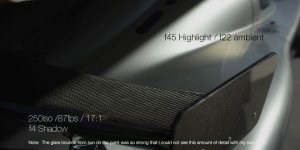
Please look at this and let us know if you are still puzzled (applied a simple curve to roll off highlights... this can even be done in camera if needs be).
ANd this is grading from just a simple compressed mov file. Imagine the flexibility one is afforded in raw.
They didn't seem difficult exposure ranges to capture with any camera.
Comments removed... maybe they were called for, maybe they weren't. But when on the fence, I choose to remove.
Looks good.
I think most people miss the point that the clipping etc, is based on two things, Marks choice in exposure for the given shot and the grading/post processing. Given the same shots, several shooters would get different results. This is just plain common sense. This was just his test and isn't indicative of what the Dragon will achieve in someone else's hands because they would handle the shot differently. He may have chose to let the highlights go as a trade off to get exposure in the darks. It's a first time test and I'm sure if he did it again he'd already have a better idea of how to expose properly and get the most out of the shot knowing it's parameters.