Scott Crawley
Well-known member
- Joined
- Jul 30, 2009
- Messages
- 3,947
- Reaction score
- 0
- Points
- 0
Bob Gundu has turned my head "to the future" in another thread. Thanks Bob.
Ben, I see why you have made storytelling part of your work.


Follow along with the video below to see how to install our site as a web app on your home screen.

Note: this_feature_currently_requires_accessing_site_using_safari


Yes but most people I know don't always have the next job lined up back to back. Ideally yes, but there are times where work can be hard to find. You have to charge accordingly if you want to pay the bills every month and one job falls throughonly on planet film is $950 a day considered some kind of slave wage. every other craft or job people would kill to make that kind of money. I don't think filmmakers work harder than nurses but nurses sure as hell don't make $950 a day.
I don't think filmmakers work harder than nurses but nurses sure as hell don't make $950 a day. sure nurses don't buy equipment but even so thats a lot of money


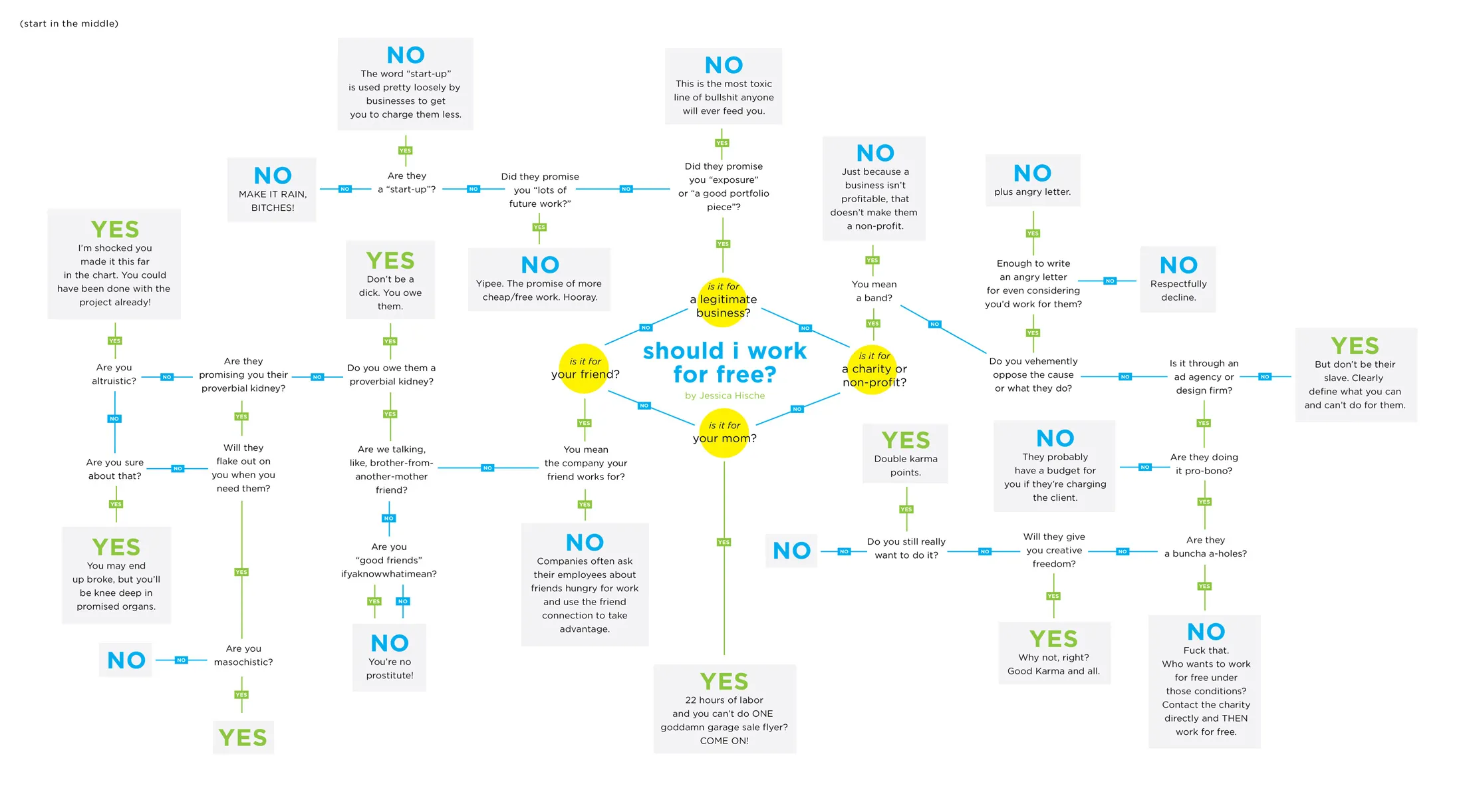

I think people are missing what is going on in the level of business above them. The old model of middle-cost productions has severely shrunk. Reality television has eaten up a tremendous amount of air time that used to be filled with dramas and substantial documentaries. Cable television is in the ascendency and Netfilix has shown that new horizons are opening, but with all these outlets, the price per minute producers are making is not going to go up.
Middle level movies in the $10 to $20 million dollar range are much rarer as the very expensive or the very cheap fill out the menu. Look at Spike Lee with his hand out on Kickstarter. Look at Soderbergh and Spielburg talking about the difficulty in getting films funded. That means that production work at the very high end is available, but a solid middle class income is no longer guaranteed for many filmmakers.
Where does this leave the producers who are hiring all these cinematographers or renting their cameras? Many of them have gone away and left the business or adapted to the low end. Many have been replaced by young producers who have no quality references because they have never known anything but the production slave-ships. So we are seeing a lot of the race to the bottom.
I recently finished a television film in the US after producing American television in Eastern Europe for some years. My American crew was half the size of the European crew we were accustomed to working with and many compromises had to be made, but the production quality remained high, relative to the budget, because my own brand depends on that. But the compromises included working outside of the unions and guilds and promoting people up to first chair that might not have been quite ready for it. We kept the days reasonable in length, we fed everybody well, and we pushed for quality.
In the end, shooting in the States was worth it, but it was very hard. If the only thing important to me had been the bottom line, I would not have shot the film this way.
But what would a producer do who had no experience in higher budget work, whose entire reference was cheap production? He is going to assume that this is everybody else’s reference too, and he will hire anybody he can for as little as possible and ask for equipment for free because that’s what he knows and because he knows he can deliver and his client will accept it.
I think people need to be as shrewd and realistic as possible in business and look very hard at what happens to your self respect and your reputation when you wear cheap on your sleeve. It’s a hard old world out there…

What kills me is when you rent your stuff out and after a couple of times they want a "friendly discount". That and people that don't have insurance!!! It has gotten so bad that I heard that one guy in Atlanta charging $450 for a full Epic Rig!!!!


When I bid on a job, it is never just a day rate with everything we have in the office. Primarily because we would never know the full scope of the project without speaking with a producer or creative so the process it more detailed than just simply saying:
Camera with everything for $950

WELL... Aside from price fixing.. there is also the principal of organizing and collective bargaining for the labor side of the equation. Union wages allow minimum compensation to be agreed upon. And still permit the technician to ask for above scale.
I notice that graphic artists communicate and attempt to follow a code of ethics and establish value pricing guidelines.
This problem is not unique to our forum. Personally, i just muddle through and consider each project on its own merits.
I feel that we probably have more equipment and more skilled personnel in this country than there are client dollars to support. But I still live by the credo of "there's always room for one more good one."
The first phase of the race to the bottom rate war darwinism, is that the "grinder" style clients quit accidentally hiring the people who are firm on their prices, causing some of those people to leave the media industry.
The second phase is that the lowest billing vendors are unable to maintain their equipment at the rates they are charging, and have to leave the industry.
The third phase is that the remaining vendors are working on a very tight margin, until demand for their tools and services exceeds supply, allowing them to increase the rates again.
This may take a long time... and is why I discourage anyone from borrowing money to acquire gear for which they do not have a customer.
And of course, remember the supposed russian proverb "Good Enough is the mortal enemy of Best"
Many consumer tools are "Good Enough" for the most ruthless producers. The Best (Cine cameras used by skilled operators) are not needed by them.

What part of, "It's a free World", do you not understand or agree with?
