Welcome to our community

Be a part of something great, join today!

  • Hey all, just changed over the backend after 15 years I figured time to give it a bit of an update, its probably gonna be a bit weird for most of you and i am sure there is a few bugs to work out but it should kinda work the same as before... hopefully :)

Gels For a Thriller

Manfred Lopez

Well-known member
Joined
Feb 14, 2007
Messages
992
Reaction score
0
Points
0
Location
Mexico
Website
www.registrodeactores.com
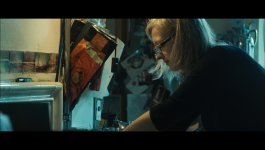
I am planning on shooting a supernatural thriller set in Mexico. I was wondering if I could get some recommendations on what specific gels I should get to light it. What would be a basic set? Which brands have worked for you? Here are a couple images for the general look I want to go for. It's from Dark Water (2005), cinematography by Affonso Beato.

Picture4.png


Picture9.png
 
99% of the time I see CTO (or CTS, the fancy CTO), CTB, plus and minus green, and not much else. Of course all of those in every common strength. On the bigger shows (50 million range) the union guys I know work on it's the same thing almost exclusively they say. That plus diff (opal, 250, 216, half grid, grid, hampshire frost) generally; they often would joke with me that the bigger the show the more conservative the use of gels, more for correction than for style.

There are some fun gels to use and everyone has their favorite color gels, but there's no right answer except what gives you the look you like and having a full supply of the common ones, listed above. Unless you're making Suspiria or Spring Breakers.

I do like the Storaro gels ok and often find myself using a red or yellow gel. Storaro yellow is nice. If you have a lot of light motivated by unusual sources (mercury vapor and low pressure sodium lights) or you want to invent a subjective moon light that has a particular mood it might be worth trying out different colors and cocktails, but even most of those can be built with standard stuff. Coordinate with art, your gaffer, and your key grip of course.
 
Have fun

Have fun

get a swatch book for both LEE and Roso gel filters .Maybe From local expendable / lighting house. If not go to rosco online. For 7.50$ they will ship you one of their collections( roscolux, eseries, cinema I'm sure LEE will do same.
you'll have small samples to test . Stick them in a 200w pepper or an LED flashlight .
 
99% of the time I see CTO (or CTS, the fancy CTO), CTB, plus and minus green, and not much else. Of course all of those in every common strength. On the bigger shows (50 million range) the union guys I know work on it's the same thing almost exclusively they say. That plus diff (opal, 250, 216, half grid, grid, hampshire frost) generally; they often would joke with me that the bigger the show the more conservative the use of gels, more for correction than for style.

There are some fun gels to use and everyone has their favorite color gels, but there's no right answer except what gives you the look you like and having a full supply of the common ones, listed above. Unless you're making Suspiria or Spring Breakers.

I do like the Storaro gels ok and often find myself using a red or yellow gel. Storaro yellow is nice. If you have a lot of light motivated by unusual sources (mercury vapor and low pressure sodium lights) or you want to invent a subjective moon light that has a particular mood it might be worth trying out different colors and cocktails, but even most of those can be built with standard stuff. Coordinate with art, your gaffer, and your key grip of course.

That is really good to know. By the way, I find it too funny that bit about the higher the budget, the more conservative the lighting. I can totally picture it. I have a feeling that on those shows production design takes on a huge role. Phil Rhodes wrote an interesting article to that effect here: http://www.redsharknews.com/production/item/766-here-s-how-to-make-your-films-look-good
 
While there has been an array of gels I used in Photography, while experiencing things, I have now come to the firm conclusion that with Modern RAW camera shooting capacity and the incredible tools we today have in Post, I absolutely refrain form using any permanently modifying tools on my camera lenses, and other then the Circular Polarizer and ND's I would never use anything, no Gels, no filters.

At only other exception possibly of netting if I need a particular look in a shot for effect.

So I would advise to test what you can achieve in Post with a good Colorist, before you would permanently set your Raw data.


Oops... clicked out

So having said that, I have been doing the exact same thing with lighting, and now only shoot using Daylight pure 5600k, completely undermining what ever sources are there already, as I'll have my main and more predominant light as the one that will give the look I want, then again, here comes Post.

Of course this is my view as DP, and each has his own, but just sharing my tough here about Gels and all.
 
..and now only shoot using Daylight pure 5600k, completely undermining what ever sources are there already
I tend to do quite the opposite Ketch, cause I love mixed light. This here is how I lit it, no secondary color tweaking.I think it gives you a nice start, that looks more organic than shot with neutral light and than try to do the trick in post.And yeah, since this is one of my own projects, I already know what I want when I shoot it, so the image doesn't have to be THAT flexible, as if you shoot with a director, that changes his mind every 5 minutes. Frank
 

Attachments

  • 2_1.80.1.jpg
    2_1.80.1.jpg
    88.3 KB · Views: 0
Last edited:
I tend to do quite the opposite Ketch, cause I love mixed light.
This here is how I lit it, no secondary color tweaking.

attachment.php


I think it gives you a nice start, that looks more organic than shot with neutral light and than try to do the trick in post.
And yeah, since this is one of my own projects, I already know what I want when I shoot it, so the image doesn't have to be THAT flexible, as if you shoot with a director, that changes his mind every 5 minutes.

Frank

Hi Frank. Thanks for your post, but I couldn't see the picture and I would love to. For some reason it didn't load. And when I clicked open in a new window it took me to BmcUser login.

Anyway, regarding the baking-in vs. post debate, I have always found that if you start off with great looking footage, the grading becomes fun and it easily elevates the footage to new heights. But if you start of with neutral footage, it usually only becomes "good" but not "great". I think it has to do with commitment and artistic risk-taking. Somehow some of the most memorable cinematography that comes to my mind is always the result of on-set lighting, with coloring just an extra step in the enhancement process.

Ketch, regarding HMI lighting, the thing I don't like about it is that it is not a continuous spectrum light source. Sometimes good old-fashion tungsten provides some of the best lighting quality despite of all it's impracticality (color balance, high amp draw, etc). Btw, I'm a big fan of you posts.
 
I´m completely with you regarding your last post. Lighting and light color has to be build properly on set and it will make the images "shine". I also agree, tungsten is a great source because of its continous spectrum, but I do work often with HMIs because of the lower amps and lower heat. I don´t alter the colortemp on the camera though, mine is "glued" to 5000K as I don´t want to starve the blue channel, usualy color the lights the way I want and in case I need another CT on camera I prefer to use filtration. So yes, look into gels to get your desired look. That said, use them carefully. YMMV.

Cheers, Ulf
 
Hi Frank. Thanks for your post, but I couldn't see the picture and I would love to. For some reason it didn't load. And when I clicked open in a new window it took me to BmcUser login.


Does it work now?

And yeah, I'm also a big tungsten fan.
 
Changing the color of the light is changing the reflection capabilities of the colors in your set and the contrast between colors. Something you won't be able to change organically in post.

Look it like this. If you have a red T-shirt you'll be able to turn it green in post. But you will kill some life in your red as it's post-forced in one direction. Shadows and light can have slight tonal differences that will be killed by a "forced" grade.

If your actor, with the red T-shirt, pass in a green light for example, your red will get darker (or black). Not something you can achieve organically in post by forcing your color.

But If you shoot neutral ballanced (5600 light / 5600 camera) you'll only need what gets you there (CTO / CTB / +GREE / -GREEN / Diffusion / ND / Scrim...).

Playing with colors is really fun, but time (and money) consuming.

Pat
 
I tend to do quite the opposite Ketch, cause I love mixed light. This here is how I lit it, no secondary color tweaking.I think it gives you a nice start, that looks more organic than shot with neutral light and than try to do the trick in post.And yeah, since this is one of my own projects, I already know what I want when I shoot it, so the image doesn't have to be THAT flexible, as if you shoot with a director, that changes his mind every 5 minutes. Frank

I agree with the above. You will find very few high end cinematographers that paint all their color in for several reason. First off it is much less organic.
Another concern is if you as the DP are not fully involved with all the coloring someone may change the look to something you really didn't intend, painting in all kinds of crap. Before you get a chance to correct it the director loves it and they lock the picture on you. This will also make the sets more sterile, giving the environment a boring look for the actors to work in. You may have to avoid using smoke as well.
It's just laziness or lack of inspiration IMO.

The ultimate question is; what's the point of having a cinematographer if he or she doesn't have a visual style to add (not the colorist)?? This includes the "color" of the light.
I say go for broke, find a visual style and pallet that makes the set pop, one that, when everyone walks onto it they feel the correct emotion.
 
I tend to do quite the opposite Ketch, cause I love mixed light. This here is how I lit it, no secondary color tweaking.I think it gives you a nice start, that looks more organic than shot with neutral light and than try to do the trick in post.And yeah, since this is one of my own projects, I already know what I want when I shoot it, so the image doesn't have to be THAT flexible, as if you shoot with a director, that changes his mind every 5 minutes. Frank


Beautiful rendering colors Frank,

what I meant is that I do only use 5600k Daylights, apart form what it is already there on the chosen seen which I never touch, never gel, as I want to reflect that apart of reality to that scene and how it looked to me and the reason I chose to shot it, so it is almost never just pure 5600k illumination, unless there is absolute darkness in that particular scene, as I too love the mixture of colors created by different lights, but not by gelling them, or trying desperately to match them all to your shooting Kelvin, might that be 5600 or 3200.

Plus the good thing for me I guess, is that not only I am always the DP on my shoots, but I am also the Director... ;)
 
if i understood ketch right, then what he means is that when filling or just changing the "stop" he uses daylight to stay "neutral" but the actual lights stay "true" and then enchance (not change) the color in post.

personally, I would say stay away from filters ON a lens because these can be mimicked almost perfectly in post BUT the lighting on set is a different story, totally diff. ball game as they say.

my 2 cents :)
 
Im someone who only likes doing things in camera. So I love mixing colors and getting a little funky with gels. My feeling is, they didn't make all these gel colors for nothing, have some fun, experiment. It's your look, only thing I would sugest is to download the APP "swatch" your have every gel ever made. Every shoot I like to go into the app and look at some colors I'm feeling, then see in the program how 3200 and 5600 will look and what simular gels I could get if that particalur gel is not at the expendable house. For example next weeks feature I'm shooting I'm feeling. White flame, Oklahoma yellow, cyan, storaro red, apricot, chocolate and wheat. Besides the boring cc gels. It's a stylistic feature, and each scene will call for a spefic colors based on the location, mood and what you want the audience to feel.
 
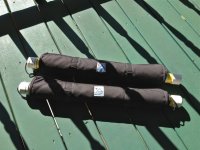
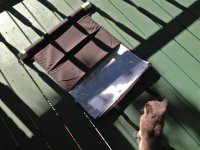
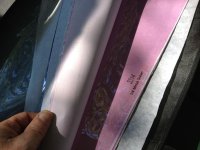
For what it's worth, aside from my large collection of gels back at my studio, I have started to carry with me what I refer to as my Gel Reference Master, which contains the basic color correction, diffusion, color wash gels I tend to use the most. While each gel has the code number on it, I also label each gel with a P-Touch labeler with it's proper name, like 1/4 CTO for example, so I can ask someone for a particular gel, and they can easily find it without knowing the Rosco or Lee reference number. I keep all my color correction gels on one roll, and all my diffusion and color wash gels on the second roll. It will cost you a few hundred dollars to purchase all your gels, but I find having a reference library of every color correction & diffusion gel in every strength available to be invaluable.

Sorry for the crappy iPhone pics.
 

Attachments

  • Gells 01.jpg
    Gells 01.jpg
    95 KB · Views: 0
  • Gells 02.jpg
    Gells 02.jpg
    92 KB · Views: 0
  • Gells 03.jpg
    Gells 03.jpg
    91.9 KB · Views: 0
For what it's worth, aside from my large collection of gels back at my studio, I have started to carry with me what I refer to as my Gel Referance Master, which contains the basic color correction, diffusion, color wash gels I tend to use the most. While each gel has the code number on it, I also label each gel with a P-Touch labeler with it's proper name, like 1/4 CTO for example, so I can ask someone for a particular gel, and they can easily find it without knowing the Rosco or Lee referance number.


Now THAT is organization!
 
Of course you realize that it isn't about the amount of money, so much as it is about where the money comes from and how that necessitates a large number of eyes and opinions in the DI suite.

Not having had the challenge of a big budget myself, I prefer to look at it this way; I have fewer masters, so I can make bolder moves. The glass is half full. ;-)

That is really good to know. By the way, I find it too funny that bit about the higher the budget, the more conservative the lighting. I can totally picture it. I have a feeling that on those shows production design takes on a huge role. Phil Rhodes wrote an interesting article to that effect here: http://www.redsharknews.com/production/item/766-here-s-how-to-make-your-films-look-good
 
Of course you realize that it isn't about the amount of money, so much as it is about where the money comes from and how that necessitates a large number of eyes and opinions in the DI suite.

Not having had the challenge of a big budget myself, I prefer to look at it this way; I have fewer masters, so I can make bolder moves. The glass is half full. ;-)

I completely agree that on big commercial productions there's often a "committee effect" that takes place and sometimes even takes over the look of the picture. That's why I love the story of the NeXT logo design. Steve Jobs decided he wanted the absolutely best designer possible for this new logo and heard about Paul Rand as being the one. So Steve invited him out to dinner and asked him for three different designs so he could choose the best one. Paul Rand responded that he would only design ONE logo and that's it, but it would be the perfect one. Steve jobs was impressed. In the same way I believe a great DoP will have the talent / ability / confidence / etc to light the set how it's supposed to be and be done with it.
 
Back
Top