Welcome to our community

Be a part of something great, join today!

  • Hey all, just changed over the backend after 15 years I figured time to give it a bit of an update, its probably gonna be a bit weird for most of you and i am sure there is a few bugs to work out but it should kinda work the same as before... hopefully :)

GROUP BUY: CAME steadycam 2-15kg >1600USD

GROUP BUY: CAME steadycam 2-15kg >1600USD

  • < 1500USD

    Votes: 79 71.2%
  • < 2500USD

    Votes: 20 18.0%
  • < 3500USD

    Votes: 6 5.4%
  • > 3500USD

    Votes: 6 5.4%

  • Total voters
    111
Correct me if I'm wrong, but it seems we need to take a vote on the additions we'd like to see to the Laing rig, and we'll get a response based on that.

David, I don't suppose you'd be able to start another thread with a poll? I'm curious to see what the results will be and am looking forward to seeing things move forward in those regards.

Also, it's nice to see Vitaly posting here. I think users here were a bit concerned that we had hit a communication problem, but it would appear that is not the case.

I sent last week the list of modifications suggestions we gathered to Laing (see other thread). I don't see why we should vote on which we would like to see before we even know which of them are possible.
 
45lbs payload. Can you imagine a light 3d rig.

My feeling is that the people who are interested in an inexpensive, sh!ts and giggles steadicam, aren't the people who need a 45 lbs rig shooting 3D... I'm sure there are a few on this group buy that shoot stereo, but I'm agreeing with Elizabeth. I have no desire for a 45lbs rig... L'Aigle seems like the best complete package. My $0.02.
 
Ah, gotcha. I know we went over modifications in the other thread, but would you happen to have the finished list on hand that you could post here?
 
I hope this one is not too much OT.

I just want to say that I bought many things trough Vitaliy Kiselev forum, and i was always satisfied for the quality and for the effort he mades to connect people with manufacturer, and for obtain the best prices with the best quality.
For who does not know who Vitaliy is, he's the person who hacked the GH1 and the GH2, and thanks to him (speaking by my personal experience) me and some people i know, we are/were able to shoot a commercial or a music video with a $700 camera.
Personally, if Vitaliy is around, i feel myself always confident to buy from China.
Nice to see you here Vitaliy :)

Jean
 
Does the L'Aigle offer come with this vest? I've never seen one with an air pump before...

 
A shout out to anyone doing "arm testing" in the immediate future. We need some empirical measurements regarding "Lift" so we can compare apples with apples! Grab some digital pocket-size luggage "hook" scales and measure the +/- lift required to achieve various boom heights (in 5 inch steps from 0-100%) ... for 11kg "basic Red" sled but also ideally for a range of sled weights that covers a wider range for heavy DSLRs -> bigger Reds (e.g. 8-15+kg?). Exercise weights or lead ballast can be added/removed to a dumb unbalanced sled for the purposes of lift testing. Put the measurements in a table to the best of your ability and we can then discuss, possibly in another thread, as it will get geeky.

Background: There is an "elephant in the living room" ... a completely missing link in the comparison methodology for stabiliser arms ... i.e. LIFT PERFORMANCE CURVES. These graphs show how an arm behaves under a specific given load, consisting of the "lift settings" of the springs on one axis and the "human lift force required" on the other axis. The resulting curve placement and shape shows scientifically whether the arm is "iso-elastic" (roughly meaning: requiring a small human lift force that is even over the entire boom range and such that the arm does not seek to "bounce back" or "return strongly" to its middle float point.)

I have drawn up some sample curves for hypothetical stabiliser arms at: http://cp.org.au/movies/steadicam-test.html ... I hope to add real data from a Steadicam Flyer arm shortly as some sort of real world benchmark. (Even though it cannot carry a Red, it will show a real-world curve shape ... and 'tis the only real arm I have access to at the moment).

Lift Performance Curves surely exist in the "back rooms" of all these companies (one would surely hope!!!!), but no company in my knowledge has ever openly published this data (and that even goes for the earliest Steadicam arms!). Some of the steadicam ops do have the curves tucked away in private files but none have really come to light so far. I recommend that it is high time for consumer blocs (e.g. RedUser ... tah-daaah!) to put pressure on manufacturers to publish their curve data. If they do have an arm that provides the feel of a top professional rig, then for god's sake show us the data! (And how Tiffen has got away all these years without being pushed to publish such data is BEYOND me!)

Given that few people have opportunity to road-test multiple arms before purchase, it seems to me that such curves are critical for comparing arms from different manufacturers. This data will also ensure that advertised weight ratings will deliver adequate performance. Keep in mind that an arm is effectively MAXED OUT from an operator's perspective when the springs are at maximum extension while still allowing the arm to float at horizontal. If the arm is sagging lower than that, it is really beyond it is effective operating load.

Depending on our ability to compare arms, I am sure that over time people will develop particular preferences to mate arms and sleds from different manufacturers, and we might consider the need to seek "arm only" quotes and to seek confirmation if the socket-blocks conform to industry standards (e.g. Tiffen, GPI-PRO) or are a proprietory system.

If anyone has any insights into availability of official Lift Performance Curves, please jump in, or PM, or email: chris.poynton@gmail.com

Many thanks, oh fellow Steadicam geeks.
 
Last edited:
A shout out to anyone doing "arm testing" in the immediate future. We need some empirical measurements regarding "Lift" so we can compare apples with apples! Grab some digital pocket-size luggage "hook" scales and measure the +/- lift required to achieve various boom heights (in 5 inch steps from 0-100%) ... for 11kg "basic Red" sled but also ideally for a range of sled weights that covers a wider range for heavy DSLRs -> bigger Reds (e.g. 8-15+kg?). Exercise weights or lead ballast can be added/removed to a dumb unbalanced sled for the purposes of lift testing. Put the measurements in a table to the best of your ability and we can then discuss, possibly in another thread, as it will get geeky.

Background: There is an "elephant in the living room" ... a completely missing link in the comparison methodology for stabiliser arms ... i.e. LIFT PERFORMANCE CURVES. These graphs show how an arm behaves under a specific given load, consisting of the "lift settings" of the springs on one axis and the "human lift force required" on the other axis. The resulting curve placement and shape shows scientifically whether the arm is "iso-elastic" (roughly meaning: requiring a small human lift force that is even over the entire boom range and such that the arm does not seek to "bounce back" or "return strongly" to its middle float point.)

I have drawn up some sample curves for hypothetical stabiliser arms at: http://cp.org.au/movies/steadicam-test.html ... I hope to add real data from a Steadicam Flyer arm shortly as some sort of real world benchmark. (Even though it cannot carry a Red, it will show a real-world curve shape ... and 'tis the only real arm I have access to at the moment).

Lift Performance Curves surely exist in the "back rooms" of all these companies (one would surely hope!!!!), but no company in my knowledge has ever openly published this data (and that even goes for the earliest Steadicam arms!). Some of the steadicam ops do have the curves tucked away in private files but none have really come to light so far. I recommend that it is high time for consumer blocs (e.g. RedUser ... tah-daaah!) to put pressure on manufacturers to publish their curve data. If they do have an arm that provides the feel of a top professional rig, then for god's sake show us the data! (And how Tiffen has got away all these years without being pushed to publish such data is BEYOND me!)

Given that few people have opportunity to road-test multiple arms before purchase, it seems to me that such curves are critical for comparing arms from different manufacturers. This data will also ensure that advertised weight ratings will deliver adequate performance. Keep in mind that an arm is effectively MAXED OUT from an operator's perspective when the springs are at maximum extension while still allowing the arm to float at horizontal. If the arm is sagging lower than that, it is really beyond it is effective operating load.

Depending on our ability to compare arms, I am sure that over time people will develop particular preferences to mate arms and sleds from different manufacturers, and we might consider the need to seek "arm only" quotes and to seek confirmation if the socket-blocks conform to industry standards (e.g. Tiffen, GPI-PRO) or are a proprietory system.

If anyone has any insights into availability of official Lift Performance Curves, please jump in, or PM, or email: chris.poynton@gmail.com

Many thanks, oh fellow Steadicam geeks.


+1...
 
Lift Performance Curves surely exist in the "back rooms" of all these companies (one would surely hope!!!!), but no company in my knowledge has ever openly published this data (and that even goes for the earliest Steadicam arms!). Some of the steadicam ops do have the curves tucked away in private files but none have really come to light so far. I recommend that it is high time for consumer blocs (e.g. RedUser ... tah-daaah!) to put pressure on manufacturers to publish their curve data. If they do have an arm that provides the feel of a top professional rig, then for god's sake show us the data! (And how Tiffen has got away all these years without being pushed to publish such data is BEYOND me!)

...

If anyone has any insights into availability of official Lift Performance Curves, please jump in, or PM, or email: chris.poynton@gmail.com

Many thanks, oh fellow Steadicam geeks.

Hey Chris,

Glad to hear you're thinking about this on this kind of level, but there's a problem with that assumption that these curves are just sitting around, waiting for someone to publish them. Quite frankly, one graph will show you almost nothing about an arm. For instance, a 3A arm can get quite isoelastic at its top weight range, whereas an arm like the Liang will only be anywhere near isoelastic at the absolute bottom of its weight range. You'd need many curves, across many different weight settings, and even then, the force numbers mean very little. An arm can do a wonderful job of stabilizing without being isoelastic, and an isoelastic arm sometimes can be your worst nightmare, if it's not built properly (case in point, the G-50 and G-70 from Steadicam, which had to be completely overhauled because they showed the operator's footsteps while slowly walking).

Most of this is totally subjective too - there are a lot of people who fly every day with a 3A arm and are plenty happy with it, even though it isn't anywhere near isoelastic. There are also those who feel lost without their "ride" control (like on Tiffen's top end arms). For the price ranges you're all looking at in this group buy, the best you can really ask for is that it does the job well, and doesn't feel too tough to operate. Beyond that, I think, is a case of expectations being too high. Remember, we're talking about a rig in total that costs less than what I paid for the grip for my gimbal.

Oh, and to Brandon, asking about the air pump, good harnesses have them (I know Klassen harnesses do, though I do not know about other manufacturers). From looking at the L'Aigle harness, however, I don't think it's 100% of the way there - the metal looks far too thin and flexible (which will cause BIG issues when you get above 15 or so pounds of weight), and it looks like it will probably have the same problem many back-mounted harnesses have - cutting off the circulation to the operator's legs. I'd be very careful with that.

Hope that helps.
 
Hey David,
I'm definitely interested in the proline system--sounds really solid. Would you please add me to the list and send me a password as well? I sent a PM your way, but I thought it might get lost in the clutter (I'm imagining) in your inbox. Thanks for all the hard work you're doing with this as well!

Matt
(USA)
 
I made survey concerning modifications for everyone interested

http://www.esurveyspro.com/Survey.aspx?id=08f4e505-0eb9-4a50-8c19-b35d51b766a8

As it is open survey, PM me for code so manufacturer will be able to filter RedUser members responses specifically.

Since I never owned this model it is difficult to choose the right answers from the survey.

EDIT : Since this thread was made specifically for the Laing model, I think it's best to post there questions related to this model.
 
Last edited:
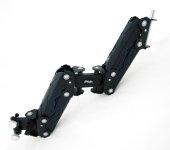
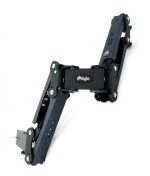
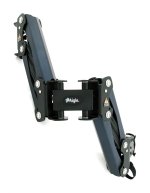
Some more info about the L'Aigle rig:

Update #2: Pierre from L'Aigle wrote me an other mail about the arm.

Since people asked, attached are pictures of what our sheet-metal arm looks like, in compare to our "sexy" CNC arm. We'll actually merge the design and adjustment method of the CNC arm with the technics of the sheet-metal arms for "your" series and our upcoming regular series. We'd just do it a little earlier than scheduled for the REDusers, if ever needed.
 

Attachments

  • pic_blc_depliedroite.jpg
    pic_blc_depliedroite.jpg
    68 KB · Views: 0
  • pic_blo_face.jpg
    pic_blo_face.jpg
    60.6 KB · Views: 0
  • pic_blv_gauche.jpg
    pic_blv_gauche.jpg
    61.3 KB · Views: 0
I googled for reviews of PROline's and L'Aigle's products. Here are some links.

THOSE A PERSONAL OPINIONS IN THESE BLOGS AND ARTICLES. I DON'T NECESSARILY SHARE THEM. AND MOST IMPORTANTLY: THE L'AIGLE AND PROLINE REVIEWS ARE BASED ON OLD VERSIONS. MOST OF THE ADDRESSED ISSUES WITH L'AIGLE SHOULD BE SOLVED WITH THE NEW VERSION!

Reviews from reduser members of both systems will be available next week.

Comments on ProLine on the SteadicamForum

Thoughts about the L'Aigle concept on HomeBuiltStabilizers

Review of the L'Aigle on HomeBuildStabilizers

Article on DVinfo about different steadicams exhibited at NAB2009. Scroll down for the part about L'Aigle.
 
David - did you ever end up contacting Tiffen?
 
David - did you ever end up contacting Tiffen?

Now that I think about it, I'm sure Tiffen would (should) consider taking one or two of their STEADICAM rigs down to near cost. Not only will they keep 100+ copies of a competitor's "steadicam" off the playing field, they also get to ensure 100+ units are sold to an extremely vocal group of REDusers :) the opportunity cost/value is pretty high in our favor, with 100-150 people in on this group buy. Why didn't we think of this sooner?
 
I have a question about the L'Aigle.
I've read that there is no way to fine tune the arm an the old design of the arm (Review on HBS).
In the description on your blog there is a passage about ajdusting it by wing knobs. (Would have quoted it but was not shure if thats allowed)
I haven't seen a wing knob on the last pictures?
Can someone confirm the 'on the fly' arm adjustability?

But after all I'm very attracted by the L'Aigle offer.
 
Back
Top