Welcome to our community

Be a part of something great, join today!

  • Hey all, just changed over the backend after 15 years I figured time to give it a bit of an update, its probably gonna be a bit weird for most of you and i am sure there is a few bugs to work out but it should kinda work the same as before... hopefully :)

Tripod Head Reviews

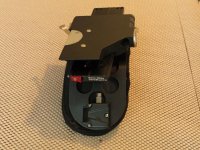
ronford_baker_01.JPG


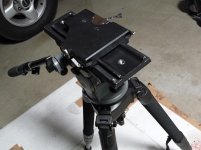
I went for used Ronford-Baker SERIES 2000 FLUID HEADS WITH BALANCE CONTROL MODEL 2004.

"Incorporates the will proven Ronford-Baker fluid system operated by a single fluid system control lever with four progressive positions both pan and tilt.
The tilt operation is backed up by a balance control system with an "off" position and seven progressive settings operated by a single control lever,
giving an unprecedented smoothness and accuracy of control and balance under all situations."


LINK>>>

Technical Specifications
Weight 14lb (6.5kg).

It tilts to 120 degrees.

Maximum load 25kg.

150mm bowl fitting.

3 stage Ronford-Baker LIGHTWEIGHT TRIPOD

Spreader.

It's a perfect for my type of work and also rental.

Second-hand from UK for about Euro 3.200.
 
Thanks everybody for the great advice. There's obviously a lot of great heads out there, but as Steve Gibby mentioned, the "price to performance ratio" needs to be considered. I'm still moving on a small budget so this resonates even louder with me. The Miller Arrow 55 sounds like a good choice.

Thanks once again, I really do appreciate your time.
 
Jeremy, The Miller 55 is an excellent head - smooth, well built, and affordable. IMO its price to performance ratio is among the best in high quality heads.


How does your Red cam go between the Mantis and Miller 55 head? I've got the Arri dovetail and base plate. Is that all I need?

Thanks,
jeremy

UPDATE: ok, I learned that it doesn't go between the mantis and miller head. I'd have to attach the plate from the miller head to the Arri dovetail plate and then remove the miller plate everytime I want to shoot with the mantis. That's not a huge deal (just annoying), but i'm wondering how sturdy will it be with the miller plate on the bottom of the Arri plate?

Actually it is quite simple:

I've attached a few pics to help you see what I do. The one pic shows one of my dis-assembled Mantis Shoulder Mounts rigs, shoulder pad and top part only. This is a rear view of the Mantis. The top of the pad unit has a v-shaped butterfly plate, onto which the ET Arri bridge plate slides. You just mount the bridge plate onto the bottom of the RED camera, then pick the camera up by the top handle, line the Arri bridge plate on it's bottom up with the butterfly plate on the Mantis top, and simply slide the rig onto the Mantis. Once you have it positioned for and aft for for good balance on your shoulder, you just slide the protruding aluminum lever sticking out on the side of the bridge plate forward to lock the rig in that spot on the Mantis. If you change lenses or accessories and want to re-balance the rig fore and aft, you just unlock the sliding lever on the bridge plate, slide the camera rig to the new position, then lock down the lever. That's an ET Arri 15mm bridge plate in the pic. That plate, or the ET Arri Hybrid plate both work fine for your needs.

The second pic shows the same ET Arri 15mm bridge plate, mounted onto a an ET V plate, which is in turn mounted on top of a normal tripod top plate - in this case a Miller 55 head. I simply keep the ET V plate mounted on top of my tripod at all times, in the case, transporting it, etc. I also keep one of my Arri 15mm bridge plates bolted onto the bottom of my RED cameras, so that I can draw the camera and tripod out of their cases, and quickly slide the camera right onto the tripod. Then if I'm also going to do some shoulder mount shooting, I keep the assembled and tuned Mantis by me resting on one of my Cine Saddles. When I need to go shoulder held, I quickly slide the camera of from the the tripod and onto the Mantis - takes about 10 seconds with practice.

Its extremely sturdy with the Miller mini-plate on the bottom of the Arri dovetail plate - no wobble, just solid as a rock. Just leave the Miller mini-plate/Arri dovetail plate combo on your tripod at all times and simply slide the RED camera/ Arri bridge plate onto the V-plate to quickly mount it on the tripod - then remove it, and slide it onto the built-in V-plate on the Mantis - easy and very quick.

I have the ET Arri bridge plates in 15mm, 19mm, and the new hybrid plate. I use the Hybrid plate more than the others. Almost all my rod usage is 15mm on RED, so a I have a wide assortment of ET aluminum 15mm rods for top and bottom use. But I also have the 19mm Bridge plate, 19mm top brackets, and an array of 19mm rods for the occasional heavyweight support use or in crew situations where 19mm is desired. But I far and away prefer 15mm. The Hybrid plate gives you "2 for 1" capability.

Hope this helps...
 

Attachments

  • Mantis w Arri plate.jpg
    Mantis w Arri plate.jpg
    96.4 KB · Views: 0
  • Tripod, BF, Arri V.jpg
    Tripod, BF, Arri V.jpg
    69.7 KB · Views: 0
Steve, you are the man. Thanks for taking the time to explain things. I just purchased the head a few minutes ago from Abelcine. They gave me a reeaaalll good deal. I'll have it tomorrow.
 
Steve, you are the man. Thanks for taking the time to explain things. I just purchased the head a few minutes ago from Abelcine. They gave me a reeaaalll good deal. I'll have it tomorrow.

Many others have helped me multiple times in my career, so I'm always happy to pass the Karma on down the line :-)

I think you'll be way stoked with the performance of the Miller 55 head - me and a lot of my associates have been. We have absolutely no connection to Miller whatsoever - we've just had very good results from Miller heads and legs in the work we do.

I've often heard Abel Cine is great to work with. I haven't bought stuff through them before, but I just may have to check them out...
 
Atlas Head, 2060's,...did anyone read what his budget is and the mobility requirement?

Budget aside and a full camera crew, the 2060 is the head of choice for me. I really find it hard to beat for movement, etc.

But on the poster's budget, I'd go for the Miller 55. I bought one about 8 months ago and have used it quite a bit (features, spots, videos). It's motion is almost as smooth as OC but definitely better than Sacthler (barring 9x9), Cartoni or Vinten, IMO. Gus at Miller is great with the customer service.

If you do alot of narrative (which I mostly do), opt for the 2 stage heavy duty CF legs. They're light and have no twist. The Sprinter's flex too much for me. Also, the Solo VJ legs are pretty brilliant for when you need to get your legs in tight spots (rocky streams, stairs, back seats, closets, etc). More versatile than baby legs and will go from 8" to over 6 and half feet (though a bit flexy at that height).

Another thing to think about is the weight difference between 150mm and 100mm. It's considerably lighter than a OC 2060 set up. If you're working with small indy crews this is a consideration or if you do mobile field style work (you'll definitely want a ball head for this).

The Cons:
If you need to put it on a Fisher, buy an O'Connor 100 mm tie down. Miller's tiedown will not work with virtually all 100mm to Mitchell plate adaptors. Also, if you get a high hat get, the Birns/Sawyer 100mm ball. Good price. You'll need to raise with washers about 3/8" to get the Miller Tie Down to fit.
 
Hey all -

as a noob to sticks/heads, a few questions:

1.) I'd imagine, since finicky mechanical moving parts, that purchasing a head used might be dicey or not recommended - agree or no?

2.) Sticks, on the other hand, seem pretty straightforward - buying used OK?

3.) I see head prices listed here, what about sticks pricing?

4.) Presuming this stuff is somewhat safe to buy used, where are some good resources for finding used gear in the LA area? I'd presume I'd go and check it out thoroughly before handing over a check.

-mike
 
The latest...

I've been using the Miller 55 head for the past week. Apart from the fact that I haven't used the other heads mentioned, the Miller 55 is super easy to balance and will stay in any position I put it in. I'm shooting with a loaded Red and occassionaly a teleprompter and it handles like a pro - no weight issues. What a huge difference from using my Cartoni focus. Thanks Steve.
 
Bogan 503 works for me!

lol just kidding.
 
That's great Jeremy :-)

Enjoy the Miller 55. Its light enough to carry anywhere, smooth enough for even the most demanding head movements, is well built, supports easily a heavily-accessorized RED One, and IMO the performance to price ratio can't be beat.

Again, I have no business connection to Miller whatsoever, and never have. I've just found that the Miller 55 has been an excellent head at a great price, and I don't mind voicing that to others who ask about it.
 
I'm a bit late to the party here, but I've been rocking a Miller Arrow 55 with my RED for nearly 18 months now. Great head. I've used most of the others mentioned in this thead at some point and I have zero regrets over buying the Miller. I really like the Miller head's size to capacity ratio it is a great head for mobile set-ups. I typically have it mounted on the Miller HD (heavy duty) 2-stage carbon sticks. If I want a lighter load for hiking, whatever, then the Solo VJ Carbon legs are perfect.

FWIW, you would have liked the Cartoni Delta Plus as well, but it's a larger head than the Miller. I prefer the O'Connor 2060 over the Delta Plus, but the 2060 is a good bit more expensive.

Other than my Miller 55, I share ownership in an O'Connor 2575 and we use the crap out of that head too. It's the greatest fluid head for the RED One, IMO, but a real pain if you have to be mobile.
 
Hey all -

as a noob to sticks/heads, a few questions:

1.) I'd imagine, since finicky mechanical moving parts, that purchasing a head used might be dicey or not recommended - agree or no?

2.) Sticks, on the other hand, seem pretty straightforward - buying used OK?

3.) I see head prices listed here, what about sticks pricing?

4.) Presuming this stuff is somewhat safe to buy used, where are some good resources for finding used gear in the LA area? I'd presume I'd go and check it out thoroughly before handing over a check.

-mike

Howzit Braddah...good to hear from you...

Here's some input on your questions:

1) Heads come in standardized bowl (bottom of head) dimensions of 75mm, 100mm, and 150mm. When you match a head with legs, generally as long as you have the same millimeter bowl on the bottom of the head as the bowl receptacle on the top of the legs, the head just sits right down into the the top of the legs, then you simply screw the large knob on the bottom of the head clockwise to secure the head to the legs. To remove it, you simply unscrew the large knob until the head can be removed. That's the same knob that you unscrew slightly to level the head using the integrated leveling bubble, then screw back tight to lock the head in place.

2) You're right, legs are pretty straightforward. The legs you use depends on what style of production you do (mobile, stationary, etc.), and the loads you put on the head. If you do a lot of mobile production with lighter head loads, lightweight CF legs without a spreader are the ticket - like the Miller 1505 SOLO CF legs I use. If you do semi-mobile production, but still want lightness and strength, standard 1-stage or 2-stage CF legs with a mid-spreader (keeps spreader above dirt and obstacles), or floor spreader if you do mostly indoor production, can be the ticket. For the Miller 55, I also have 2-stage Sprinter CF legs and 1-stage aluminum alloy legs. It simply takes about a minute to change the head to the desired legs. Yes...buying used is fine, as long as the legs haven't been damaged.

3) New legs pricing can be found on each manufacturer's web site, and sites like B&H, Abel Cine Tech, etc. You can find used legs on the B&H web site and others. Used prices can vary - obviously depending on how motivated the seller is. I'd do some Google searches to find some comparable sales to know what you're dealing with.

4) In the L.A. area there are many equipment rental companies that regularly sell off used legs and heads - Bexel, Otto Nemenz, Clairmont, and many others. Since you're in the L.A. area you can simply go in with your RED camera, put it on the head/legs combo you're considering, and test it out. Some of those companies even give you a warranty or guarantee on the stuff you buy used.

Hope this helps...good to hear from ya :-)
 
Jeff,

I obviously agree with you on the Miller 55. I also own an O'Connor 2575, and agree with you as to its great head performance. I also agree with you that it is essentially for non-mobile production.

When you gain something (heavy head), you necessarily give something up (mobility), and vice versa on a sliding scale. If someone has a lot of money to spend on a head and does stationary production, the 2575 is hard to beat. If they do semi-mobile production and have a lot of money to spend, then the O'Connor 2060 is a good choice. But if they do highly mobile production, have a moderate budget, are looking for the best performance to price ration their money can buy for their needs, and don't work crew situations where peer pressure demands O'Connor, then IMO the Miller 55 can't be beat.
 
O'connor 2575 is the standard here in LA, and a solid choice especially if you've got your eyes on rentals, but I actually don't like it for 4 reasons.

My Issues with O'Connor:

It's too tall. It's about 6" higher than C40.
No zero drag setting, always has light fluid effect.
Design clunky with lots of levers poking out.
Wind up counterbalance can take a long time to set.

Just my opinions, I have a Cartoni C-40 and besides being incredibly heavy and only tilting up or down 75deg I like very much. It also was cheap and has paid for itself many times over. I have used both heads for 1000's of hours in many situations.

Matt Uhry
www.mattuhry.com
 
Gibby - as always your time and expertise much appreciated!

Nate is possibly coming down to Santa Monica tomorrow, we'll catch up and discuss his 1030 setup while I investigate Miller 55 et al.

Thanks again to all on this thread.

-mike
 
The RedOne can be a pretty heavy mother (Cooke zoom, etc...). Also it's for many important that the tripod is light and mobile. That rules out the 150mm bowl OConners. My bet for an excellent payload to weight ratio ist the Sachtler System 25 EFP (http://www.sachtler.us/index.php?id=1721&exp_mode=product&exp_cid=111&exp_pid=362#111) which weights alltogether under 12 kilo (25 lbs) and has a payload of 35 Kilo (77 lbs). No other tripod has such an ratio. Build quality is out of question. OConner and Sachtler belong to the same company, BTW.

Hans
 
I bought the O'con 2575 despite the weight and price because I look at it as an investment. Any O'conor 2757 or 2060 will be worth about 90% of what you paid for it in 10 years. I've seen 2575Bs sell for $10K with totally beaten up RB sticks. You know that head had seen thousands of production days probably in horrendous conditions and climates. The Miller seems like a very nice head especially for light weight field production, but the reason that the 2575 is "Hollywood's fluid head" is that it does the job and almost never says die.
 
Just sold my 1030 (which I will miss dearly for one-man-band days) and got a 2575.

One thing I've noticed about O'Connors is somehow they have the aging thing down. Almost any head I've ever worked with thats 5-10 years old seems to develop just the tiniest bit of slop. To me, Sachtlers seem to be the worst with age, but a new Sachtler is a joy of course.

Anyway, my 'new' (to me) 2575B is surely 8-10 years old, only needed a thorough cleaning for it's checkup, and I can't imagine how it was any better when it was new. O'connors seem to be BEYOND consistent in this regard. It's baffling to me.
 
Back
Top