Wayne Morellini
Well-known member
- Joined
- Jan 3, 2008
- Messages
- 6,157
- Reaction score
- 0
- Points
- 0
Though I would like to make one , but might not be able afford to,, I am interested in looking into this. Anybody else interested?
I have also been considering talking to electronics people about an DIY 8k+ electro wetting display. These are simple displays with two fluids between sheets, as power is to the applied to the circuits, typically an oil is attracted to a surface changing color, or between the circuits allow light through. Switching times are something like 1/1000-500th a second. Bistable, no power is required to hold a pattern. A laser table though could be a better image for now and simpler.
Here is good argument for it's use in the industry:
I have also been considering talking to electronics people about an DIY 8k+ electro wetting display. These are simple displays with two fluids between sheets, as power is to the applied to the circuits, typically an oil is attracted to a surface changing color, or between the circuits allow light through. Switching times are something like 1/1000-500th a second. Bistable, no power is required to hold a pattern. A laser table though could be a better image for now and simpler.
There is one market with stakes as big as any mentioned for Redray Laser projectors: Windows/Mac/Android etc multi-touch Surface tables, instead of the washed out cheap home made ones, that do not have enough resolution (8k is preferable).
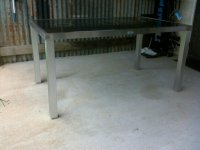
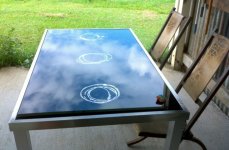
Been keeping my eye out for cheaper surface tables for design, document editing and research. However, it is something every home could do with. I realised that if Redray was small and cheap enough, that a table could be made to take it. My patio table is just an open frame with a five foot glass on it unobstructed, and not expensive, and I think 7 foot versions are out there. Unlike many of the homemade surface tables, the laser projector allows people to sit at the table with their legs underneath, by mounting the projector centrally facing upwards, protected by a cone going to the edges). Using newer rear projection films, such as 3m has for one example, can allow a high contrast saturated image in normal light. The web camera type systems used on DIY units would be affective. Going a step further a hinged tilt mechanism can be used to tilt the frame, cone and projector up like a draughtsman work table. Tilting it up as a screen is possible angling the projector, which could be used for the draft table function also (but the surface becomes to high for normal seating). Of course, you can low profile the projection down to 12cm with new rear projection technology designs (Laservue is 30cm I think for example). An observation, is that the computer components can fit in the frame of the table (narrow form factors).
This would be better with a smaller 120 inch (200 inch blacked out) laser projector at around $2000, plus table and computer to get the market penetration. However the projector would be rather sellable on it's own
Here is good argument for it's use in the industry:
The workstation of the future, and a good addition to editing environment. People do not realise it, but it allows you to arrange work objects on a more traditional scale, but stacked.... more than a sound desk, your documents, multi media, clips, photos animations, audio. People think that all they need is a 24 inch monitor and a table is to big to reach out, but the monitor is the restriction. You organise your work into a viewable area while seated, you then put needed elements within reach and others to be used elements around the table for future use, and scheduled projects. You only get up around the table when you need something extra, or when you are walking around on massive projects, like they used to with photos, young mans game I know, but good workflow. You [look in stacks] and you see what is in [them]. And other things, this is how I design things. So, a big table is useful. I'm looking forwards to work desks like this. I have been thinking about the tables years before Microsoft Surface. Your...