Welcome to our community

Be a part of something great, join today!

  • Hey all, just changed over the backend after 15 years I figured time to give it a bit of an update, its probably gonna be a bit weird for most of you and i am sure there is a few bugs to work out but it should kinda work the same as before... hopefully :)

Shooting Tungsten In Daylight With A Digital Camera

Sanjin Jukic

Well-known member
Joined
Dec 28, 2006
Messages
8,929
Reaction score
0
Points
36
Location
Vienna, Austria
Website
www.sanjinjukic.com
This is something mostly connected with shooting in a sunny bright summer or winter daylight.

I do have some questions;

How often you shoot tungsten in daylight with a digital camera?

How you do it and what are your experiences and results?

From my experience:

I do it exactly in the same way as I would do shoot with tungsten balance film stock.

1. Set camera @ ISO 160.

2. Filters were set of 85N9+True Polarizer in three different combinations (all of 3 together, only 2 of them or even use just one).

3. Aperture mostly open @ 4.0, @ 4.0 1/2, @ 5.6 or @ 5.6 1/2 as needed.

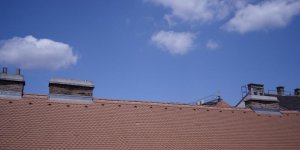
Results are pretty good with a clear blue sky, very contrasty and balanced shadows and highlights, skin tones are natural as it should be, blacks are also very good...

Here are some of my recent test results but unfortunately there were not shot on RED (I sold it) or EPIC (still don't have it)

but I promise that first time I can get my hands on Epic I wilt do the same sort of tests ...

tungsten_daylight_05.jpg

Shot on 5DMK2 with Leica Vario Elmar f/4.0 @ 5.6 1/2, ISO 160, filters: 85N9+True Polarizer (image processed in Capture One Pro).

tungsten_daylight_06.jpg

Shot on 5DMK2 with Leica Vario Elmar f/4.0 @ 5.6 1/2, ISO 160, filters: 85N9+True Polarizer (image processed in Capture One Pro).

tungsten_daylight_07.jpg

Shot on 5DMK2 with Leica Vario Elmar f/4.0 @ 5.6 1/2, ISO 160, filters: 85N9+True Polarizer (image processed in Capture One Pro).

Tungsten lighting is defined at 3200 K, which is considered "warmer" in tone and shifted towards orange;

daylight is defined at 5600 K, which is considered "colder" and shifted towards blue.

Read more>>>

Daylight: Light consisting of a natural combination of sunlight and skylight (approximately 5500 degrees K).

Read more>>>
 

Attachments

  • tungsten_daylight_01.jpg
    tungsten_daylight_01.jpg
    94 KB · Views: 0
  • tungsten_daylight_02.jpg
    tungsten_daylight_02.jpg
    30.8 KB · Views: 0
  • tungsten_daylight_03.jpg
    tungsten_daylight_03.jpg
    42.1 KB · Views: 0
  • tungsten_daylight_04.jpg
    tungsten_daylight_04.jpg
    37.8 KB · Views: 0
Yes, but the sensor is closer to daylight-balance so why would you use an 85 filter and then correct-out the excess orange to get back to daylight balance? You prefer a noisier blue channel? It's like putting an 85 filter onto a camera with daylight-balanced film stock. All the 85 filter is doing is underexposing the blue information relative to the other colors and forcing the processing along some point in the chain to compensate. I know that at 160 ASA, you're giving the sensor plenty of overall exposure but I see no creative advantage of misbalancing the colors and then correcting it back unless for some reason you want the reds to be less noisy relative to the blues.
 
David, yes maybe you are right here theoretically but only a test should be always a sort of proof.

So I went in my RED ARCHIVE and dig some footage just because do not have R1 or either EPIC-M to do additional tungsten to daylight tests.

Instead of it today (July 09, 2011) I also went at the same location and more or less at the same daytime (afternoon between 2.0 P.M. and 4.0 P.M.)

where I was shot those RED-MX tests exactly about a year ago (June, 30, 2010) then shot with trusty 5DMK2 using such an extraordinary Leica Vario Elmar R 35-70mm f/4.0 zoom lens.

The camera set up was: aperture f/5.6 & 1/2, ISO 160, shutter 1/50, WB 3800K, filters: 85N9+True Polarizer.

Old R1-MX footage was shot with Nikon 18-200mm zoom @ unknown aperture but probably from f/11 to f /16, ISO 800, filters: 0.9ND, Circ-Pola,

but rated later in RCX @ ISO 160, WB 5600K, REDColor2, REDGamma2, REDLogFilm OUTput.

But also I already saw that RED improved colorimetry on EPIC and probably a test like this with EPIC should make much better result than R1-MX.

Anyway this is not any kind of test between 5DMK2 and RED (or EPIC tomorrow) because it is about that when shooting digital to use tungsten to daylight option in optimal condition when needed.


RED1-MX-daylight-01_AB.jpg

Shot on RED 1 MX with Nikon 18-200mm zoom

5dmk2-tungsten-daylight-01.jpg

Shot on 5DMK2 with Leica Vario Elmar R 35-70mm f/4.0.

RED1-MX-daylight-02_AB.jpg

Shot on RED 1 MX with Nikon 18-200mm zoom

5dmk2-tungsten-daylight-02.jpg

Shot on 5DMK2 with Leica Vario Elmar R 35-70mm f/4.0.

RED1-MX-daylight-03_AB.jpg

Shot on RED 1 MX with Nikon 18-200mm zoom

5dmk2-tungsten-daylight-03.jpg

Shot on 5DMK2 with Leica Vario Elmar R 35-70mm f/4.0.
 
Yes, but the sensor is closer to daylight-balance so why would you use an 85 filter and then correct-out the excess orange to get back to daylight balance? You prefer a noisier blue channel? It's like putting an 85 filter onto a camera with daylight-balanced film stock. All the 85 filter is doing is underexposing the blue information relative to the other colors and forcing the processing along some point in the chain to compensate. I know that at 160 ASA, you're giving the sensor plenty of overall exposure but I see no creative advantage of misbalancing the colors and then correcting it back unless for some reason you want the reds to be less noisy relative to the blues.

Dave what is your thought on using tungsten with daylight, would you CTB the tungsten?

I find this very interesting, as I only have tungsten available at the moment.
For example in an interior shot with daylight from the windows and using tungsten to fill.
Would you CTO gel the windows to mach tungsten or the CTB tungsten to mach daylight (and miss a lot of light in the filter but adding more light).
What would be your process if both daylight and tungsten were mixed as Sanjin is testing?
 
Dave what is your thought on using tungsten with daylight, would you CTB the tungsten?

I find this very interesting, as I only have tungsten available at the moment.
For example in an interior shot with daylight from the windows and using tungsten to fill.
Would you CTO gel the windows to mach tungsten or the CTB tungsten to mach daylight (and miss a lot of light in the filter but adding more light).
What would be your process if both daylight and tungsten were mixed as Sanjin is testing?

Sanjin isn't testing mixed color temps, he's testing correcting the overall frame to 3200K with an orange 85 filter but then having to process out that orange bias that he's giving the image to return to a neutral image. I don't see the advantage to misbalancing the sensor except for perhaps two reasons: (1) it acts slightly like a warm filter in b&w photography in that the blues are darkened relative to other colors, and conversely reds are lightened, but I don't know if it works that way in color photography; (2) he's shooting a lot of interior scenes in 3200K light and wants the day scenes to have the same correction applied so that noise levels are the same for each color, i.e. his blue channel is noisier relative to his red and green channels, as they would be for the interior scenes.

As for having tungsten lamps in a daylight situation and needing to correct them to daylight or the windows to tungsten, it really depends on which is easier and which source is providing most of your exposure. If you are talking about a bathroom scene with a small window and you don't want a mixed color temp effect, it's easier to just gel the little window. If you are talking about a big living room with lots of windows, it's easier to gel the tungsten though you won't get much out of them after that. In general, if I can avoid gelling windows, I will do it because it's expensive, time-consuming, and can look crappy if done wrong and/or it gets windy outside.

--

Sanjin, you could at least test the 85 versus no 85 on the Canon 5D outdoors if that's what you have to test with, just make sure you expose each version the same way, of the same subject at the same time.
 
Thanks David and I 'll do additional tests as you were suggested today afternoon.

Also must say that I'm interested in only for outdoor tungsten to daylight conversion because of the following reason:

1. To get aperture @ 4 or 5.6 or 5.6 &1/2 without blowing highlight and getting good contrast.

2. Avoid to use IR filters that are often use when you adding higher ND filters than is ND 0.9.

3. Use EI ISO 160 for this purpose instead of EI ISO 800 that is mostly recommended sweet spot of MX daylight balanced sensor.

4. Make shooting easy and faster especially in the most of handheld situations when DP operates himself/herself.

A002_C026_06306S_001.jpg

Shot on R1-MX with Nikon 18-200mm zoom, REDColor2, REDGamma2, REDLogOut, EI ISO 800, Shutter 1/50.

A002_C026_06306S_001-02.jpg

Shot on R1-MX with Nikon 18-200mm zoom, REDColor2, REDGamma2, REDLogOut, EI ISO 800, Shutter 1/50, additional Auto Contrast in PS.
 
San...

I have a hard time understanding what you think you gain by setting the ISO bellow 320.

But I guess that's just me...

Cheers!

G
 
San...

I have a hard time understanding what you think you gain by setting the ISO bellow 320.

But I guess that's just me...

Cheers!

G

Gunleik,

that's a good question.

But maybe you could try to do a similar kind of test with R1-MX and Epic-M then show and tell us exactly what is going on there?

Also have a nice vacation in Tuscany.

Regards

Sanjin
 
Let me now finally to finish this small study about a possibility to use "Tungsten to Daylight" conversion when shooting with a digital camera.

In this case I would recommend to consider that solution as an option that can maybe be helpful in some of various shooting situation.

Then I could say now to use it sometimes (but maybe not always).

But must say definitely the blue skies in a hot summer or in a cold winter are much better with this conversion.

Here below are my latest test result images.

1. With all three filters 85N9 +polarizer.

85N9Pola_3200K_ISO160.jpg

Shot on Canon 5DMK2 with Leica Vario Elmar R f/4.0 @ f/5.6 & 1/2, ISO 160, shutter 1/50, WB 3200K, filters: 85N9 +polarizer.

85N9Pola_3200K_ISO160_Center_Detail.jpg

Center cropped detail: Shot on Canon 5DMK2 with Leica Vario Elmar R f/4.0 @ f/5.6 & 1/2, ISO 160, shutter 1/50, WB 3200K, filters: 85N9 +polarizer.


This example below is when you take of 85 filter and the picture becomes normally more blueish because in camera WB setting is still @ 3200K.

2. Without 85 filter, only with ND.09 +polarizer, WB 3200K.

ND9Pola_3200K_ISO160.jpg

Shot on Canon 5DMK2 with Leica Vario Elmar R f/4.0 @ f/5.6 & 1/2, ISO 160, shutter 1/50, WB 3200K, filters: ND 0.9 +polarizer.

ND9Pola_3200K_ISO160_Center_crop.jpg

Center cropped detail: Shot on Canon 5DMK2 with Leica Vario Elmar R f/4.0 @ f/5.6 & 1/2, ISO 160, shutter 1/50, WB 3200K, filters: ND 0.9 +polarizer.


This example below is when you take of 85 filter and change in camera WB setting to 5500K.

3. Without 85 filter, only with ND.09 +polarizer, WB 5500K.

ND9Pola_5500K_ISO160.jpg

Shot on Canon 5DMK2 with Leica Vario Elmar R f/4.0 @ f/5.6 & 1/2, ISO 160, shutter 1/50, WB 5500K, filters: ND 0.9 +polarizer.

ND9Pola_5500K_ISO160_Center_crop.jpg

Center cropped detail: Shot on Canon 5DMK2 with Leica Vario Elmar R f/4.0 @ f/5.6 & 1/2, ISO 160, shutter 1/50, WB 5500K, filters: ND 0.9 +polarizer.

4. Shot on RED1-M at the same location, October 30, 2008.

RED1-M-5600K-ISO320_01.jpg

Shot on RED1-M with Angenieux 70-200mm f/2.6 zoom @ f/8, ISO 320, 1/50, filters ND 0.9+Polarizer.

RED1-M-5600K-ISO320_02.jpg

Center cropped detail: Shot on RED1-M with Angenieux 70-200mm f/2.6 zoom @ f/8, ISO 320, 1/50, filters ND 0.9+Polarizer.
 
Back
Top