Welcome to our community

Be a part of something great, join today!

  • Hey all, just changed over the backend after 15 years I figured time to give it a bit of an update, its probably gonna be a bit weird for most of you and i am sure there is a few bugs to work out but it should kinda work the same as before... hopefully :)

35mm "CINE" Lenses do NOT fill the RED-One Sensor ??

George D.

Well-known member
Joined
Oct 22, 2008
Messages
980
Reaction score
0
Points
0
Location
N. California, USA
Something has just come to my attention that is making me VERY, VERY concerned.

According to everyone at Red and on this forum I've talked to in the past, there is no problem with a 35mm "CINE" lens filling the frame of a RED-One 4K sensor without vignetting. This is VERY important to me because of the specialty, custom made, 35mm cine lenses we use for our kind of cinematography, that we MUST be able to use on the Red in 4K.

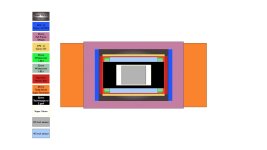
We are a mere few days away from receiving our new RED-One, but if the attached chart IS correct, it does NOT look like a 35mm "cine" lens will fit the sensor at all. If true, we may have to cancel the order and begin looking for an alternative camera. This would break my heart because we love the Red.

Please take a look at the chart, and PLEASE tell me I'm reading it wrong, and that 35mm cine lenses will work just fine with no problems at all.

Please advise ASAP.

Thanks.
 

Attachments

  • Frame Size Chart.001.jpg
    Frame Size Chart.001.jpg
    49.6 KB · Views: 0
Chances are you'll be fine...if you look more closely, the R1 sensor size looks to be just about the same frame width (not height, as the R1 sensor is 16:9 aspect ratio) as S35. There have been reports of some older lenses vignetting or exhibiting falloff in the corners of the frame on R1, but keep in mind that with all the resolution, you can punch in slightly to lose any vignetting while still having a lovely image.

Using another S35-sensor-sized camera, you may run into the same issue, though you may not have the luxury of punching in as many of these other solutions don't offer near the resolution (i.e. a camera that records a S35 image to 1080p won't give you much wiggle room if you need to reframe).

Hope this helps...

P.S. What kinds of lenses are you using specifically? If you're worried about particular lenses, you could always list them here, as there are a lot of knowledgable people on the forum who may have an idea of what problems you may run into. The other alternative would be to borrow/rent a R1 from an owner near you to see if there are any problems, or even visiting a rental house or lens technician, as they should be able to tell you what kind of coverage your lenses exhibit.
 
can you tell us specifically what you see in this chart that concerns you?

generally most 35mm "cine" lenses work just fine on the Red sensor (as seen by the green and light grey). Its full frame still lenses (purple) that vignette.
 
can you tell us specifically what you see in this chart that concerns you?

generally most 35mm "cine" lenses work just fine on the Red sensor (as seen by the green and light grey). Its full frame still lenses (purple) that vignette.

I'm afraid what you say does not make any sense. A 35mm cine lens casts a smaller frame image than does a 35mm full frame still lens. Therefore, if the cine lens works, a full frame lens works as well.

I realize there is no problem with a full frame lens, as long as it fills or overshoots the Red sensor frame. But, it looks like to me that a cine lens frame is "smaller" than a Red sensor, therefore will NOT fill it.

The word "most" in your answer is what concerns me.

.
 
can you tell us specifically what you see in this chart that concerns you?

generally most 35mm "cine" lenses work just fine on the Red sensor (as seen by the green and light grey). Its full frame still lenses (purple) that vignette.

I think you stated that wrong. Full frame still lenses cover a much larger area than the smaller APS-C sized redone sensor as well as the larger epic sensor which is still MUCH smaller than the 24x36m full frame still size.


I'm afraid what you say does not make any sense. A 35mm cine lens casts a smaller frame image than does a 35mm full frame still lens. Therefore, if the cine lens works, a full frame lens works as well.

I realize there is no problem with a full frame lens, as long as it fills or overshoots the Red sensor frame. But, it looks like to me that a cine lens frame is "smaller" than a Red sensor, therefore will NOT fill it.

The word "most" in your answer is what concerns me.

.

You won't know for sure until you try your specific lenses if they are older models but pretty much any S35 type lenses made in the last 20 years are going to cover the redone sensor.
 
That chart is about as useful as tits on a bull... Looks to me like some proportions and sizes are off for starters, there's no dimensions labeled anywhere and it's frickin' ugly to boot. That said, in comparing the RED One frame on that chart with their APS-C frame reference, it seems they are using the full sensor dimensions and not the active area. Which does make a difference. The RED One sensor is approximately 4900x2550 pixels in size, but the active areas are smaller. Active area on the RED One is 4480x2520 and that accounts for non-recordable look-around space. Maximum recordable areas on the RED One are 4.5K wide and 4K 16:9, which I outline in more detail below.

The active sensor area on the RED One is smaller than Super35 cinema film aperture, so right off you don't have to worry about modern lenses not covering. Old lenses may run into issues if they were designed to cover 35mm cinema or Academy formats, but pre-date Super35. Some specialty lenses can sometimes have coverage issues. Any reasonably modern lens (made in the last 25 years or so) that "covers S35" will cover all the image formats on the RED One. To note, 4K on the RED One is almost identical to shooting 35mm Academy frame size and shooting 4K 16:9 is essentially the same as Academy 1.85:1. You're going to be hard pressed to find any true cinema lens that does not cover just fine.

The widest image area the RED One can record is shooting "4.5K", which is 4480 pixels wide and it has 5.4micron (0.0054mm) square pixels. This translates to 24.192mm, which is still smaller than "full aperture" S35 at 24.89mm wide. Additionally, the "4.5K" mode is only 1920 pixels high, which gives it a vertical dimension of 10.37mm. Thus giving us a diagonal (and minimum coverage circle diameter) of 26.32mm. Something well within the coverage range of most all "35mm cinema" lenses.

The largest 4K area on the RED One is 4K 16:9, which is 4096x2304. That is 22.12mm x 12.44mm with a diagonal of 25.38mm.

Canon APS-C and Nikon DX frame sizes (which are essentially the same) are often used as a reference point for those coming from still photography when relating Super35 cinema frame sizes. It's also useful to some 35mm still photographers who have trained their brains to think in terms of FF35 and relate everything else to "crop factors". The crop factor to APS-C is essentially the same as that going to Super35. APS-C and Nikon DX both fit within a 24mm x 16mm frame. So, as you can see on your chart, while Nikon DX and Canon APS-C lenses should all cover the RED One active sensor areas, the chart you have referenced is incorrect and does not show this. ...I have yet to find any lens that covers APS-C / DX frame size that does not cover the RED One. Some specialty lenses, such as fisheyes and whatnot, obviously may not fully cover. The Peleng 8mm fisheye is popular because it's cheap and available in PL mount. It has a slight vignette in the corners on the RED One when shooting 4.5K wide or 4K 16:9.
 
I'm afraid what you say does not make any sense. A 35mm cine lens casts a smaller frame image than does a 35mm full frame still lens. Therefore, if the cine lens works, a full frame lens works as well.

I realize there is no problem with a full frame lens, as long as it fills or overshoots the Red sensor frame. But, it looks like to me that a cine lens frame is "smaller" than a Red sensor, therefore will NOT fill it.

The word "most" in your answer is what concerns me.

.

you have this backwards. If the lens projects an image which is smaller than the sensor you are golden. If it projects an image that falls off the edges of the sensor it vignettes.
 
That chart is about as useful as tits on a bull... Looks to me like some proportions and sizes are off for starters, there's no dimensions labeled anywhere and it's frickin' ugly to boot. That said, in comparing the RED One frame on that chart with their APS-C frame reference, it seems they are using the full sensor dimensions and not the active area. Which does make a difference. The RED One sensor is approximately 4900x2550 pixels in size, but the active areas are smaller. Active area on the RED One is 4480x2520 and that accounts for non-recordable look-around space. Maximum recordable areas on the RED One are 4.5K wide and 4K 16:9, which I outline in more detail below.

The active sensor area on the RED One is smaller than Super35 cinema film aperture, so right off you don't have to worry about modern lenses not covering. Old lenses may run into issues if they were designed to cover 35mm cinema or Academy formats, but pre-date Super35. Some specialty lenses can sometimes have coverage issues. Any reasonably modern lens (made in the last 25 years or so) that "covers S35" will cover all the image formats on the RED One. To note, 4K on the RED One is almost identical to shooting 35mm Academy frame size and shooting 4K 16:9 is essentially the same as Academy 1.85:1. You're going to be hard pressed to find any true cinema lens that does not cover just fine.

The widest image area the RED One can record is shooting "4.5K", which is 4480 pixels wide and it has 5.4micron (0.0054mm) square pixels. This translates to 24.192mm, which is still smaller than "full aperture" S35 at 24.89mm wide. Additionally, the "4.5K" mode is only 1920 pixels high, which gives it a vertical dimension of 10.37mm. Thus giving us a diagonal (and minimum coverage circle diameter) of 26.32mm. Something well within the coverage range of most all "35mm cinema" lenses.

The largest 4K area on the RED One is 4K 16:9, which is 4096x2304. That is 22.12mm x 12.44mm with a diagonal of 25.38mm.

Canon APS-C and Nikon DX frame sizes (which are essentially the same) are often used as a reference point for those coming from still photography when relating Super35 cinema frame sizes. It's also useful to some 35mm still photographers who have trained their brains to think in terms of FF35 and relate everything else to "crop factors". The crop factor to APS-C is essentially the same as that going to Super35. APS-C and Nikon DX both fit within a 24mm x 16mm frame. So, as you can see on your chart, while Nikon DX and Canon APS-C lenses should all cover the RED One active sensor areas, the chart you have referenced is incorrect and does not show this. ...I have yet to find any lens that covers APS-C / DX frame size that does not cover the RED One. Some specialty lenses, such as fisheyes and whatnot, obviously may not fully cover. The Peleng 8mm fisheye is popular because it's cheap and available in PL mount. It has a slight vignette in the corners on the RED One when shooting 4.5K wide or 4K 16:9.

I guess I did not phrase my question correctly and I'm sorry about that.

But, I am NOT talking about a "Super" 35mm Cine frame. I'm talking about a "STANDARD" 35mm Cine lens, designed to fill a 35mm strip of film vertically from sprocket holes to sound track ONLY.

A Super35mm cine lens fills the frame from sprocket holes to sprocket holes vertically across the face of the film. It, therefore, casts a "larger" image than does a Standard 35mm lens. Both of these types of lenses create a smaller image than does a full-frame DSLR lens, since those lenses were designed to fill a frame cast across the "horizontal" surface of 35mm film because the film travels "across" the back of the camera.

There is thereby, NO problem with full-frame DSLR lenses or Super35 Cine lenses filling the Red-One sensor without vignetting. I know that. It's the Standard 35mm Cine lenses I'm concerned about.

.

.
 
you have this backwards. If the lens projects an image which is smaller than the sensor you are golden. If it projects an image that falls off the edges of the sensor it vignettes.

THAT makes absolutely no sense at all. Sorry.

.
 
You will 99.98% be fine.

The MX is a multi-aspect sensor.
30x15 is "full gate" there is quite a bit of lookaround. The beauty of red is
The control you have over what your end result is. It is the best digital cinema
Camera -in- -the- -world-.

Bar none.

You will have no problem with 4kHD or 4k 16:9 I am willing to bet.

Trust me. Relax. Take a deep breath. It's going to work.

Dan
 
Last edited:
you have this backwards. If the lens projects an image which is smaller than the sensor you are golden. If it projects an image that falls off the edges of the sensor it vignettes.

Greg, this is exactly wrong. It is you who have this backwards.

George, Jeff Kilgroe's answer above is detailed and exactly correct. A look through the Lens Test area of this forum should assure you that any S35mm lens will work fine on R1.
 
Regular 35mm is 22mm wide (Academy) and Super-35 is 24mm wide (Full Aperture), so most old 35mm cine lenses designed to cover the Academy area will also cover the Super-35 area. At worst you may see some minor fall-off in corners on some lenses like the old Cooke 20-100mm zoom. Only a few might truly vignette, but keep in mind that the 4K recorded area of the Red One is smaller than Super-35 anyway, you'd only be recording a 24mm wide image if you are shooting in 4.5K mode. Also keep in mind that an old lens might slightly vignette in the corners of a square frame like 4x3 but since the sensor is not square, you are talking about 16x9 or wider aspect ratios, often the corner vignetting falls outside of those widescreen rectangles.

In other words, the 4K recorded area on the Red One is regular 35mm Academy in terms of width, not Super-35, so if your lens was designed for 35mm Academy, then you are fine. If it was designed for 16mm, you might have a problem.
 
Greg, this is exactly wrong. It is you who have this backwards.

George, Jeff Kilgroe's answer above is detailed and exactly correct. A look through the Lens Test area of this forum should assure you that any S35mm lens will work fine on R1.

Sorry, my brain is out of sync this morning. What Jeff said.

bottom line is most cine lenses are fine. Which lenses specifically are you concerned with?
 
@George D:

Relax. You are going to be completely fine.

You are reading the chart wrong. In any case, as has been pointed out, the chart you posted is missing details and is inconsistent in several ways.

Now if you were talking about Epic, which has a larger usable sensor area than Red One, then you may have some issues. Red One will be perfectly fine.

As others have noted, some older lenses vignette anyway. Without tests of your specific lenses its hard to be perfectly assured.

My advice is to take delivery of your R1MX and test. You are very likely to be completely content.

OK ... so that was the redundant part.

What I want to know is what these special lenses of yours are, and why they can't be replaced? I'm assuming they are a special design for a specific task or something - but you've piqued my curiosity.
 
"What I want to know is what these special lenses of yours are, and why they can't be replaced? I'm assuming they are a special design for a specific task or something - but you've piqued my curiosity. "

Sorry fellas, but I'd rather not say.

Thanks to everyone for your help and advise. My mind is at peace now, and I'm so excited about getting this wonderful camera I'm about to bust....yeeeeeeeeeeeeeeeeeeehaaaa !!
 
Back
Top