Welcome to our community

Be a part of something great, join today!

  • Hey all, just changed over the backend after 15 years I figured time to give it a bit of an update, its probably gonna be a bit weird for most of you and i am sure there is a few bugs to work out but it should kinda work the same as before... hopefully :)

IR Pollution on MX chip at high altitudes

Keith Putnam

Well-known member
Joined
Jul 17, 2008
Messages
185
Reaction score
0
Points
0
Location
Rego Park, NY
Website
isota.blogspot.com
Hi, all.
I'm currently teching a RED feature being shot in the Wasatch Mountains, mostly between 6,500 and 9,000 feet elevation. When we originally checked out all of our gear we decided not to bring any IR cut filters or IR/ND combos, because up until now I've felt that the MX chip is sufficiently less sensitive to IR than the M chip was and, as such, IR cut hasn't been necessary.
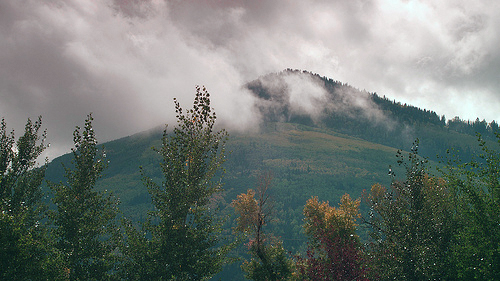
However, once we began shooting at altitude the DP and I definitely began noticing a warmish magenta color cast once we stacked ND starting around a 1.2 + .3 and it would get very strong if we went to a 1.2 +.6. As an extreme example we stacked a 1.2 + .9 and got this:
5093391277_38263f61f3.jpg

Now, obviously, ND 1.2 + .9 is kind of absurdly dense. But it illustrates the issue.
So, my question is this: does elevation significantly affect IR pollution on the MX chip? I can see it being totally possible that with less atmosphere to filter out IR that more of it is getting through the lens. At sea level the MX seems significanly more resistant to IR to the point where I haven't felt an IR filter was necessary for even an ND 1.2 + .6 stack, but up here in the mountains we seem to start seeing IR pollution with a 1.2 + .3 stack.
Thoughts?
 
That's really interesting. And I believe you are spot on with the reaon why. The atmosphere does absorb IR light.

Thanks for sharing.
 
To me it seems that IR filters haven't become much less relevant on the MX. As people tend to shoot at higher ISO that pretty much canibalizes the extra tolerance, as you'll need to shoot with more ND the way the preview in redgamma is currently calibrated.
 
Altitude definitely matters with IR. If you guys need anything shoot me an email. I'm currently out of the country, but we have a lot of resources and know the vast majority of everyone else in UT so can point you to a good resource if we can't help.
 
I can't see how you would get IR contamination on clouds as they tend to absorb IR, not reflect it. On the other hand, green grass and foliage are big IR reflectors.

To my eye, your sample seems overly magenta for IR, especially in the clouds. What colour temperature/tint was it shot with. I often shoot with a good quality 10 stop (ND 3.0) neutral density and IR is not noticable in most situations, certainly never as bad as in your sample. It is worth mentioning that the B+W (Schneider) 10 stop ND is very poor as far as IR is concearned, but it goes into mushy brown rather than magenta.

Altitude should not increase IR polution. The only thing that could increase with altitude is the UV.

Hmmm, very interesting.
 
I suspect it might be UV contamination. If you try a heavy UV such as a #2, you will probably pick up some contrast and it will keep nearly all UV out. Your image might look like magenta on the monitor, but probably is violet. Also, there are typically three catagories of IR: near IR, short wave IR and long wave IR. Long wave IR actually can "see" through smoke and clouds, and that is one reason why LWIR sensors are used for targeting and serveillance by the military. The OPLF attenuates much of the near IR as far as I can tell, as the R1 or R1MX sensors wouldn't be sensitive for SWIR or LWIR.
 
While it could be IR, do check your tint settings. I dealt with a shoot where they had set the tint towards magenta to make a sunrise look more interesting, and throughout the rest of the shoot and even the post process nobody noticed the tint setting, and just assumed it was IR pollution.
 
ND 1.2 + ND .9 ain't nuthin'!!! That's just another partly cloudy day in paradise here. It's not uncommon to stack 8 to 10 stops of ND for mid-day work here in our ozone-free, 10% humidity, cloudless wonderland.

As for the OP... There seems to be more going on there besides IR. Looks like a white balance and or / tint issue more than IR. In high altitude environments, daylight balance is often not 5600K and UV contamination becomes another concern. This seems more likely WB and tint... UV can cause color-casts, but more often than not, it washes out the image. UV color casts under heavy ND tend to be more blue/pink where IR is more purple/magenta. I would suspect UV here, but the clouds seem to indicate it's more likely a WB or tint problem.

MX sensor is more resistant to IR with the different OLPF design. But most anything shot with more than an ND 1.2 needs IR filtration. It also varies with the lenses used. Different lenses have different IR transmission properties.

For the record, I live at 6000ft. And regularly shoot anywhere from 5000ft up to 10,000ft regularly. Occasionally I go to some of our 14,000ft peaks here. Both UV and IR can be intense at altitude, UV more so in most situations. IR is typically given off by your surroundings more so than sunlight itself -- as it's heat being reflected off. Kinda like taking an IR camera out and shooting glowing rocks and buildings at night after they have baked in the sun all day.

I don't go anywhere around here, with any camera, without an IR cut filter and a good +2 UV filter if I'm heading to the mountains or near water.

EDIT> What ND filters are you using? Some ND's can introduce a magenta color cast on their own if stacked to heavily as they are not truly neutral. The Tiffen and Schneider water-white or white-glass NDs are the way to go. Pancro and Formatt are the best for IR cut, but Formatt NDs can be a bit purple/pink at times on their own.
 
Last edited:
Just a quick test on your low-rez image you posted, but it looks like a white balance issue brought on by not-so-neutral density filters.

wbtest.jpg
 
Back
Top